

- PM urges vigilance against creating confusion in potics |
- Japanese sweet potato brings new hope to Brahmanbaria farmers |
- Dhaka’s air turns moderate after rain Sunday morning |
- Rajshahi rally wants reparation from India for river diversion |
- Scientists find climate change is reducing oxygen in rivers |
Boosting tea gardening creates 30,000 jobs in northern districts
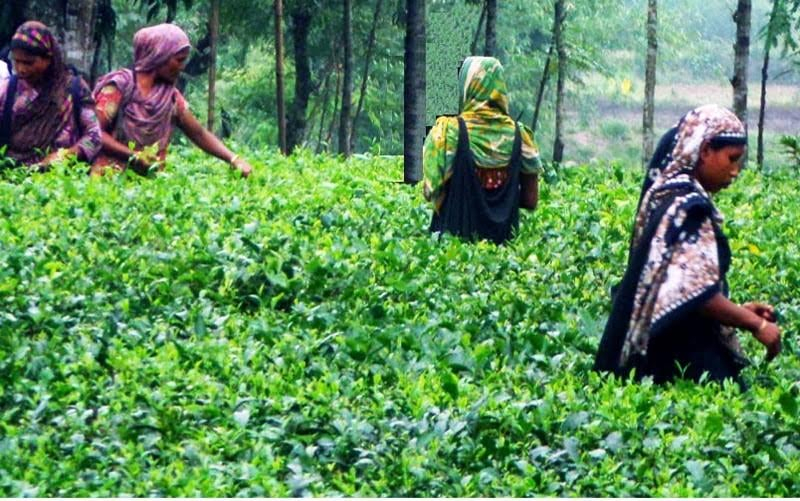
Boosting tea gardening on the plain lands has already created jobs for 30,000 people, including 18,000 women.
Boosting tea gardening on the plain lands has already created jobs for 30,000 people, including 18,000 women, in the tea-producing five northern districts improving their livelihoods and living standard.
"The working men and women of Panchagarh, Thakurgaon, Dinajpur, Nilphamari and Lalmonirhat districts are earning well from farm-activities in tea
gardens," said President of Bangladesh Small Tea Garden Owners' Association Md Amirul Haque Khokan.
Despite the global crises caused by the Russia-Ukraine War and Covid-19 pandemic, the boosting tea sector has become a blessing for farm-laborers,
including housewives, widows, divorcees and young girls, to earn better wages and lead a normal life.
The thriving 'small-scale gardening-basis' tea farming has ushered in a new hope for people of the tea-producing five northern districts bringing fortune to hundreds of farmers and well-being to many farm-laborers.
"As tea cultivation on plain lands continues expanding every year, production of processed tea continues increasing alongside creating more jobs and strengthening the rural economy in these northern districts," Khokan added.
Talking to BSS, female tea-garden laborers of different areas said they are effectively contributing to their families for living with dignity and honour by earning from plucking green tea leaves and their well-dressed children are now going to schools.
"We are drinking safe water, using sanitary latrines, adopting family planning, stopping child marriage, taking healthcare and living better with our earnings," said tea-garden worker Aklima Khatun of Moynaguri village in Tentulia upazila of Panchagarh.
Farm-laborers Bulbuli, Maksuda and Hasna of different villages in the same upazila said they are leading a normal life despite the crises caused by the Russia-Ukraine War and Covid-19 pandemic through earning better wages from plucking tea-leaves.
Labourers Selina Hembrom, Gokul Hasda and Nur Nahar of village Buraburi in Tentulia upazila said they generally earn Taka 500 to Taka 600 as daily wages
from plucking green-tea leaves during the full plucking seasons to lead a better life.
Similarly, female labourers Rehana Begum Julekha Khatun, Laboni Yasmin,Mariyam Nesa and Nur Nahar of Panchagarh Sadar upazila said they are plucking
tea-leaves to live a better life though they had hard days even a decade ago.
Expressing happiness, the female tea-garden labourers said they are sending their children to schools as plucking of tea-leaves has created job opportunities for them to earn wages for improving economic conditions.
Development Officer of Bangladesh Tea Board (BTB) at its Panchagarh regional office Agriculturist Md. Amir Hossain Officials said tea cultivation on plain
lands in five tea-producing northern districts continues increasing every year creating more and more jobs.
"At the same time, production of green tea leaves and processed tea continues increasing in these northern districts keeping the regional agro-economy
vibrant despite the global crises and Covid-19 pandemic," he said.
An all-time record 17.759-mn kgs of processed tea was produced in five northern districts last year, exceeding the production of 14.54 million kgs of processed tea of the previous 2021 year by 3.219 million kgs.
"As per a direction of the then Prime Minister Sheikh Hasina during her visit to Panchagarh in 1996, the then Deputy Commissioner Rabiul Islam planted tea
saplings on Panchagarh Circuit House premises on experimental basis," Hossain said.
Getting excellent results, a BTB team conducted a feasibility study in Panchagarh and Thakurgaon districts in 1999 and found 16,000 hectares of land
suitable for commercial basis tea cultivation.
"Tentulia Tea Company Limited first started commercial basis tea cultivation on plain lands in Tentulia upazila there in 2000," said Hossain.
Later, different tea companies and local farmers started commercial-basis tea farming in 2005 ushering in a new hope in the agro-economy alongside creating
huge jobs for farm-labourers in the tea producing five northern districts.