

- UN calls for urgent action to protect children from online info risks |
- UN offers support to Colombia as 7.4 scale earthquake kills dozens |
- Former Syrian President Assad Sentenced to Death in Absentia |
- PM Welcomes Visa Investment in Bangladesh’s Digital Economy |
- PM Tarique inaugurates three pilot SDG villages |
Middle East War Sends Shockwaves Through Global Economy
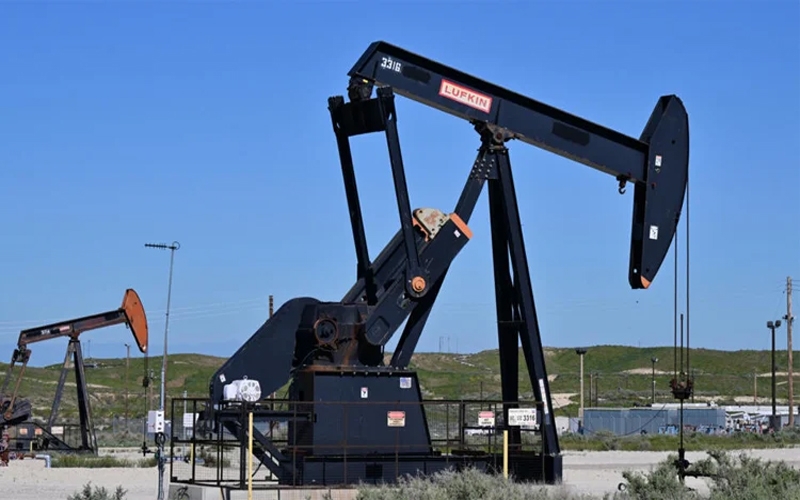
The ongoing war in the Middle East continues to ripple through the global economy, affecting oil markets, stock exchanges, transport routes and government policies across several regions.
Oil prices fell sharply after U.S. President Donald Trump suggested the conflict was “pretty much” over. The comments eased fears of prolonged supply disruptions and helped calm energy markets.
Both major oil benchmarks dropped more than 10 percent. U.S. crude West Texas Intermediate fell to about $85.29 per barrel, while Brent crude declined to around $88.95 during early trading hours.
The fall in oil prices also boosted investor confidence in the United States. All three major stock indexes moved higher, with the Dow Jones Industrial Average closing up 0.5 percent at 47,740.80 after recovering strongly from earlier losses.
The U.S. administration also signalled it may ease certain sanctions related to oil exports in an effort to stabilise global markets. Trump said the move was aimed at helping reduce fuel prices amid market volatility.
Asian stock markets responded positively to the easing pressure in oil markets. South Korea’s benchmark Kospi index rose more than five percent in early trading, while Japan’s Nikkei 225 jumped more than three percent before trimming some gains later in the session.
Meanwhile, finance ministers from the Group of Seven (G7) major economies held discussions on the economic impact of the war. France’s finance minister said the group was not yet ready to release strategic oil reserves but remained prepared to take such measures if necessary. G7 energy ministers were scheduled to meet to review the situation.
The conflict has also disrupted global transport and tourism. French President Emmanuel Macron said France and its allies were preparing a defensive mission aimed at ensuring safe navigation through the Strait of Hormuz, a key route for global oil shipments.
Shipping data also showed that several vessels travelling through the Gulf region have altered their tracking information to indicate links to China, apparently in an attempt to avoid potential attacks.
Airlines have also been affected. Major European carriers including Lufthansa and Air France have extended flight cancellations to destinations in the Middle East due to security concerns.
Global shipping company MSC announced it had suspended some export shipments from the Gulf region, warning that cargo already affected by the disruption would be unloaded at alternative ports.
Governments around the world have begun taking precautionary steps to limit the economic impact of the conflict. Countries such as Croatia, Hungary, South Korea and Thailand have introduced fuel price caps to protect consumers.
China has reportedly asked major refiners to halt exports of diesel and gasoline in order to secure domestic supplies, while Nigeria’s large Dangote refinery said it would prioritise local demand to prevent shortages.
In Japan, authorities have also begun preparing emergency measures, including the potential release of national oil reserves if global supply pressures intensify.