

- 11-Year Run of Record Global Heat Continues: UN Agency |
- Gaza Ceasefire Not Enough as Children Continue to Die |
- Bangladesh Sets Guinness Record With 54 Flags Aloft |
- Gambia Tells UN Court Myanmar Turned Rohingya Lives Hell |
- U.S. Embassy Dhaka Welcomes Ambassador-Designate Brent T. Christensen |
UN Worth Fighting For, Says General Assembly President
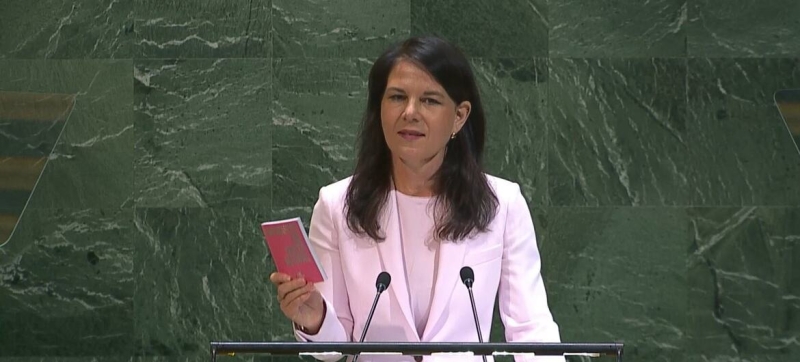
Annalena Baerbock, President of the 80th Session of the UN General Assembly highlights her priorities for 2026.
With the multilateral system under pressure and under attack, Member States must fight for the United Nations, the President of the General Assembly said on Wednesday as she outlined her priorities for the resumed 80th session.
Annalena Baerbock noted that the New Year began with crises in Venezuela and Iran, placing the international community at “an even more urgent make-or-break moment” than when the landmark session opened in September.
She stressed that “the world needs the United Nations” and highlighted its wide-ranging work, including providing lifesaving support in Gaza, championing girls’ education in Afghanistan, protecting civilians in Sudan, and intensifying efforts to end the war in Ukraine.
“In no way would the world be better off without our United Nations. It is worth fighting for,” she said.
Defending the Charter
The General Assembly is the UN’s main policy-making body, comprising all 193 Member States, each with an equal vote. It meets in regular sessions from September to December and thereafter as required.
In contrast to previous years, the President avoided providing a comprehensive list of mandated meetings for the resumed session.
“My main priority today and for the next 237 days as President of the General Assembly is to defend—together with you—this institution, its Charter, and the principles enshrined in it,” Ms. Baerbock said.
“Because it is increasingly evident that not all of us are singing from the same songbook anymore; not all are equally invested in the Charter and international law.”
Renewed commitment and compromise
She called on Member States from all regions to come together to build a cross-regional alliance to protect and promote the principles of the UN Charter, “to defend a global order founded on international law and human rights.”
“This means stepping up every day. It means standing up. It means recommitting,” she said.
“It also means always endeavouring to bridge divides and find compromise, insofar as compromise does not become appeasement.”
Addressing ongoing efforts to reform the United Nations, she emphasised that “no amount of reform can resolve a financial crisis if Member States do not meet their financial obligations.”
She stressed the need for countries to pay their contributions in full and on time, warning that otherwise “this institution cannot function and reform will have no meaning.”
New leadership
Another key priority, she said, is the selection of the next UN Secretary-General, as António Guterres prepares to leave office in December.
The General Assembly appoints the UN chief on the recommendation of the Security Council. The selection process is already underway, and Ms. Baerbock announced that interactive dialogues with candidates have been scheduled for the week of 20 April, during which they will present their vision statements.
Women candidates encouraged
She urged Member States to submit qualified candidates early to ensure their participation in the dialogues and strongly encouraged the nomination of women candidates.
“In a time of strong headwinds facing this institution, the process of selecting the next Secretary-General is our chance to send a clear message about who we are and what we stand for,” she said.
“The next Secretary-General will not only be the face and voice of this institution; our choice will also show whether this organisation is truly serving all of humanity, half of whom are women and girls.”
The decision on who leads the UN, she added, “will determine how we address pressing global challenges, from conflict and climate change to inequality.”
“We need someone who is up to the task at hand, who can chart a path to the future while passionately defending the principles of our Charter.”