

- Trump says no longer sending Witkoff and Kushner to Pak for Iran talks |
- Iran FM Leaves Pakistan Before US Delegation Arrives |
- BIP calls for shift to public transport to ensure energy security |
- Commercial flights resume at Tehran airport after two months |
- 11 more children die of measles, similar symptoms in 24 hrs: DGHS |
Iran War May Push Global Food Prices Higher: FAO
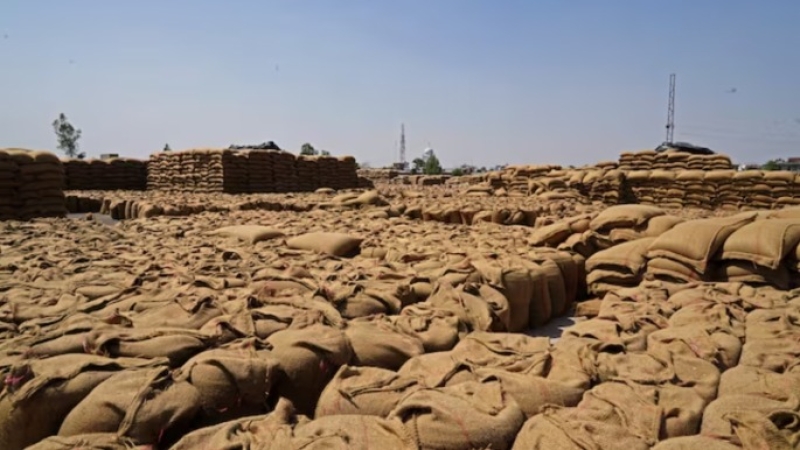
Sacks of harvested wheat are seen at a grain market in Gaggarpur village, in the northern state of Haryana, India, 25 April, 2025.
Global food prices rose in March to their highest level since September last year, and the upward trend may continue if the conflict involving Iran drags on, the UN Food and Agriculture Organization (FAO) said on Thursday.
According to the FAO, the recent increase in prices has so far remained moderate, largely driven by higher energy costs and partly offset by strong global cereal supplies.
FAO Chief Economist Maximo Torero said prolonged instability in the Middle East could put further pressure on food markets in the months ahead.
He warned that if the conflict continues for more than 40 days and farming input costs stay elevated, many farmers may cut back on fertiliser use, reduce planting, or switch to less input-intensive crops.
Such decisions, he said, could affect crop yields and influence global food supply and commodity prices for the rest of this year and into next year.
The FAO Food Price Index, which tracks monthly changes in a basket of globally traded food commodities, rose 2.4 per cent in March from its revised February level.
The index was also 1 per cent higher than a year earlier, though it remained nearly 20 per cent below its peak in March 2022 following the start of the war in Ukraine.
Wheat, Oil and Sugar Prices Rise
The FAO said the cereal price index rose 1.5 per cent in March, led by a 4.3 per cent increase in international wheat prices. The rise was linked to worsening crop prospects in the United States and expectations of lower planting in Australia due to high fertiliser costs.
Global maize prices edged up slightly, supported by stronger ethanol demand prospects and rising energy prices, although ample supply helped contain the increase.
Rice prices, however, fell 3 per cent, mainly due to harvest-related supply and weaker import demand.
The vegetable oil price index climbed 5.1 per cent, marking its third straight monthly increase. Prices of palm, soy, sunflower and rapeseed oil all rose amid higher energy prices and expectations of stronger biofuel demand.
Palm oil prices reached their highest level since mid-2022.
Sugar prices jumped 7.2 per cent in March to their highest level since October 2025. The increase was driven by expectations that Brazil, the world’s largest sugar exporter, may divert more sugarcane to ethanol production as crude oil prices rise.
Meat prices also increased 1 per cent, led by higher pig meat prices in the European Union and stronger bovine meat prices in Brazil, while poultry prices edged lower.
Record Cereal Output Forecast
In a separate report, the FAO slightly raised its forecast for global cereal production in 2025 to a record 3.036 billion metric tonnes.
That would mark a 5.8 per cent increase from the previous year.