

- Uncertainty over possible US-Iran talks as Trump extends ceasefire |
- Bangladesh eyes broader bilateral engagements with African nations |
- Trump Extends Iran Ceasefire, Seeks Time for Talks |
- SSC and Equivalent Exams Begin Nationwide |
- US, Iran Signal War Readiness as Talks Hang in Balance |
UNRWA Situation Report on Lebanon Emergency Response 2026
Published on 3 April 2026
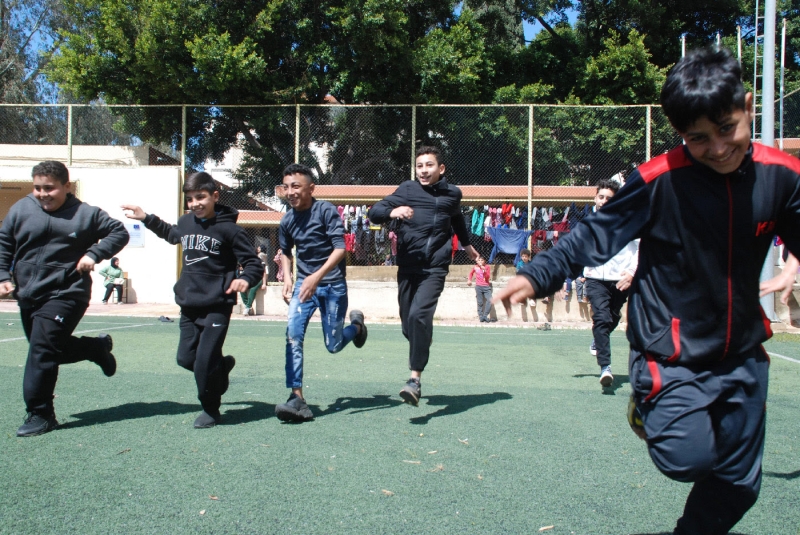
Palestine Refugee, Lebanese, and Syrian children take part in a race during psychosocial support activities at the UNRWA Siblin collective emergency shelter in Lebanon.
Key Points
• UNRWA launched its emergency response in Lebanon on 4 March 2026. As of 31 March, it operates two emergency shelters[1]: Siblin Training Centre in Saida Area and Battir School in Nahr el-Bared Camp in northern Lebanon.
• By 31 March, a total of 1,867 displaced people (565 families) had been registered in the two UNRWA emergency shelters.
• On 13 March, UNRWA launched an appeal for US$12.3 million to support up to 10,000 people in the Agency’s two emergency shelters and 63,000 vulnerable Palestine Refugees outside of shelters.
• Between 26 and 31 March, no security incidents affecting on-duty UNRWA personnel were reported.
Overall Situation
• By 30 March, the Ministry of Social Affairs had documented the displacement of 1,049,000[2] individuals, including 136,156 individuals hosted in 669 shelters[3].
• More than 189,000 people have crossed into Syria since 2 March, including over 1,200 Palestine Refugees from Syria[4].
• In Ein El Hilweh Camp, all operations have been suspended since 30 March due to armed clashes and heightened tensions among armed groups.
Humanitarian Access and Protection of Civilians
• By 31 March, 1,617 displaced persons were recorded at the emergency shelter at Siblin Training Centre (STC), while 250 individuals were recorded at Battir emergency shelter in Nahr el-Bared Camp. Displacement is ongoing, and figures are expected to evolve over time. Each shelter is overseen by a dedicated UNRWA team to ensure safe, orderly operations and to provide continuous support to displaced families.
• On the night of 29 March, a dispute resulted in two fatalities and three injuries among Palestine Refugees from Ein El Hilweh Camp. The violence has resulted in heightened instability within the camp. Main roads in the camp have been barricaded and closed since 30 March. These events have increased fear among residents, prompting some families to temporarily flee, and further deepening existing vulnerabilities among camp residents.
• On 30 March, two Indonesian peacekeepers serving with the United Nations Interim Force in Lebanon (UNIFIL) were killed and two others injured when a roadside explosion struck a UNIFIL logistics convoy, destroying their vehicle[5].
Partnerships
• In coordination with UNICEF, the National Institution of Social Care and Vocational Training (NISCVT), also known as Beit Atfal Assumoud, has been identified as the main partner supporting UNRWA in the Battir emergency shelter in Nahr el-Bared Camp. Similarly, the Arab Resource Center for Popular Arts (ARCPA), also known as Al-Jana, serves as the main partner at the Siblin emergency shelter. Both organisations work alongside UNRWA to help ensure continuity and quality of services for displaced families in the collective emergency shelters, filling critical gaps in service provision, such as recreational activities, distribution of basic items, non-formal learning activities, case management for child protection and gender-based violence (GBV), amongst other activities.
• The local partner Nabaa continues to operate two additional collective emergency shelters in UNRWA facilities in Saida Area, with support from Action Contre la Faim (ACF) on water, sanitation and hygiene services.
• UNRWA maintains close coordination with the Norwegian Refugee Council (NRC), the Cooperazione Internazionale Fondazione (COOPI), as well as UNHCR and their implementing partners to facilitate the provision of in-kind assistance, including blankets, pillows, mattresses, and floor mats. Further support is expected in the coming period including additional food items, basic hygiene items and recreational kits for children.
• Hot meals continue to be provided at the Siblin emergency shelter by the local partner SHEILD, and at the Battir shelter by the Women's Programme Association (WPA), under the umbrella of the WFP-led Food Security Sector.
• Collaboration is ongoing with the community organisation INITIATE, co-funded by UN Women, and with WPA, co-funded by ANERA, to support the establishment and operation of on-site kitchens in both UNRWA-run emergency shelters.
• UNRWA is also coordinating with the Palestine Red Crescent Society to support the emergency medical transportation for displaced persons in UNRWA-run emergency shelters.
• In parallel, UNRWA is maintaining operational coordination with other partners including IOM, UNICEF, UNHCR, WFP, NRC, ICRC, COOPI, ACF, TdH-Italy, Save the Children, DanChurchAid, Basmeh & Zeitooneh, Mousawat, Najdeh, Tadamon, Soufra (Makani), Taawon (Walfare) and Community-Based Rehabilitation Association (CBRA).
Programme and Operational Response
• As of 31 March, UNRWA maintained available stocks of non-food items, including 1,552 mattresses, 4,796 pillows, 234 hygiene kits, 1,470 adult diapers, 219 fire extinguishers, 2,212 protective vests, 55 gas burners, 154 cooking pots, various kitchen utensils and equipment, and 305,000 aluminium foil sheets. A large portion of these supplies are already prepositioned in UNRWA’s decentralised warehouses near the shelters.
• During the reporting period, a donation of 88 packs of adult diapers was received from the Norwegian Refugee Council (NRC) and directly delivered to the Siblin emergency shelter to support preparedness for a potential new influx of displaced persons. In addition, 100 hygiene kits were delivered to the same site.
• Furthermore, 1,273 litres of sunflower oil, 696 kg of iodised salt, and 5,000 aluminium foil plates were dispatched to the Battir emergency shelter. In-kind contributions from the local partner Basmeh & Zeitooneh, including 300 pillows, 300 blankets, and 299 mattresses, were also distributed at Battir emergency shelter. In Nahr el-Bared Camp, the Najdeh Association and the Tadamon Association distributed 471 mattresses and 200 blankets to displaced persons living outside UNRWA emergency shelter.
• Cleaning supplies were provided to both emergency shelters based on identified needs.
Health
• As of 31 March, 13 out of 26 UNRWA primary clinics across Lebanon were operational, while 13 remained closed due to the security situation. Additionally, one mobile clinic in Siblin emergency shelter and one temporary health point in Musaytbeh (Beirut Area) are functional. Health staff whose clinics are closed or who have themselves been displaced are being redeployed according to operational needs to ensure continuity of services.
• In Beirut, Mar Elias Clinic, Burj Hammoud Clinic, Dbayeh and the temporary Musaytbeh Emergency Clinic provide primary healthcare services. In Saida Area, Saida Polyclinic, Mieh Mieh Clinic and Wadi Zaini Clinic are operational, while Ein El Hilweh, Ghazieh and Adloun clinics remain closed. Patients from Ein El Hilweh Camp are served at Saida Polyclinic. In Bekaa Area, all three clinics are operational on an emergency basis. In North Lebanon Area, all three clinics remain operational.
• Family Health Teams (FHTs) continued rotations inside Tyre Area camps (El Buss, Rashidieh, Burj El Shemali) when possible, due to the dynamic security situation. In addition, an FHT at Siblin emergency shelter and two FHTs at Musaytbeh continue to provide primary healthcare services to displaced people.
• The e-health platform, Mobile Clinic One, remains operational under the emergency module to enable clinics to serve displaced communities. Additionally, Mobile Clinic Two remains operational in Musaytbeh to serve displaced communities there.
• Screening of displaced persons at the two emergency shelters continues, focusing on disability, chronic and acute illnesses, with timely referrals and follow-up by health teams.
• UNRWA’s central pharmacy continues to distribute medicines to all operational clinics.
• Since the start of the emergency, 40,551 medical consultations have been provided, including 4,584 for displaced persons at operational clinics and 861 at the two UNRWA emergency shelters. No infectious disease outbreaks were reported to date.
• Hospitalisation for war-related injuries is covered by the Ministry of Public Health and the ICRC.
Education
• The UNRWA Education Programme Emergency Preparedness and Continuity Plan has been in effect since 10 March, aligned with the Lebanese Ministry of Education and Higher Education.
• Education services resumed on 16 March across all UNRWA schools and vocational centres, using remote or in-person modalities depending on area stability.
• By 31 March, all 60 UNRWA schools were operational: 18 in-person and 42 remotely.
• Remote learning focuses on core subjects (numeracy, literacy, sciences), while in-person schools deliver the full curriculum.
• During the reporting period, 11,327 students (5,890 girls and 5,437 boys) received at least one remote psychosocial support (PSS) activity, delivered by 40 school counsellors.
• PSS and recreational activities in the two emergency shelters are provided by local partners: Al-Jana (ARCPA) in Siblin and Beit Atfal Assumoud (NISCVT) in Battir.
• At UNRWA’s Technical and Vocational Education and Training Centre, South campus students at Siblin are currently attending remotely as the campus has been turned into an emergency shelter, while North campus students are attending in-person.
Protection
• By 31 March, a total of 805 children had registered in UNRWA’s shelters (381 boys and 424 girls).
• The deteriorating security situation continues to cause loss of livelihoods among Palestine Refugees in the southern camps, with many residents and displaced families no longer able to work and lacking alternative sources of income. Needs of host families are increasing and remain largely unmet, while prices for basic commodities continue to rise, further exacerbating their socio-economic challenges.
• Since the onset of the conflict, UNRWA’s Social Work teams in Battir and Siblin shelters have continued providing PSS, psychosocial first aid (PFA), family and individual interventions, and case management to 500 displaced persons, aiming to reduce community tensions and strengthen emotional well-being, coping capacities and overall resilience.
• UNRWA Protection teams participated in Explosive Ordnance Risk Education (EORE) sessions with Lebanon Mine Action Center (LMAC) to harmonise awareness messaging.
• UNRWA Protection teams delivered training on Humanitarian Principles and Child Safeguarding to the local partners operating in both shelters.
• Accountability and community participation remain key priorities: four help desks are operating at Siblin emergency shelter and two help desks at Battir shelter.
• Community committees continue to function in both emergency shelters. In Siblin emergency shelter, the local partner Al-Jana supported the formation of four committees (for youth, health, sports, as well as culture and arts). At Battir shelter, UNRWA Community Support Associates conducted induction sessions following the setup of men’s and women’s community committees[6].
• UNRWA’s legal aid focal point, in partnership with NRC, delivered an awareness session on civil registration at Battir shelter.
Water, Sanitation and Hygiene (WASH)
• As of 31 March, UNRWA continued to provide basic and lifesaving sanitation services across all 12 Palestine Refugee camps in Lebanon, including solid waste collection and water pumping. A total of 70 out of 74 water wells are operational, with the remaining four undergoing routine maintenance.
• Several camps reported water shortages driven by increased demand following the influx of displaced persons. The situation is further strained by the reliance of water systems on electricity for pumping. In the absence of stable power, generators are used, resulting in higher diesel consumption.
• Limited hot water availability was reported in the two UNRWA emergency shelters.
• Solid waste collection and disposal continued across all camps, but increased waste from additional displaced families and security risks disrupted transfers outside the camps in Tyre Area and Wavel Camp in the Beqaa Valley. Solid waste collection in Ein El Hilweh Camp has been suspended since 30 March due to armed clashes, while Burj Al Barajneh and Shatila camps experienced a two-day suspension due to nearby airstrikes during the reporting period.
• The two UNRWA shelters face limited waste management infrastructure and insufficient sanitation staff, causing garbage build-up.
• Sanitation facilities in shelters remain under pressure, with approximately 20 people sharing one toilet and 50 people sharing one shower unit on average. Efforts are underway to expand and improve WASH services in the shelters.
Food assistance
• UNRWA continues to provide ready-to-eat food parcels and hot meals to displaced people hosted in its two shelters.
• During the reporting period, UNRWA distributed 20 ready-to-eat kits, 14,720 hot meals and 490 bread packs through various partners, including WFP, SHEILD, Caritas and the Women’s Program Association (WPA).
Source: UNRWA