

- UN calls for urgent action to protect children from online info risks |
- UN offers support to Colombia as 7.4 scale earthquake kills dozens |
- Former Syrian President Assad Sentenced to Death in Absentia |
- PM Welcomes Visa Investment in Bangladesh’s Digital Economy |
- PM Tarique inaugurates three pilot SDG villages |
UN Warns of Rising Risks of Child Exploitation Worldwide
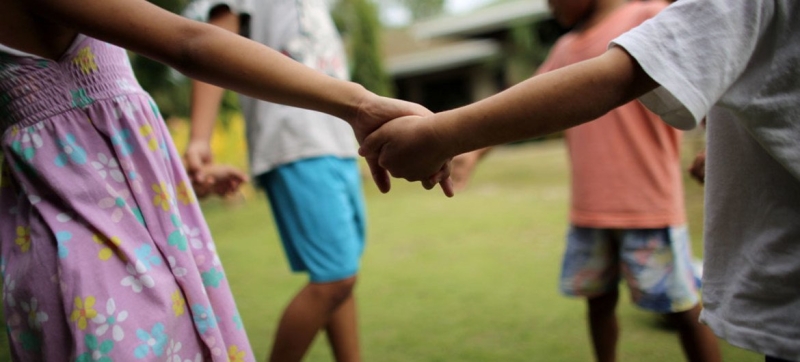
Children play outside their home at a shelter in the Philippines.
Despite some global progress, children around the world still face serious and evolving risks of being sold, sexually exploited and abused, the UN independent human rights expert on the sale, sexual exploitation and sexual abuse of children, Mama Fatima Singhateh, warned on Monday.
“There is a deeper understanding of the interconnectedness of these crimes,” Ms Singhateh said.
“We are also witnessing stronger international cooperation, more victim-centred approaches and greater involvement from the private sector. However, despite these achievements, the scale and severity of abuses against children remain alarming.”
Far too many children worldwide are still being trafficked, sexually exploited and abused, she said in her final report to the Geneva-based UN Human Rights Council. She noted that such crimes are often hidden, normalised or fail to receive the attention they deserve.
Technology-driven risks rising
The independent expert pointed out that in recent years countries have made notable progress in strengthening criminal laws to align them with international standards and to hold perpetrators accountable for child trafficking and sexual exploitation.
However, the report’s review of the current situation reveals a rapidly evolving landscape of child sexual exploitation.
As digital threats intensify and global crises deepen, the risks facing children continue to grow.
Technology-driven sexual exploitation and abuse are increasing, while conflict and climate-related disasters are creating conditions that make children more vulnerable. Expanding extractive industries in some regions are also worsening these risks.
Response strategies
The independent expert said these “new frontiers” require a rethinking of strategies, updated and effectively implemented legal frameworks, and greater investment in technological solutions to identify and stop offenders.
She called on countries to:
strengthen, harmonise and enforce legal frameworks criminalising all forms of child exploitation
invest in digital security and stricter regulation of technology platforms
enhance cross-border cooperation
ensure victim-centred justice
address the root causes of exploitation
involve the private sector as an active partner
She also urged all institutions working with children to place their protection at the centre of every decision, policy and intervention.
Prevention possible
Ms Singhateh stressed that the sale of children, sexual exploitation and sexual abuse are not inevitable but preventable.
“These problems stem from choices — political, economic and technological choices,” she said. “That means we can also choose to protect children’s rights, close the gaps that make them vulnerable and build a world where every child is valued, protected and free from exploitation.”