

- 40 Killed as Bus Plunges Into Ravine in Pakistan |
- Budget steps help stabilize prices of essential commodities |
- Bangladesh likely to face flooding in July-August |
- China open to other countries for economic corridor: Envoy Yao Wen |
- Top Iranian general emerges before Khamenei funeral |
Racism Still Restricts Access to Sport, UN Warns
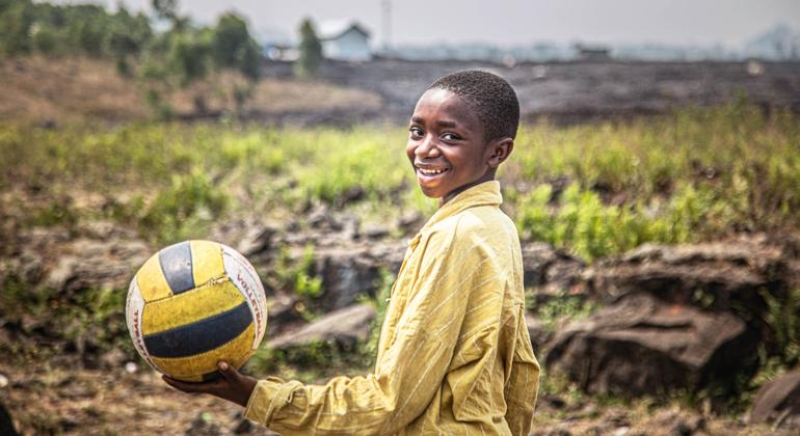
A boy in the eastern DR Congo holds a volleyball in a camp for people displaced by conflict.
Racism continues to significantly shape access to sport worldwide, affecting participation, representation and opportunities at every level, according to a new report presented on Thursday by a United Nations Human Rights Council independent expert.
The report highlights how high participation costs, restrictive eligibility rules and structural discrimination continue to prevent many people from fully participating in sport.
Despite sport’s potential to promote diversity, inclusion and social cohesion, racial and ethnic minorities remain underrepresented in many areas of global sport, with governance and access disparities reflecting broader social inequalities.
Ashwini K.P., the Human Rights Council-appointed independent expert on contemporary forms of racism, racial discrimination, xenophobia and related intolerance, said sport plays a unique role in cultural expression and collective identity.
“Persistent stereotypes continue to influence how athletes are identified, trained, selected and perceived,” she told the council.
“I am concerned about the underrepresentation of racially and ethnically marginalised groups, including minorities, caste-oppressed communities and other racialised populations.”
In her report, she urged member states to collect disaggregated data on racism in sports, invest in infrastructure and promote equal access.
She also called for stronger protections for athletes, reviews of eligibility regulations that may have discriminatory effects and full compliance with international anti-discrimination obligations.
Economic Barriers Limit Participation
The report found that lack of access to facilities, equipment, coaching, travel and nutrition remains a major barrier for children and young people entering sports.
Geographic access to sports facilities also limits participation among lower-income families.
In the Occupied Palestinian Territory, restrictions on movement and the destruction of sports facilities have made participation in international competition increasingly difficult.
The report noted that limited access to sports during childhood can have lifelong consequences, reducing opportunities for physical activity and limiting both physical and mental health benefits.
It also stressed that economic inequality often overlaps with racial discrimination, particularly in countries where structural inequalities are rooted in colonialism and historical exploitation.
In United Kingdom, for example, Asian British and Black British cricketers accounted for only 8.1 percent of male professional cricketers in 2021, despite representing 30 to 35 percent of adult recreational players.
Eligibility Rules Raise Concerns
The report highlighted restrictions on Muslim women wearing hijabs in France as an example of eligibility rules with discriminatory effects.
Muslim women often face overlapping discrimination based on race, ethnicity, religion and gender.
The report said bans on head coverings in football and basketball create tension between participation in sport and the rights to religious freedom and self-expression.
It also raised concerns about World Athletics regulations involving prosthetics and testosterone levels, warning that such rules may disproportionately affect Black athletes and women from the Global South.
“There is significant potential for discrimination if eligibility regulations are not developed and enforced in alignment with international human rights law,” the report stated.
Leadership Remains Dominated by White Men
The report found that racial and ethnic minorities remain significantly underrepresented in sports leadership positions.
Structural barriers such as implicit bias, weak accountability and poor data collection continue to limit representation.
In cricket leadership roles in England and Wales, Black and South Asian representation remains disproportionately low compared with participation rates at recreational levels.
The report also found that a large majority of senior football leadership roles across Europe are held by white men.
This imbalance, it said, weakens institutional responses to racism in sport.
The report also referenced findings from the Hamilton Commission, established by Lewis Hamilton in 2021.
The commission found that Black people and other racialised groups remain severely underrepresented in senior leadership, engineering, technical and governance roles in motorsport.
Call for Equal Access
The report stressed that international human rights law provides both a framework and an obligation for governments and sports bodies to address racial discrimination.
It called on member states to ensure equal access to sport, provide effective remedies for victims of discrimination and invest in education and public awareness campaigns.
Sports governing bodies were urged to identify barriers to participation, expand access and adopt human rights-based policies to tackle discrimination.
“Efforts must move beyond symbolic gestures and reactive measures,” Ashwini K.P. wrote.
She said meaningful progress requires addressing root causes, redistributing opportunities and dismantling entrenched racial inequalities in sport.