

- BNP govt to take office with economy at a crossroads |
- Pahela Falgun brings colour, music as spring begins |
- New MPs, cabinet members to be sworn in Tuesday |
- Mamata sends sweets, flowers to Tarique Rahman |
New Recombinant Mpox Strain Detected in UK, India
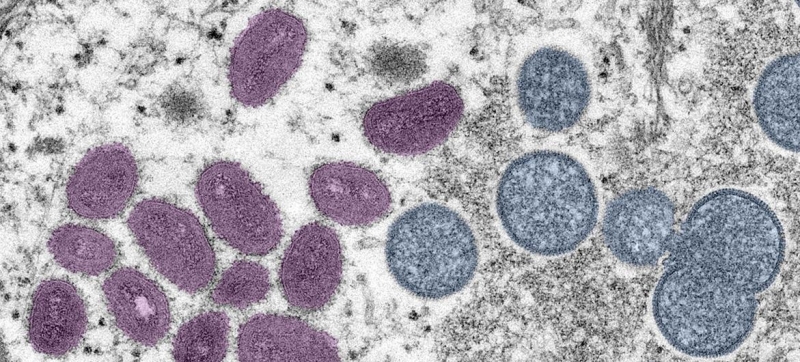
Mpox (previously known as monkeypox) is a viral disease caused by an orthopoxvirus called monkeypox virus (MPXV).
The detection of a newly identified recombinant mpox virus containing genetic material from two known strains underscores the need for continued genomic surveillance, the World Health Organization (WHO) said on Saturday, adding that the overall global public health risk assessment remains unchanged.
WHO confirmed that two cases of the recombinant strain — combining genomic elements of clades Ib and IIb of the monkeypox virus (MPXV) — have been identified so far: one in the United Kingdom and one in India. Both patients had recent travel histories, and neither developed severe illness.
No secondary cases were detected during contact tracing. WHO has published a detailed update on the two cases and the respective national responses.
Recombination is a natural process that can occur when two related viruses infect the same person and exchange genetic material, producing a new variant. According to WHO, genomic analysis shows the two individuals “fell ill several weeks apart with the same recombinant strain,” suggesting that additional undetected cases may exist.
What is mpox?
Mpox is an infectious disease caused by the monkeypox virus (MPXV), part of the Orthopoxvirus genus, which also includes the virus that causes smallpox. It spreads through close physical contact, including sexual contact, and in some cases through contaminated materials or respiratory droplets. Symptoms typically include fever, swollen lymph nodes, and a rash and/or lesions.
Two Detected Cases
The case in the United Kingdom was detected in December 2025 in a traveller returning from a country in the Asia-Pacific region. Initial laboratory testing identified the virus as clade Ib, but whole-genome sequencing later revealed genetic regions from both clade Ib and clade IIb strains. Repeat sequencing confirmed the findings and indicated the virus “can replicate and presents potential for onward transmission.”
In India, a patient who developed symptoms in September 2025 was initially classified as infected with clade II MPXV. However, following updates to global genomic databases, the virus was reclassified as the same recombinant strain identified in the UK. The Indian case represents the earliest known detection of this strain.
“Due to the small number of cases found to date, conclusions about transmissibility or clinical characteristics of mpox caused by recombinant strains would be premature, and vigilance remains essential,” WHO said. Clinical presentations in both cases were consistent with known mpox infections.
Risk Assessment Unchanged
WHO’s overall risk assessment remains unchanged. The risk is considered moderate for men who have sex with men who have new and/or multiple partners, sex workers, and others with multiple casual partners, and low for the general population without specific risk factors.
At the same time, WHO cautioned that clade-differentiation PCR tests alone “may not reliably identify recombinant MPXV strains,” meaning genomic sequencing is essential for detection.
“All countries should remain alert to the possibility of MPXV genetic recombination,” WHO said, urging continued epidemiological surveillance, sequencing, vaccination of at-risk groups, and infection prevention and control measures.
WHO added that no travel or trade restrictions are warranted based on current information.