

- 17 Bangladeshis Killed in Saudi Arabia Factory Fire |
- BNP Set to Nominate Fakhrul as President Candidate |
- PM Stresses Efficient Use of Power Infrastructure |
- PM Tarique, Modi Are People’s Persons, Says Trivedi |
- Dhaka ranks 15th among world's most polluted cities |
WHO, Brazil Push Pandemic Deal to Prevent Crises
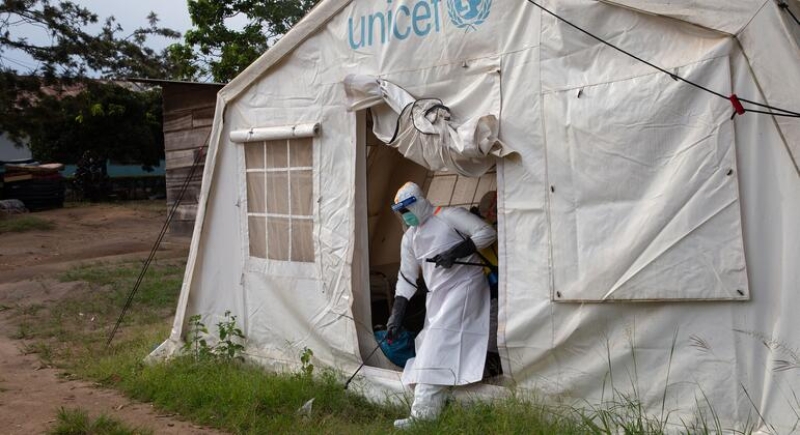
A team of hygienists disinfects a tent in Bunia in the eastern DR Congo.
Global leaders are being urged to finalise a landmark international agreement aimed at preventing future pandemics, according to a joint appeal issued by the World Health Organization (WHO) and Brazil.
In a joint letter released on Monday, Brazilian President Luiz Inácio Lula da Silva and WHO Director-General Tedros Adhanom Ghebreyesus called on countries to complete negotiations on the WHO Pandemic Agreement, warning that delays could leave the world vulnerable to future global health crises.
The letter stressed the need for collective action to avoid repeating the devastation caused by the COVID-19 pandemic, which claimed up to 20 million lives and caused an estimated $13 trillion in global economic losses.
Reflecting on the early days of COVID-19, the leaders recalled overwhelmed hospitals, families separated from loved ones and frontline healthcare workers operating under extreme pressure.
“This collective trauma led to a promise among nations — never again should the world face a pandemic unprepared,” the letter said.
Although countries adopted the WHO Pandemic Agreement more than a year ago, a key component — known as the pathogen access and benefit-sharing (PABS) annex — remains unresolved, preventing the agreement from formally taking effect.
The PABS framework is designed to help countries rapidly identify and share information on dangerous pathogens, allowing scientists to develop vaccines, tests and treatments more quickly during outbreaks.
According to the letter, the absence of a final agreement on PABS risks undermining global preparedness and leaves unfinished the commitments made after COVID-19.
The leaders acknowledged that negotiations remain challenging, particularly over how benefits from shared pathogen data would be distributed fairly among countries and how governance systems would ensure equitable access.
“These are among the same unresolved issues that exposed major weaknesses during the COVID-19 response,” the letter noted.
Negotiators are scheduled to meet from 6 to 17 July in an effort to finalise the remaining details.
The appeal outlined three key priorities for world leaders.
First, Lula and Tedros urged leaders to show stronger political commitment by empowering negotiators to reach a consensus and finalise the annex. They emphasised that the agreement would not compromise national sovereignty or grant WHO authority to impose measures such as lockdowns or vaccine mandates.
Second, they stressed the importance of equity, arguing that countries willing to quickly share pathogen information must be assured fair access to resulting medicines, vaccines and treatments.
The letter described pandemic preparedness as a strategic necessity rather than an act of charity, saying early action reduces both financial costs and loss of life.
Third, the leaders warned of growing urgency, citing scientific estimates suggesting nearly a 25 per cent chance of another pandemic occurring within the next decade.
They also highlighted how environmental and social changes, combined with rapid advances in biotechnology, are increasing the risks of accidental or intentional disease outbreaks.
Current health emergencies, including Ebola outbreaks in several countries without approved vaccines, underscore the need for stronger global coordination, the letter said.
Recalling the achievements of international cooperation in fighting diseases such as smallpox, polio, HIV, tuberculosis and malaria, the leaders said finalising the agreement would build on that legacy.
“Finishing this agreement is not a departure from that legacy,” the letter stated. “It is its natural next chapter, and it is within reach.”