

- Govt to Build Padma, Teesta Barrages for Water Security |
- Bangladesh Warned Repeatedly Over Measles Vaccine Gap |
- 163 Olive Ridley turtle hatchlings found on Kuakata beach |
Ebola Risk High in Congo, No Pandemic Alert: WHO
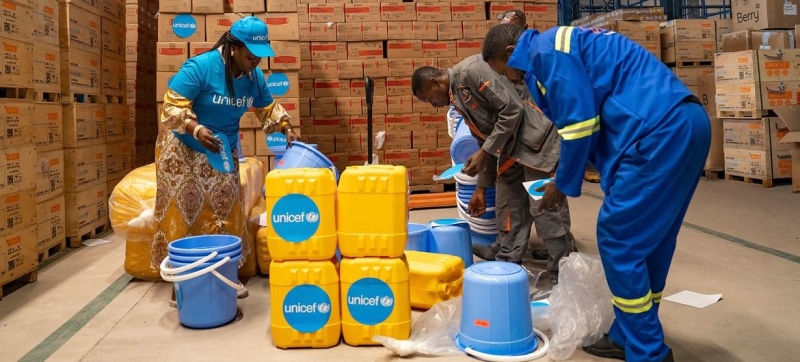
Emergency aid is prepared for delivery to Kasaï province in response to the recently declared Ebola virus disease outbreak in DR Congo.
The deadly Ebola outbreak in the Democratic Republic of the Congo (DRC) and Uganda does not constitute a global pandemic emergency, although the risk remains high at regional and national levels, the head of the UN health agency said on Wednesday.
Updating on the rapidly evolving situation in eastern DRC, World Health Organization (WHO) Director-General Tedros Adhanom Ghebreyesus said there are nearly 600 suspected cases of Ebola Bundibugyo virus and 139 suspected deaths, in addition to several dozen confirmed infections.
He warned that the numbers are expected to rise as the virus had likely been circulating for some time before detection.
Uganda has also reported two confirmed cases in its capital, Kampala, he added.
With no approved vaccine or treatment for this rare strain, WHO teams are working with local leaders in Ituri province, the outbreak’s epicentre, to prevent further transmission.
Officials said decades of conflict in mineral-rich eastern DRC have left communities highly vulnerable, with overstretched health systems and insecurity affecting response efforts.
According to the UN refugee agency (UNHCR), more than two million people are internally displaced in Ituri and North Kivu provinces, where armed groups remain active.
WHO officials said their teams continue to operate in affected areas, including Goma, despite ongoing insecurity, to support local communities and health services.
Experts noted that detecting Ebola in remote and conflict-affected areas remains challenging due to limited access, weak surveillance systems, and delays in laboratory confirmation.
They said the current outbreak was only confirmed after samples were transported around 1,700 kilometres to the capital, Kinshasa.
WHO officials added that investigations are ongoing to determine the exact origin and timeline of the outbreak, which may have started months earlier.
Following a meeting of the WHO Emergency Committee, the outbreak was declared a public health emergency of international concern, but not a pandemic emergency.
Experts stressed that Ebola spreads through direct contact with bodily fluids, not through casual or airborne transmission, and urged against unnecessary travel restrictions.
They also highlighted the need for stronger surveillance, rapid response capacity, and improved access to affected communities to contain the outbreak.