

- Uncertainty over possible US-Iran talks as Trump extends ceasefire |
- Bangladesh eyes broader bilateral engagements with African nations |
- Trump Extends Iran Ceasefire, Seeks Time for Talks |
- SSC and Equivalent Exams Begin Nationwide |
- US, Iran Signal War Readiness as Talks Hang in Balance |
Workplace Stress Linked to 840,000 Deaths Yearly: ILO
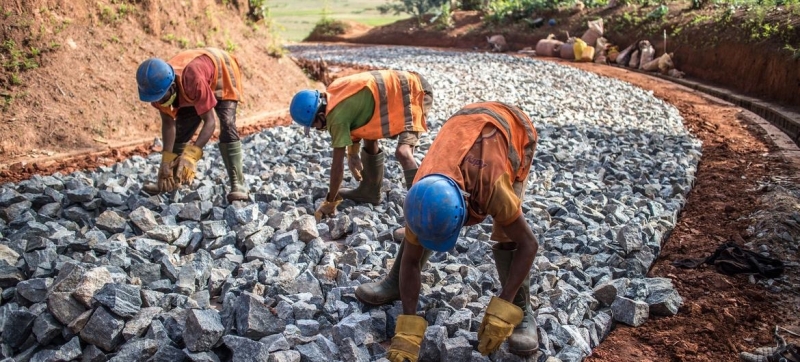
Construction workers lay a road in Madagascar.
More than 840,000 people die each year from health conditions linked to workplace risks such as long working hours, job insecurity, harassment and bullying, according to a new report by the International Labour Organization.
The report finds that the way jobs are designed, organised and managed has a significant impact on workers’ health and safety. Titled The Psychosocial Working Environment: Global Developments and Pathways for Action, the study highlights a growing link between workplace stress and rising rates of cardiovascular disease and mental health disorders, including suicide.
Researchers examined three key areas: the nature of work itself, how it is organised and managed, and broader workplace policies such as performance systems and measures to prevent violence and harassment.
The estimate of 840,000 deaths annually was derived by analysing global exposure to major workplace risk factors, including job strain, effort–reward imbalance, job insecurity, long working hours, bullying and harassment. These risks were then matched with global health and mortality data from the World Health Organization and the Global Burden of Disease study.
A growing challenge
While many of these risks are not new, the report warns that ongoing changes in the world of work are intensifying their impact. Trends such as digitalisation, artificial intelligence, remote work and evolving job structures may worsen existing pressures or create new ones if not properly managed.
“Psychosocial risks are becoming one of the most significant challenges for occupational safety and health in the modern workplace,” said Manal Azzi. “Improving the psychosocial working environment is essential not only for protecting workers’ mental and physical health, but also for enhancing productivity and sustainable economic development.”
Preventable risks
The report emphasises that many of these risks—and the resulting deaths—are preventable. Addressing root causes and integrating psychosocial risk management into workplace safety systems are key steps.
It also calls for stronger social dialogue among governments, employers and workers to create safer and healthier working environments.
By taking proactive measures, countries and organisations can reduce health risks, improve productivity and build more resilient economies, the report concludes.