

- Dhaka-Seoul Ties Set for Strategic Partnership Push: Envoy |
- BSEC vows investor protection as top priority in IPO reform drive |
- Facebook post triggers tension in Shahbagh JCD-DUCSU brawl |
- Grameen Kalyan plans 300 healthcare centres in 64 districts |
- Italy dismisses replacing Iran at the World Cup, as Trump official says |
WHO Warns of Rising Health Risks for Migrants
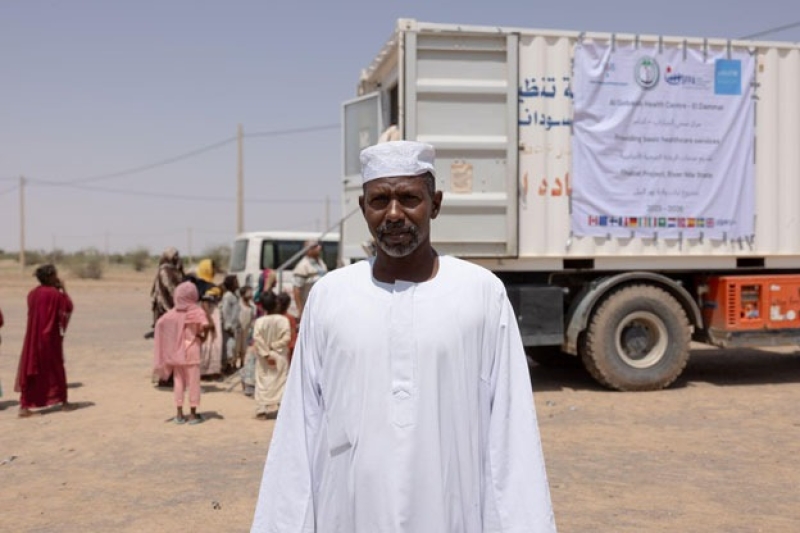
On 27 October, Omer, a Community Development Committee member, supports health workers at the UNICEF-supported mobile clinic in Al Jadab village in Atbara, River Nile State. Through this initiative, UNICEF is restoring lifesaving healthcare services, such as nutrition, immunization, antenatal and postnatal services, medical consultations, and essential medicines, closer to vulnerable communities.
Global human migration has reached record levels, with the World Health Organization (WHO) estimating that roughly one in eight people, or about one billion individuals, are on the move. Many of these migrants and refugees face harsh living conditions and growing challenges, including poverty, insecurity and limited access to basic services. With the number of international migrants having doubled since 1990, new findings from WHO call for stronger health systems to meet rising needs.
“Refugees and migrants are not just recipients of care, they are also health workers, caregivers and community leaders,” said Dr Tedros Adhanom Ghebreyesus, WHO Director-General. “Health systems are only truly universal when they serve everyone. Like anyone else, refugees and migrants need uninterrupted, affordable and equitable access to health services wherever they are.”
WHO estimates that there are around 304 million international migrants worldwide, including 170 million migrant workers. Of them, about 117 million are forcibly displaced persons, 49 million are children, and 2.3 million were born as refugees.
More than 71 percent of the world’s international migrants are hosted in low- and middle-income countries, which often face the greatest resource shortages and protection challenges. Marginalised groups are disproportionately affected. Women and girls are especially vulnerable to gender-based violence and often lack access to support services. Unaccompanied children face heightened risks of exploitation, abuse and neglect, while persons with disabilities encounter greater barriers to access and higher levels of discrimination.
Refugees and migrants are also exposed to greater health risks, driven in part by restrictions on movement and access to care, as well as persistent discrimination and language and cultural barriers. These challenges are being worsened by ongoing conflicts and climate-related disasters, leaving millions increasingly vulnerable to infectious and chronic diseases, mental health problems, and unsafe living and working conditions.
“We cannot talk about refugee and migrant health without also addressing emergencies,” said Dr Chikwe Ihekweazu, WHO Executive Director for Health Emergencies. “Whether it is conflict, a climate-related crisis or an epidemic that forces movement, these crises expose the fragility of health systems and magnify the vulnerabilities of those already at risk.”
On 26 March, WHO launched its World Report on Promoting the Health of Refugees and Migrants: Monitoring Progress on the WHO Global Action Plan, describing it as the first global baseline for tracking progress towards inclusive, migrant-responsive health systems. Based on data from more than 93 member states, the report highlights both a growing shift in national responses and the structural gaps that continue to hinder equitable access.
WHO found that only 42 percent of surveyed member states reported having emergency preparedness, disaster reduction or response programmes in place for migrant and refugee communities. Just 40 percent said they provide training for health workers in culturally responsive care, while only 37 percent reported having systems to collect, monitor and analyse migration-related health data. WHO said such information is still too rarely shared to support a more coordinated global response.
Discrimination remains widespread in many low- and middle-income countries hosting large numbers of refugees and migrants, with misinformation and disinformation continuing to fuel negative perceptions. Only 30 percent of surveyed countries reported having communication campaigns in place to counter these misconceptions and discriminatory language.
Anti-migrant sentiment remains especially strong in many settings, with internally displaced persons, migrant workers, international students and migrants in irregular situations being far less likely to access health services. In addition, refugees and migrants remain largely excluded from governance and decision-making processes that shape their access to health rights in most surveyed countries.
“The phenomenon of displacement is unfortunately becoming more frequent in countries with fragile systems, fragile economies and limited domestic resources,” said Dr Santino Severoni, head of WHO’s Special Initiative on Health and Migration and lead author of the report. “There is almost no mention of irregular migrants in those emergency plans, response mechanisms or disease risk reduction efforts. There is no systematic approach to assessing how well these systems are actually functioning or how efficient and effective they are. This is really a call to action to keep the promise of sharing responsibility in managing these emergencies.”
International support for refugee health has declined significantly over the past year. Figures from the UN refugee agency show that its 2025 response plan has secured only 23 percent of its $10.6 billion target. The agency warns this could leave more than 12.8 million displaced people without access to lifesaving health interventions this year.
Global responses have been mixed. Some countries have adopted inclusive policies to support migrant communities. Chile, for example, has supported municipal health councils for migrants and refugees with community representation. Others, including the United States and Canada, have reduced health insurance coverage for undocumented migrants, forcing many to pay out of pocket for essential care and increasing protection risks.
Through the report, WHO called for greater inclusion of refugee and migrant voices in decision-making, along with stronger coordination among governments. It said improved data-sharing between member states would help shape more effective health, employment, housing and protection policies.
WHO also stressed that responses must be tailored to the needs of different migrant groups, while continuing efforts to counter misinformation and discrimination through evidence-based action. Investment in refugee and migrant health, it said, can bring major social and economic returns by strengthening health systems, improving social cohesion and reducing long-term costs.
“The health of refugees and migrants is not a marginal concern; it is a defining issue of our time,” said Severoni. “By acting now, countries can ensure that refugees and migrants are not left behind, and that health systems are stronger, fairer and better prepared for the future.”