

- Islami Andolan to Contest Election Alone in 13th Poll |
- 3 killed in Uttara building fire; 13 rescued |
- Late-night deal ends standoff: BPL resumes Friday |
- Global Marine Protection Treaty Enters into Force |
- US Immigrant Visa Suspension Triggers Concern for Bangladesh |
Landmark International Ocean Treaty Comes Into Force
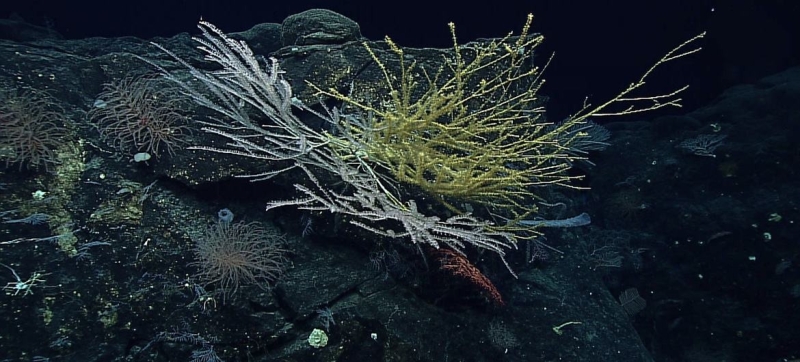
Deep-sea corals were among the treasures found during an expedition in the North Marianas Islands in the Pacific Ocean.
Almost two decades in the making, an international agreement to protect and sustainably use marine life in international waters and the seabed is set to come into force on Saturday, marking a major step forward in efforts to safeguard ocean ecosystems for decades to come.
Officially known as the Biodiversity Beyond National Jurisdiction (BBNJ) Agreement, the legally binding UN treaty covers ocean zones beyond national waters—namely, the “high seas”—and the international seabed area.
These regions make up over two-thirds of the ocean’s surface, representing more than 90 percent of Earth’s habitat by volume, since most of the living space on Earth is underwater.
Why It Matters
The BBNJ is designed to ensure that the high seas are managed sustainably for the benefit of all humanity. It is the first legally binding ocean instrument to provide for inclusive governance, with provisions on the engagement of Indigenous Peoples, local communities, and gender balance.
Once fully implemented, the Agreement is expected to make a vital contribution to addressing the “triple planetary crisis” of climate change, biodiversity loss, and pollution.
Speaking to UN News, Tanzanian diplomat Mzee Ali Haji, who led his country’s negotiation team during BBNJ discussions, said the agreement marks a major step in protecting international waters.
“Everyone should bear in mind that activities in the high seas are now regulated. For instance, when you pollute, you are responsible for your actions,” he said.
The BBNJ strengthens the existing international legal framework, building on the UN Convention on the Law of the Sea, which has governed maritime and seabed use and marine protection since 1994. It also provides more detailed guidance on managing biodiversity and aligns ocean governance with modern challenges such as climate change and the UN 2030 Sustainable Development Agenda.
What ‘Entry Into Force’ Means
After entry into force, the treaty becomes legally binding for the 81 nations that have ratified it, meaning they must implement it at the national level. The treaty enters into force this Saturday, 120 days after being ratified by at least 60 countries.
Who Has Signed Up
Countries that have ratified the BBNJ include several major economies, notably China, Germany, Japan, France, and Brazil. China’s participation is particularly significant, as it has large ocean-related industries, including shipbuilding, fisheries, aquaculture, and offshore oil and gas, exporting around $155 billion of ocean-related goods in 2023.
The US, the world’s largest economy, is a top exporter of ocean-related goods ($61 billion). Although it adopted the treaty in 2023, it has not yet ratified it, as the Senate has not acted. India adopted the treaty in 2024, but domestic legislation on ratification is still pending. The UK introduced legislation in 2025 but has yet to ratify. Russia remains among the minority that has neither adopted nor ratified the treaty, citing the need to preserve existing governance frameworks and ensure freedom of navigation and shipping in international waters.
Next Steps
Despite the reluctance of some major economies, Mr Haji remains positive about the BBNJ’s impact.
“Developing countries and small island nations need support,” he said. “We expect that, over time, more countries will accept this agreement because it will help them. Protecting the high seas is everyone’s responsibility.”
The door remains open for more countries to ratify, which will strengthen the treaty. Implementation, including enforcement against violations, will be key. According to the agreement, the first meeting to monitor progress on both fronts will take place no later than one year after the treaty’s entry into force.