

- Global Warming May Exceed 1.5°C, but Recovery Is Possible |
- Three Tourists Die, Two Missing at Himchari Beach |
- Road crashes claim over 1.25 lakh lives from 2014 to June 2026: BJKS |
- Juvenile Crime in Bangladesh: Causes and Ways to Prevent It |
- Trade, Energy, Economic Coop, Rohingyas to Feature Dhaka-Tokyo Talks |
Global Warming May Exceed 1.5°C, but Recovery Is Possible
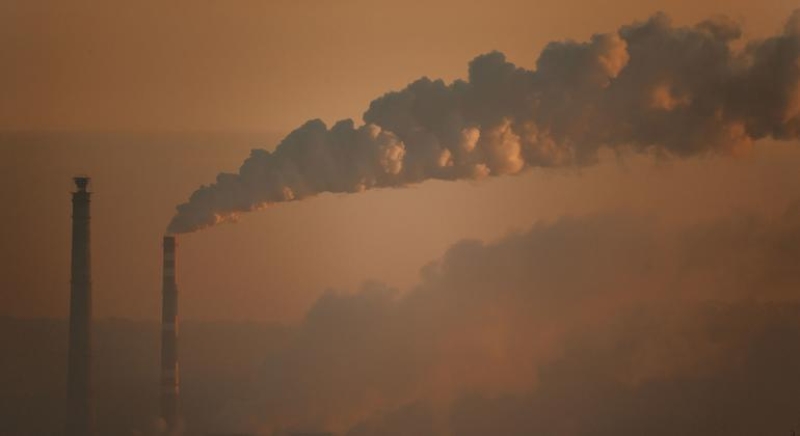
After decades of not cutting emissions enough, the world will very soon pass the 1.5°C warming limit and it can no longer be avoided, according to the UN Environment Programme.
Global temperatures are expected to exceed the 1.5°C threshold above pre-industrial levels, but countries must urgently cut greenhouse gas emissions to limit the overshoot and bring warming back below the internationally agreed target by the end of this century, according to a new UN report.
The Emissions Gap Report 2026: The Point of Return, published on Wednesday by the UN Environment Programme (UNEP), outlines a scenario in which peak warming is limited to around 1.7°C to 1.8°C by mid-century before temperatures return to the 1.5°C threshold.
Achieving this outcome would require cutting emissions by 18 per cent by 2030, 45 per cent by 2035 and 69 per cent by 2040, compared with 2025 levels.
‘Overshoot is not surrender’
UN Secretary-General António Guterres said exceeding the 1.5°C threshold would not mean the world had lost the opportunity to limit long-term warming.
“Overshoot is not surrender,” he said in a message accompanying the report. “We can still keep it as small and as short as possible – and bring temperatures back below 1.5 degrees by the end of the century.”
The report highlights growing opportunities to accelerate climate action. Since the adoption of the 2015 Paris Agreement, renewable energy has expanded rapidly, coal and oil supplies have grown more slowly than previously projected, and climate policies have helped reduce emissions in several places.
UNEP Executive Director Inger Andersen warned that every additional fraction of a degree and every additional year of warming above 1.5°C would increase climate risks, including deadly floods, heatwaves and wildfires.
“We must pull out all the stops to minimize peak warming and return to 1.5°C by the end of the century,” she said, stressing that the goal remains achievable.
A warmer planet, worse outcomes
If current climate policies continue, global warming could reach 2.8°C this century and rise further thereafter, the report warns.
Even if countries fully implement their existing national climate action plans, known as nationally determined contributions (NDCs), and maintain similar efforts, warming is projected to reach around 2.6°C.
The report says these projections are worse than those published last year, citing the United States' withdrawal from the Paris Agreement and revised estimates of historical emissions.
New climate commitments submitted since the previous emissions report have made little difference to the overall outlook, it adds.
Nevertheless, the report argues that returning to or below the 1.5°C threshold remains possible, pointing to evidence that climate policies have already helped reduce emissions.
Turning commitments into action
The report calls for faster implementation of goals identified during the first Global Stocktake, a process conducted from 2021 to 2023 to assess collective progress towards the Paris Agreement's objectives.
Key priorities include:
Tripling renewable energy capacity and doubling the annual rate of energy efficiency improvements by 2030.
Shifting away from fossil fuels in energy systems.
Reducing emissions of greenhouse gases other than carbon dioxide.
Halting and reversing deforestation and forest degradation.
However, progress towards most of these goals remains insufficient, the report says.
The second Global Stocktake, which begins next month at the COP31 UN climate conference in Antalya, Türkiye, could reinforce priority areas for emissions reductions, extend quantified goals to 2035 and 2040, and establish clearer targets for existing commitments.
The report also outlines benchmarks for limiting the temperature overshoot.
For example, reducing the share of coal, oil and gas in total energy supply by 2035 would require cuts of at least 55 per cent, 15 per cent and five per cent, respectively, compared with 2025 levels.
By 2040, the required reductions would increase to at least 75 per cent for coal, 30 per cent for oil and 35 per cent for gas.
The report stresses that rapid, sustained emissions reductions and stronger implementation of existing commitments are essential to limit peak warming and bring global temperatures back towards the Paris Agreement's 1.5°C goal.