

- El Niño Could Threaten 347 Million Children Worldwide |
- PM Assures Support for Waste-to-Fuel Technology |
- CJP founder Abhijeet Dipke detained after flight lands in Delhi |
- India’s young return to streets as anger against EC and Modi grows |
- Dhaka’s air quality 4th worst in the world this morning |
El Niño Could Threaten 347 Million Children Worldwide
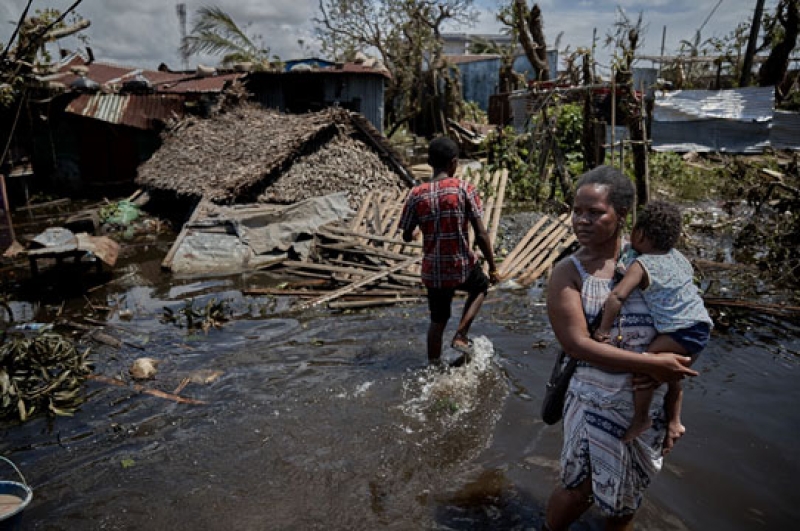
A mother and her child stand amid the wreckage of their destroyed home in Toamasina, Madagascar, following a devastating cyclone.
The 2026–2027 El Niño cycle could be one of the strongest on record, threatening the health, education, safety and development of more than 347 million children worldwide, the United Nations Children’s Fund (UNICEF) has warned.
The climate phenomenon could bring unusually wet and dry conditions to different parts of the world, triggering extreme weather events such as droughts, floods and heatwaves. These could worsen existing humanitarian crises and disrupt essential services.
“For children, El Niño is far more than a weather pattern. It can mean increased displacement, malnutrition, water shortages, and disease outbreaks,” UNICEF Executive Director Catherine Russell said, stressing the need for preventive action before the worst impacts emerge.
Nearly 1.1 billion children worldwide are already exposed to at least three overlapping climate hazards, including drought, extreme heat and flooding. The approaching El Niño cycle could affect children and communities in nearly 100 countries and territories between October and December 2026.
Rohini Sampoornam Swaminathan, UNICEF’s statistics and monitoring manager, said children were particularly vulnerable because of their developmental stage and dependence on caregivers and essential services.
These factors limit their ability to withstand climate shocks, especially when extreme weather disrupts basic services, she said.
“Communities may not have fully recovered from one shock before another one strikes, causing the impacts to compound over time,” Swaminathan added.
Asia-Pacific Faces Greatest Risk
The Asia-Pacific region is projected to face the greatest impact, with around 190 million children estimated to be at risk. East and Southern Africa could see another 41 million children exposed to climate shocks, alongside 41 million in Latin America and the Caribbean.
An estimated 22 million children are vulnerable in Europe and Central Asia, while 20 million each could be affected in the Middle East and North Africa and in West and Central Africa.
The effects of El Niño are expected to vary considerably by region and could intensify existing humanitarian emergencies. Climate shocks that some communities can manage may develop into severe humanitarian crises in areas already struggling with poverty, conflict or inadequate services, Swaminathan said.
Colombia, Papua New Guinea, Fiji and the Philippines are forecast to face unusually dry conditions, threatening agricultural production and worsening water scarcity. These pressures could increase the risks of acute malnutrition and other adverse health outcomes among children.
By contrast, parts of the Greater Horn of Africa could experience unusually heavy rainfall. Somalia faces particular risks from river and flash flooding, which could displace communities and increase the spread of waterborne diseases.
Climate Shocks Threaten Children’s Safety
Weather-related disasters displaced more than 20,000 children a day between 2016 and 2023, according to figures cited by UNICEF.
Swaminathan warned that further flooding could force more families from their homes into overcrowded temporary shelters, increasing risks to children’s safety and protection.
Children living amid prolonged conflict and humanitarian emergencies, including in Chad and Afghanistan, face particularly severe threats. Many already experience extreme hunger, displacement and limited access to essential services, leaving them with little protection against additional climate shocks.
Education is another major concern. Severe droughts and floods could lead to school closures, lower attendance and rising dropout rates. Extreme weather disrupted the education of an estimated 171 million students worldwide in 2025 alone.
School disruptions can expose children to greater risks of violence, exploitation and child marriage, Swaminathan warned. Girls are particularly vulnerable because school closures can increase their caregiving responsibilities at home and restrict their access to healthcare, nutrition and other essential services.
“When girls leave school, they are often less likely than boys to return,” she said.
UNICEF Urges Action Before Crisis Peaks
UNICEF estimates that every US$1 invested in disaster risk reduction and prevention can save up to US$15 in recovery costs. Despite the potential benefits, less than 1% of humanitarian funding is allocated to anticipatory action, even when forecasts provide months of warning.
The agency is urging governments, donors and humanitarian partners to invest in preventive measures before the worst impacts occur. Priorities include strengthening climate resilience, protecting essential services and ensuring humanitarian access to vulnerable communities.
Swaminathan also stressed the need to include children with disabilities in disaster preparedness plans, noting that they already face significant barriers to education, healthcare and nutrition.
Inclusive planning is essential to address structural inequalities and ensure that vulnerable children are not overlooked, she said.
“Despite efforts to plan for disasters, most resources are mobilised only after the damage occurs, and the focus is often on the immediate response phase of a crisis,” Swaminathan said.
With forecasts providing months of warning, she urged governments, donors and partners to act early by investing in preventive measures before needs escalate and impacts peak.
Building resilience requires more than infrastructure and early warning systems, she added. It also means strengthening the services and institutions children depend on and addressing the inequalities that leave some communities far more exposed to climate shocks.