
- Uncertainty over possible US-Iran talks as Trump extends ceasefire |
- Bangladesh eyes broader bilateral engagements with African nations |
- Trump Extends Iran Ceasefire, Seeks Time for Talks |
- SSC and Equivalent Exams Begin Nationwide |
- US, Iran Signal War Readiness as Talks Hang in Balance |
Nations Pledge $3.9bn to Boost Global Environment Fund
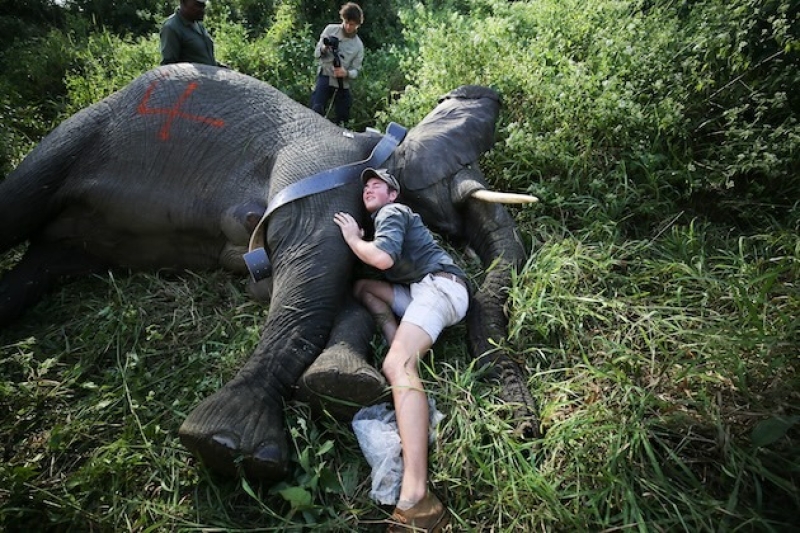
The Global Environment Facility (GEF) announced that donor countries pledged an initial USD 3.9 billion to the facility for the ninth replenishment cycle, indicating that nature remains a priority, as in this image, where a veterinary team applies a collar to a sedated elephant in KwaZulu-Natal, South Africa, as part of an ambitious project aimed at conserving the animals.
With just four years left to meet a series of global environmental targets, governments are moving to strengthen one of the world’s main environmental funds, the Global Environment Facility (GEF), with a $3.9 billion pledge.
The funding will form the backbone of the GEF’s ninth replenishment cycle, known as GEF-9, a four-year financing round running from July 2026 to June 2030. These years are widely seen as decisive for slowing biodiversity loss, tackling pollution and keeping climate goals within reach.
While the $3.9 billion pledge signals renewed momentum, it comes at a time of deepening environmental strain. Ecosystems continue to decline, coral reefs are bleaching at scale, and small island states are already grappling with the economic and social fallout of environmental change.
“This replenishment sends a clear message: the world is not giving up on nature,” said Claude Gascon. He noted that donor countries had “risen to the challenge and made bold commitments towards a more positive future for the planet” despite competing global priorities.
“The coming four years of the GEF-9 cycle will reflect this high-ambition push to achieve the 2030 environmental goals,” he added.
The GEF, the world’s largest multilateral environmental fund, supports developing countries in meeting commitments under major global agreements on climate change, biodiversity, land degradation, chemicals and ocean governance. Since its establishment, it has provided more than $27 billion in grants and mobilised a further $155 billion in co-financing.
Rewiring Economies Around Nature
At the centre of the new funding cycle is a push towards what the GEF calls “nature-positive development”. It aims to embed environmental value into economic decision-making rather than treating it as a secondary concern.
This includes reworking systems that drive environmental degradation, such as food production, energy, urban development and public health, so they operate within ecological limits.
The strategy also places strong emphasis on attracting private investment. Around 25% of GEF-9 resources are expected to be used to mobilise private capital, reflecting a growing recognition that public funding alone cannot close the global environmental financing gap.
Focus on the Most Vulnerable
The allocation of funds carries a clear political signal.
At least 35% of resources are expected to go to Least Developed Countries and Small Island Developing States (SIDS), which contribute the least to environmental degradation but face some of its most severe impacts. A further 20% is earmarked for Indigenous Peoples and local communities.
For Caribbean nations, where coastal erosion, stronger storms and coral reef loss are already reshaping economies, the funding could prove significant if it translates quickly into action on the ground.
“We need multilateral cooperation more than ever to protect our planet for future generations,” said Niels Annen, describing the replenishment as a “joint effort” between countries in the Global North and South. “Environmental action and sustainable development have to go hand in hand.”
Support has also come from Spain and Mexico, with Inés Carpio San Román highlighting the importance of effective multilateralism, while Mexico backed country-driven solutions to global environmental challenges.
Calls to Deliver Results
Civil society groups have welcomed the increased emphasis on inclusion, particularly the allocation for Indigenous Peoples and local communities.
“This will strengthen a whole-of-society approach,” said Faizal Parish. Meanwhile, Aliou Mustafa said the shift reflects efforts to place Indigenous groups “at the centre of decision-making.”
Still, expectations are high and time is short.
“The environmental crises we face are accelerating,” said Richard Bontjer, describing the replenishment as “a vote of confidence” while stressing that “every dollar must count.”
With the 2030 deadline approaching, the success of this funding round will ultimately be judged not by the size of the pledges but by how quickly they translate into measurable gains, including restored ecosystems, protected coastlines and more resilient economies.
For countries on the frontlines, particularly in the Caribbean, the $3.9 billion represents more than another funding cycle. It marks a narrowing window of opportunity.
Additional pledges are expected before the end-of-May GEF Council meeting, where countries will finalise the size and ambition of the four-year funding round.
The 71st GEF Council meeting will be held in Samarkand from May 31 to June 3, 2026, ahead of the Eighth GEF Assembly, where individual country pledges will be formally announced.