

- US to Pause Immigrant Visas for 75 Countries Including Bangladesh |
- 11-Year Run of Record Global Heat Continues: UN Agency |
- Gaza Ceasefire Not Enough as Children Continue to Die |
- Bangladesh Sets Guinness Record With 54 Flags Aloft |
- Gambia Tells UN Court Myanmar Turned Rohingya Lives Hell |
Govt Plans BPC LPG Imports to Stabilise Domestic Market
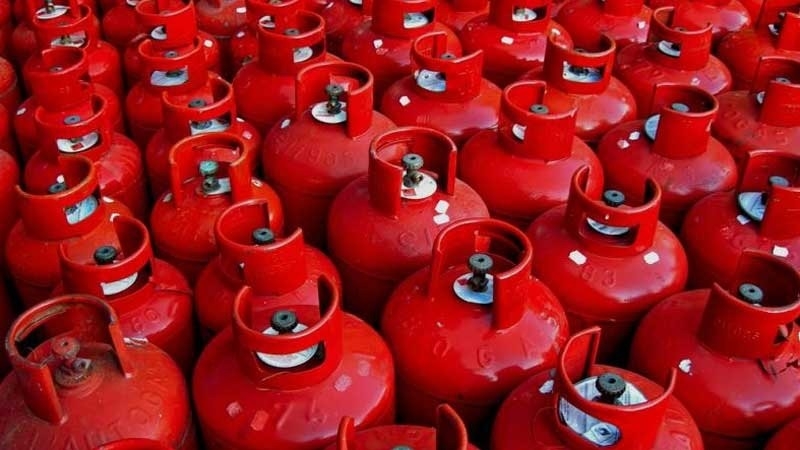
The government is moving to import liquefied petroleum gas (LPG) through the state-owned Bangladesh Petroleum Corporation (BPC) in a bid to stabilise the domestic market and shield consumers from artificial shortages and sharp price fluctuations.
As part of the plan, BPC has sought approval to import LPG under government-to-government (G2G) arrangements. A formal proposal was sent to the Ministry of Power, Energy and Mineral Resources on 10 January.
Energy Adviser Muhammad Fouzul Kabir Khan confirmed the initiative, saying the government intends to authorise BPC to import LPG to reduce Bangladesh’s heavy reliance on private sector operators for meeting domestic demand.
He said the move would allow the government to play a more active role in market management, particularly during supply disruptions, and help curb syndicate-driven price manipulation.
BPC Chairman Md Amin Ul Ahsan said sourcing LPG from the same international suppliers that already provide fuel oil to Bangladesh could create a more competitive and predictable market environment.
Private sector operators have also welcomed the proposal, noting that BPC’s involvement could ease supply constraints if LPG is imported at competitive prices and distributed through existing private networks.
Private sector dominance
At present, LPG import and distribution in Bangladesh are fully controlled by private companies, with no direct government involvement in imports. This has limited the authorities’ ability to intervene effectively during shortages or periods of abnormal price volatility.
Bangladesh’s annual LPG demand stands at around 17 lakh tonnes and continues to rise. Industry estimates suggest demand could grow to between 25 lakh and 30 lakh tonnes by 2030.
Currently, BPC meets only about 1.33 percent of domestic demand, which comes as a by-product of crude oil processing at the Eastern Refinery.
The government’s decision follows a recent intensification of LPG shortages in the local market. Despite multiple meetings with traders, officials were unable to bring the situation under control, as operators placed various demands, including tax relief.
Fouzul Kabir Khan said BPC would be permitted to import LPG under G2G deals if its existing foreign fuel suppliers agree to supply the product.
“This will enable the government to stabilise the market and break syndicates,” he said.
Azam J Chowdhury, former president of the LPG Operators Association of Bangladesh, described the proposal as a positive development, saying lower-cost imports by BPC could help address current supply shortages.
However, he pointed out that BPC lacks LPG storage facilities and suggested that imported LPG should be supplied to private operators after import.
Infrastructure constraints
In its letter to the energy ministry, BPC noted that it does not have the necessary infrastructure for LPG unloading and storage, including jetty-based pipelines, flow meters and storage tanks.
Private operators currently unload LPG from carrier vessels through lighter ships in deep-sea areas near Kutubdia and store the fuel at their own terminals. BPC said it could adopt a similar method by using lighter vessels owned by interested private operators.
The corporation proposed preparing a list of willing operators in consultation with the LPG Operators Association, along with decisions on import volumes, payment mechanisms, and unloading and distribution procedures.
Energy Division officials said a meeting held on 7 January, chaired by the division’s secretary, reviewed the proposal to import LPG through BPC and supply it to private companies, and decided to forward it to the ministry.
BPC also noted that it has previously imported additional fuel oil by seeking quotations from enlisted G2G suppliers during periods of sudden demand or supply shortages. Since these suppliers are large refiners capable of producing LPG, the corporation said feasibility assessments could be carried out by seeking quotations from them.
In parallel, Bangladesh Bank has taken steps to support LPG imports. A circular issued on 12 January classified LPG as an industrial raw material, allowing businesses to import it on deferred payment terms of up to 270 days under suppliers’ or buyers’ credit.
The central bank said the policy reflects the multi-stage nature of LPG processing, as the fuel is imported in bulk and later bottled for distribution.