

- Rahul, Priyanka Detained Outside Modi Residence |
- Indian Students Resume Protests After Crackdown |
- One year after Milestone tragedy: memories mark a day of grief |
- GP auditor flags Tk 125.80 bn BTRC tax demand as 'unresolved risk' |
- Govt Unveils 2027 Hajj Packages, Cuts Airfare |
Bangladesh Moves to Build Strategic Energy Reserves
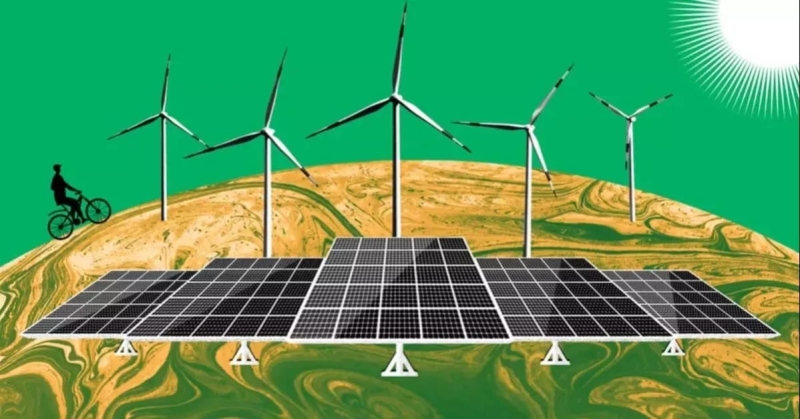
Bangladesh has launched a major initiative to establish Strategic Energy Reserves and expand fuel storage infrastructure as part of a broader plan to strengthen energy security against global market volatility, geopolitical tensions and emergency supply disruptions.
According to a budget document, the government aims to build strategic fuel reserves and related storage facilities to ensure uninterrupted energy supplies while maintaining regional balance and keeping energy prices affordable.
As part of the strategy, authorities are reviewing the construction of an additional LNG terminal at Moheshkhali, complementing the country's two existing floating LNG terminals.
The government is also in the final stages of land acquisition and consultant appointment for a land-based LNG terminal at Matarbari, Moheshkhali, while preparing an action plan to connect gas from the Bhola region to the national gas grid.
To improve efficiency in gas distribution, the installation of prepaid gas meters is being accelerated to reduce wastage, eliminate illegal connections and minimise system losses.
The budget outlines a broader policy of energy source diversification to reduce reliance on imports from the Middle East by expanding energy cooperation with suppliers in Asia, Africa and Europe.
The government also plans to attract greater private investment through investment-friendly policies and expanded Public-Private Partnerships (PPP) in the energy sector.
To strengthen fuel logistics, initiatives are underway to maximise the use of the country's 601.5 kilometres of fuel transportation pipelines, operationalise the Single Point Mooring (SPM) facility for petroleum unloading and expand refining and storage capacity.
A phased plan has been adopted to establish a new crude oil refinery with an annual capacity of 5 million metric tonnes in Chattogram or another coastal industrial zone. The government is also moving ahead with the Second Eastern Refinery Limited (ERL-2), which will have an annual refining capacity of about 3 million metric tonnes.
In addition, a Smart Fuel Distribution Monitoring System has been introduced in 2,722 fuel tank lorries to strengthen oversight of petroleum transportation.
The government has also set production targets of 600,000 metric tonnes of coal and 1.4 million metric tonnes of stone for FY2026–27, alongside new development projects for the Barapukuria Second Phase and Dighipara Coal Field.
The budget also highlights plans to evaluate valuable minerals, including zircon and monazite, found in the sands of the Jamuna and Meghna rivers, while advancing the digital transformation of services provided by the Department of Explosives.
To boost domestic energy production, BAPEX plans to conduct 270 kilometres of geological surveys, 700 line-kilometres of 2D seismic surveys and 700 square kilometres of 3D seismic surveys between FY2025–26 and FY2027–28. The company also plans to drill 69 wells and carry out workover operations on 31 existing wells using its own drilling rigs.
The government has also announced a new offshore bidding round, opening nine shallow-water blocks and 15 deep-water blocks to international oil companies under revised production-sharing contracts designed to safeguard national interests while attracting foreign investment.
Authorities are also planning to procure two new exploration rigs for BAPEX and expand exploration of offshore gas, unconventional hydrocarbons and critical minerals as part of efforts to strengthen long-term energy security.