

- New Disasters Hit Rohingya Refugees in Bangladesh |
- Presidential Election Set for August 20 |
- PM Urges Eco-Friendly Steps to Curb Riverbank Erosion |
- Moheshkhali LNG Terminal Resumes Partial Operations |
- Dhaka Condemns Hasina's Media Event in New Delhi |
Who will power Asia's next decade?
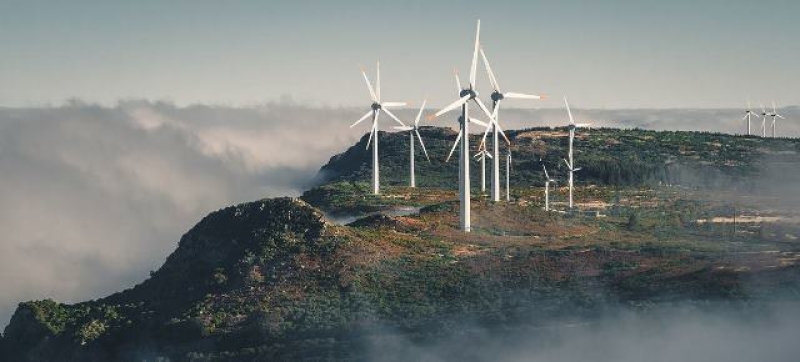
Electricity generated by wind farms reduces the reliance on coal-powered energy. Unsplash - Fabian Wiktor
Taejun Kang
Asia’s energy transition took centre stage last week with the Asian Development Bank unveiling a US$50 billion plan to connect power grids across the region. The proposed Pan-Asia Power Grid Initiative (PAGI) aims to link existing regional networks and create the foundations for a more integrated clean energy market, helping countries balance supply and demand as electricity consumption rises from electrification, artificial intelligence (AI) data centres and extreme heat.
This even as the multilateral bank warned that Asia is suffering the lender’s worst-case scenario under the global energy crisis, with 15 countries seeking emergency loans in response to the Iran war.
The strain of meeting rising power demand was also evident in our coverage of the data centre boom. A new Wood Mackenzie report finds that regulators across Asia-Pacific increasingly requiring developers to provide battery storage, support grid stability and manage curtailment risks before securing access to constrained electricity networks. This signals a structural shift in power system management as AI and cloud infrastructure scale, with grid access emerging as a key constraint on future data centre expansion.
Meanwhile, South Korea launched a new US$30 million programme to recycle components from end-of-life hydrogen vehicles, reflecting growing efforts to recover critical minerals and build more circular clean energy supply chains.
Not all trends are moving in the same direction, however. Analysis from Rystad Energy last week suggests Asia’s coal demand could rise sharply in the coming years as LNG supply disruptions tighten gas markets and prompt utilities to rely more heavily on coal-fired power generation, underscoring the tension between energy security and decarbonisation.
This week, we also published a special report on the Philippines’ offshore wind ambitions, examining how much of the country’s large project pipeline is likely to be bankable amid high costs, social concerns and geopolitical uncertainties, and exploring the role of Chinese players in the sector.
Taejun Kang is the Deputy Editor of EcoBusiness, singapore