

- Dhaka-Seoul Ties Set for Strategic Partnership Push: Envoy |
- BSEC vows investor protection as top priority in IPO reform drive |
- Facebook post triggers tension in Shahbagh JCD-DUCSU brawl |
- Grameen Kalyan plans 300 healthcare centres in 64 districts |
- Italy dismisses replacing Iran at the World Cup, as Trump official says |
Petrobangla to Import 11 LNG Cargoes in May
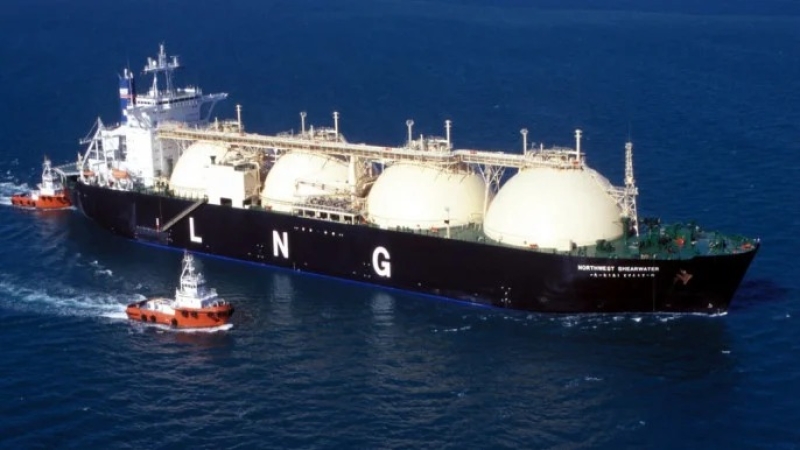
Representational Image.
The government has decided to import 11 liquefied natural gas (LNG) cargoes in May to ensure uninterrupted gas supply for power generation during the peak summer season, despite a sharp rise in global prices.
Officials said the move aims to prevent gas shortages at power plants and reduce the risk of load-shedding at a time when electricity demand is expected to surge in the hot and humid month ahead.
Earlier, Bangladesh had considered reducing May imports to nine cargoes due to supply uncertainty and rising prices linked to tensions in the Middle East and disruptions in the Strait of Hormuz. However, that plan was later dropped over concerns it could worsen power shortages.
Petrobangla officials said maintaining the original import target is necessary to support gas-fired power generation, fertiliser production for the Boro season and industrial demand.
Petrobangla Director (Finance) AKM Mizanur Rahman said importing 11 LNG cargoes would allow the supply of up to 935 million cubic feet per day (mmcfd) of gas to power plants, enough to generate more than 5,000MW of electricity.
He said the import decision was taken after reviewing demand from the power, fertiliser and industrial sectors.
So far, Petrobangla has secured four LNG cargoes for May, including two from the spot market and two under short- and long-term contracts. The remaining seven are expected to be finalised in the coming days.
Rising import cost
The import plan comes at a heavy financial cost as global LNG prices have risen sharply in recent weeks.
According to Petrobangla data, the average spot LNG price increased to $21.77 per MMBtu in March and April, up from $10.18 earlier this year, marking an increase of nearly 114 percent.
Officials said importing 11 cargoes in May alone would require an additional Tk4,500 crore compared with earlier cost estimates made before the recent market shock.
To manage the higher cost, the government has allocated up to Tk17,000 crore in additional subsidies on top of the Tk6,000 crore originally set aside for LNG imports in the FY2025-26 budget.
Petrobangla officials estimate that around Tk9,000 crore in extra spending may be needed for LNG imports in April and May combined.
Greater reliance on spot market
Supply disruptions have also forced Bangladesh to depend more heavily on the spot market.
Before the recent crisis, the plan was to source nine of the 11 May cargoes through long- and short-term contracts, with only two to be bought from the spot market.
Under the revised plan, eight cargoes are now expected to come from the spot market, while only three will arrive under existing contracts.
Officials said the shift followed force majeure declarations from several major suppliers, including firms from Qatar, Oman and the United States.
Of the three contracted cargoes, two will come from QatarEnergy Trading and one from Saudi Arabia’s Aramco Trading Company, with supplies originating from Angola and the United States.
To secure more LNG, Rupantarita Prakritik Gas Company Limited (RPGCL) on 1 April invited 24 international suppliers to submit price offers for three spot cargoes scheduled for delivery in early May.
Power plants to get priority
Petrobangla said gas supply to power plants will remain the top priority in May to help keep electricity generation stable.
The company plans to supply up to 935mmcfd of gas to the power sector. In Bangladesh, around 100mmcfd of gas can generate roughly 500 to 550MW of electricity.
Gas supply to power plants has already improved in early April. As of 5 April, average supply stood at 875mmcfd, while peak supply reached 913.2mmcfd on the same day.
However, this still remains well below the total demand for power generation, which stands at more than 2,500mmcfd.
For May, the fertiliser sector is expected to receive around 85mmcfd of gas, much lower than its total requirement, while the rest will be distributed among industries and households.
Overall gas supply is projected to remain between 2,570 and 2,650mmcfd.
Summer demand pressure
Officials warned that electricity demand may rise to as high as 17,000MW in May, especially if rainfall remains low.
Last year, peak electricity generation reached 16,018MW in May against a demand of 16,700MW, resulting in load-shedding of 651MW.
According to the Bangladesh Power Development Board, gas-fired plants account for 11,794MW of installed capacity, or about 43 percent of the country’s total power generation capacity.
Officials said the government is now trying to strike a balance between maintaining fuel supply and coping with mounting import costs amid ongoing volatility in the global LNG market.