

- World Bank to Provide $150.75m for Bangladesh RAISE Project |
- Press Secretary Alleges Indian Media, AL Spread Disinformation |
- Hasina Gets 10 Years in Purbachal Plot Corruption Cases |
- NASA Finds Ammonia Compounds on Jupiter Moon Europa |
- Remittance Inflow Surges 45% to $3.17bn in January |
January Exports Jump 11% to $4.41bn as Trade Steadies
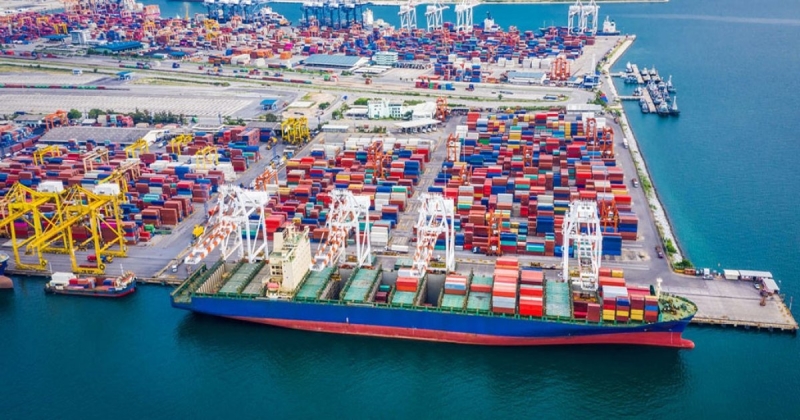
Bangladesh’s exports posted a solid rebound in January, rising 11.22% month-on-month to $4.41 billion, signalling improving trade momentum despite persistent global economic pressures.
Export earnings climbed from $3.97 billion in December 2025 to $4.41 billion in January, reflecting a strong double-digit monthly increase, according to the latest data released by the Export Promotion Bureau (EPB) on Sunday.
However, overall performance for the July–January period of FY2025-26 remained slightly subdued. Total exports during the seven months stood at $28.41 billion, down from $28.97 billion recorded in the same period of the previous fiscal year, underscoring the continued impact of challenging global trade conditions.
The readymade garments (RMG) sector maintained its dominance, earning $22.98 billion during the period and registering an 11.77% year-on-year growth. The performance points to sustained global demand for Bangladeshi apparel and improved competitiveness of the sector.
Export results across other major sectors were mixed. Among the top six export segments excluding RMG—leather and leather goods, jute and jute goods, agro and agro-processed products, home textiles, light engineering, and frozen fish—both positive and negative trends were observed.
Leather and leather goods, jute and jute goods, home textiles, plastic and plastic goods, and light engineering products recorded growth on both a year-on-year and month-on-month basis, indicating gradual diversification gains.
In terms of destination markets, the United States remained Bangladesh’s largest export market during July–January of FY26, with shipments worth $5.22 billion. Exports to the US rose by 1.64% over the corresponding period, with year-on-year growth of 3.59% and month-on-month growth of 2.24%.
Exports to major European markets also showed signs of recovery. Germany and the United Kingdom ranked as the second- and third-largest destinations, earning $2.85 billion and $2.78 billion respectively.
Earnings from exports to Great Britain, Spain and the Netherlands increased on a corresponding period, year-on-year and month-on-month basis, reflecting a broader positive turnaround in key international markets.