

- Spain Beat France to Reach World Cup Final |
- Ismail Elfath, referee for England-Argentina semifinal |
- BSEC approves liquidation of Vanguard AML BD Finance Mutual Fund One |
- 200 economists for urgent action to tackle AI's impact on jobs, economy |
- PM Launches National Startup Platform for Entrepreneurs |
Dollar Climbs Again After Weeks of Stable Rates
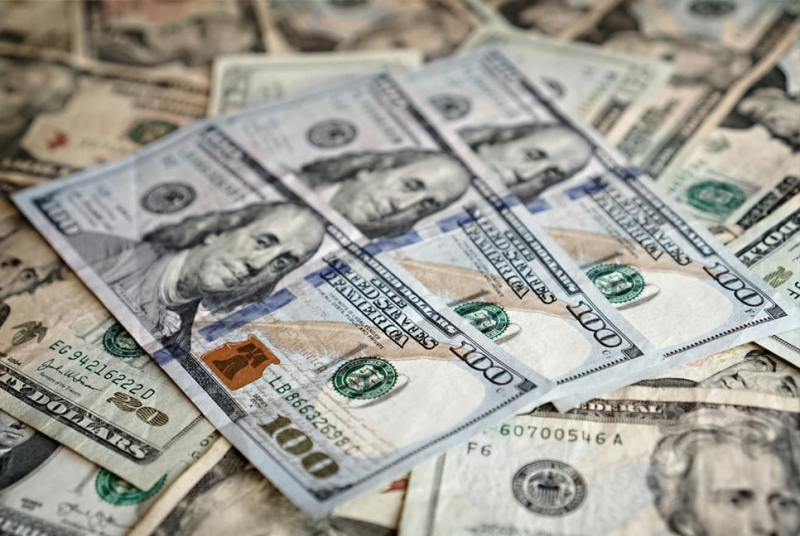
The US dollar resumed its upward trend in Bangladesh's foreign exchange market after more than two weeks of relative stability, with rates rising across the interbank market, commercial banks and the open market on Tuesday.
The increase has renewed concerns over further depreciation of the taka, although Bangladesh Bank said the movement was entirely driven by market demand rather than any policy shift.
According to interbank market data, the spot exchange rate reached Tk123.52 per US dollar on Tuesday, up from a low of Tk123.36.
On Sunday and Monday, both the highest and lowest interbank rates remained at Tk123.00, while on the previous Thursday—the last trading day of the week—the highest rate stood at Tk123.00 and the lowest at Tk122.85.
A year earlier, on July 9, the average interbank exchange rate was Tk122.01 per US dollar, meaning the greenback has appreciated by about Tk1.26 against the taka over the past year.
Bank, open market rates rise
The higher interbank rate has quickly been reflected in commercial bank quotations.
Several banks are now selling cash dollars at Tk124.50, while charging around Tk124.00 for opening import letters of credit (LCs).
On Monday, state-owned Sonali Bank and Janata Bank sold cash dollars at Tk123.00 and bought them at Tk122.00.
Among private lenders, Eastern Bank and City Bank quoted Tk124.50 for selling and Tk123.50 for buying US dollars.
The open market also recorded fresh gains, with money changers selling dollars for as much as Tk126.50 and buying them at around Tk126.20.
Last Thursday, the selling rate was Tk125.50, compared with Tk125.00 a week earlier.
A foreign exchange trader in Motijheel said demand continues to exceed supply.
"There is simply not enough supply to meet market demand, which is why prices are increasing," the trader said.
Bangladesh Bank blames stronger demand
Bangladesh Bank Executive Director and spokesperson Arif Hossain Khan attributed the latest rise to increased demand for foreign currency.
He said recent government payments had pushed up demand for US dollars, resulting in higher exchange rates.
"Demand for dollars has increased because of several government payments. If remittance inflows continue to rise, the exchange rate is expected to remain stable at the current level," he said.
He added that the central bank has not purchased dollars from commercial banks in recent days because market demand has remained strong.
IMF link dismissed
Despite the central bank's explanation, some bankers believe the latest adjustment coincided with the visit of an International Monetary Fund (IMF) mission to Dhaka.
The IMF has long encouraged Bangladesh to adopt a fully market-based exchange rate instead of an administratively managed system.
The visiting IMF delegation is holding discussions with the government on a new lending programme and has already met Finance Minister Amir Khosru Mahmud Chowdhury, Bangladesh Bank officials and representatives from the finance ministry and other agencies.
However, Arif Hossain Khan rejected suggestions that the IMF visit influenced the latest exchange rate movement.
"There is no connection between the IMF delegation's visit or its conditions and the recent increase in the dollar exchange rate. The rise is solely the result of higher market demand," he said.
Officials from Bangladesh Bank and commercial banks noted that the interbank exchange rate had remained unchanged at Tk122.85 for more than two weeks before the latest upward adjustment.