

- 360 Students Killed in Road Crashes in Six Months |
- PM Asks Doctors to Build Trust, Reduce $5bn Outflow |
- Kuakata's natural beauty destroyed by intense sea erosion |
- 461 stranded tourists evacuated from Sajek Valley |
- 30,000 marooned as Khowai embankment breaches in Habiganj |
DSE, BSEC, BFIU Unite to Combat Money Laundering
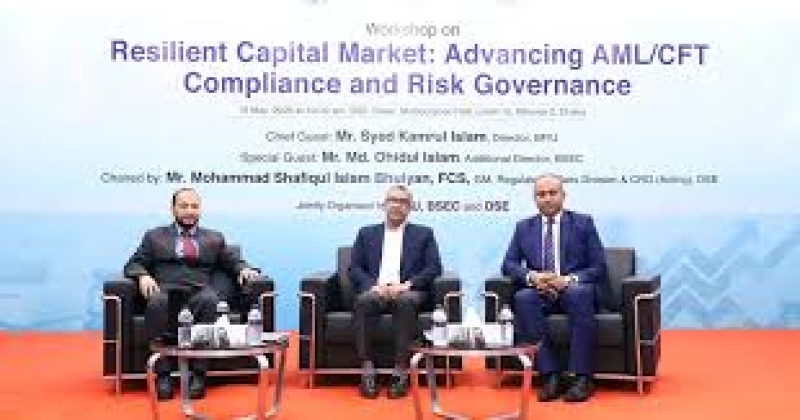
Bangladesh's key financial regulators convened on Wednesday at the Dhaka Stock Exchange PLC (DSE) to bolster the capital market's defences against money laundering and terrorist financing, underscoring growing concerns over illicit financial flows threatening investor confidence.
The workshop titled “Stable Capital Market: Progress in AML/CFT Compliance and Risk Management” was jointly organised by the Bangladesh Financial Intelligence Unit (BFIU), the Bangladesh Securities and Exchange Commission (BSEC) and the DSE.
Chaired by DSE General Manager and acting Chief Risk Officer Mohammad Shafiqul Islam Bhuiyan, the event brought together senior officials from all three institutions to assess implementation of anti-money laundering and counter-terrorist financing frameworks across the securities sector.
In his welcome address, Shafiqul Islam warned that the capital market now faces layered risks, from money laundering and terror financing to cyber-enabled financial crimes, insider trading and market manipulation, all of which erode investor trust and undermine sound governance of the financial system.
BSEC Additional Director Md Ohidul Islam, speaking as a special guest, stressed that effective implementation of the Anti-Money Laundering (AML) and Combatting the Financing of Terrorism (CFT) framework is indispensable for building a transparent, resilient and trust-based capital market.
He cautioned that illicit financial flows and laundering risks directly damage market integrity and pose a systemic threat to financial sector stability.
BFIU Director Syed Kamrul Islam, the chief guest, called for clearer and more actionable AML/CFT guidance for capital market participants.
A transparent, accountable and well-governed capital market, he said, plays a decisive role in attracting both domestic and foreign investors.
AML/CFT guidelines enforce strict protocols to prevent money laundering and terrorist financing, primarily focusing on risk-based approaches (RBA), Customer Due Diligence (CDD), and transaction monitoring.
Key requirements include identifying beneficial owners, conducting regular audits, reporting suspicious activities (STR/SAR), and complying with international standards, such as those from the Financial Action Task Force (FATF).
The workshop comes as Bangladesh's capital market regulators face intensifying pressure to align with international financial integrity standards ahead of upcoming FATF-related assessments, reports UNB.