

- Resumption of US Tests May Trigger Threats from Other Nuke Powers |
- Zubaida goes to Evercare again at night to stay beside Khaleda |
- Urgent earthquake preparedness underlined to minimise damage |
- International Day of Persons with Disabilities celebrated at Barura |
- Bangladesh achieves 97% typhoid vaccine coverage for children |
Urgent earthquake preparedness underlined to minimise damage
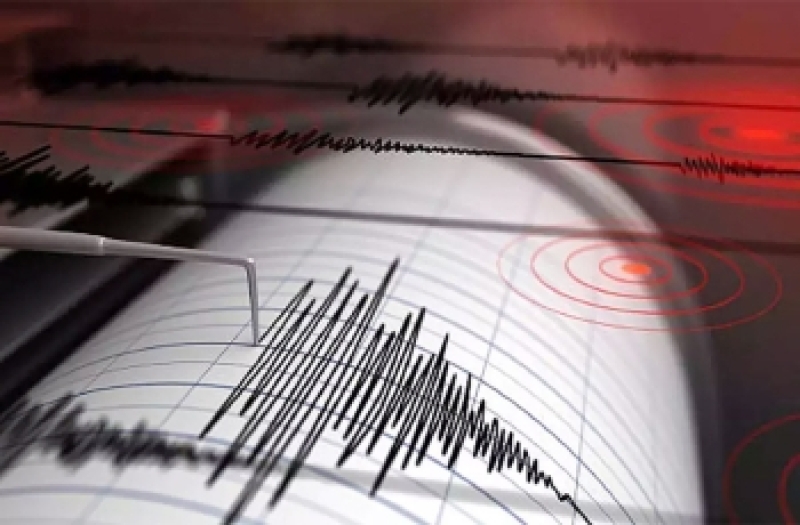
Earthquake
The need for adequate earthquake preparedness in view of seven successive tremors felt in Bangladesh since November 21 was emphasised at an open discussion organised by the Policy Dialogue Network at a restaurant in Khilgaon on Friday.
The open discussion attended by architects, planners and engineers plus social workers, imams of mosques and political workers also called for the creation of a society and state based on moral values so that people stop encroaching water bodies and open lands making cities and towns more disaster-prone.
The 5.7 magnitude quake of November 21 left clear indications of how disastrous could an earthquake of higher magnitude mean to Dhaka and other cities of Bangladesh.
Abu Nayeem Sohag of the Bangladesh Institute of planners said we all should take responsibility for disasters hitting Dhaka metropolis from time to time. The fire tragedy that killed fifty people at a Bailey Road restaurant could have been avoided if the shop has an emergency exit as required by the building code.
He said that children in Dhaka City suffer from repeated bouts with cold and cough as they have no exposure to sunlight due to construction of congested building leaving no space for this free source of vitamins that human body needs.
Mehtaj of Prime Civil Society pointed out that although there were cyclone and food preparedness programmes, little has been done for earthquake preparedness. In the event of an earthquake there should be advance preparation about who should stop the supply of electricity and gas to prevent a disaster from turning into a calamity.
Alauddin Quamrul Islam said that there has been little response to the statement from the Fire Service that they would not be able to undertake rescue operations in old Dhaka because of the narrow roads in the event of an earthquake.
Engineers Zahid explained how tectonic movements along geological faultlines create earthquakes with devastating consequences.
Mostafa Kamal Majumder, editor of GreenWatch Dhaka said there has been a casual approach to the threat of earthquakes because severe quakes have not hit the country for the last one century. After the Chattogram and Maheshkhali earthquakes of 1997 and 1999 that partially destroyed some structures and caused some deaths, the November 21 earthquake gave a severe jolt and killed 10 people making the people to think over the disaster. Six successive mild tremors that followed, the last one being on the 5th of December, were also reminders that most of their origins were in Bangladesh.
He suggested that the government should organise earthquake drills at regular intervals to make people prepared to respond in case a disaster strikes.
Mahmudul Hasan from BUET said that all constructions from now onwards should strictly follow building code. An early earthquake warning system should be devised to help people take safety measures as far as possible. The government should expedite the procurement of rescue equipment, widen narrow roads to make dwelling buildings accessible for management. All families living in buildings should have water, torch light and other equipment which would become extremely necessary in the events of an earthquake disaster, he added. – GreenWatch Dhaka News Desk