

- Garment Workers’ Protest Shuts Five Metro Rail Stations |
- Govt Forms Six-Member Wage Board for Garment Workers |
- Dhaka ranks 4th among world's most polluted cities this morning |
- Dhaka Launches Company-Operated Buses on Six Routes Today |
- FBI Blames North Korea for Record $6.3bn Binance Hack |
Tarique Rahman to Visit Saudi Arabia in Late November
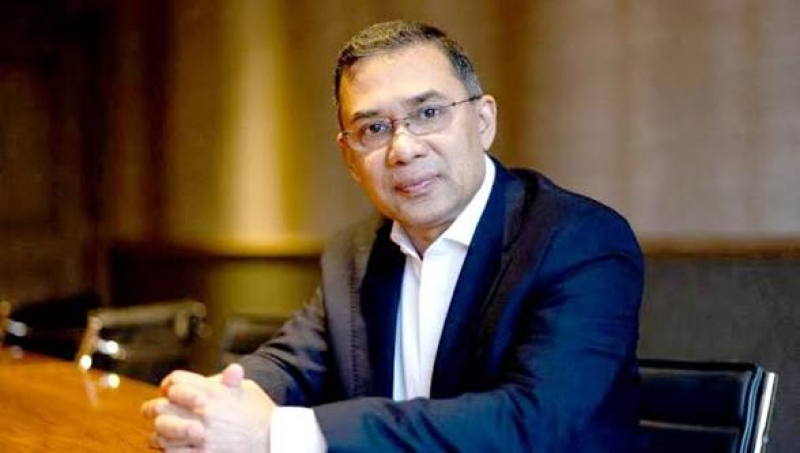
Prime Minister Tarique Rahman
Prime Minister Tarique Rahman is expected to visit Saudi Arabia in the second half of November at the invitation of Saudi Crown Prince Mohammed bin Salman. The proposed visit is considered significant as it would be his first trip to the kingdom as head of government following his party’s victory in nearly two-thirds of the parliamentary seats.
However, the prime minister’s itinerary has yet to be finalised, and the foreign ministries of the two countries are working on the arrangements.
The visit is not expected to be affected by the recent beheading of two Bangladeshi expatriates in Saudi Arabia, despite Bangladesh sending several letters to the Saudi authorities seeking explanations over the incident.
Diplomatic analysts say the situation in the Middle East is changing rapidly, with Saudi Arabia facing security challenges following Houthi attacks. Bangladesh has strongly condemned the attacks from the outset.
Foreign Affairs State Minister Humayun Kabir has said Bangladesh is prepared to respond to calls from the international community to help safeguard Islam’s holy sites. He has also indicated that Bangladesh would view positively a possible request to join the Mecca-related regional security framework, should its member countries invite it.
Analysts believe Bangladesh’s position on regional security could have a positive impact on the proposed visit, as Saudi Arabia has been expressing interest in expanding cooperation with Bangladesh beyond traditional areas.
According to a source at the Ministry of Foreign Affairs, Saudi Arabia is not only a major destination for Bangladeshi migrant workers but also an important partner as Bangladesh seeks to develop new relationships across the Middle East.
The two countries may discuss investment agreements, energy imports, regional and international issues, and continued Saudi support for the Rohingya cause.
Over the past several years, Saudi Arabia has expressed interest in broadening its relationship with Bangladesh beyond manpower exports.
During a meeting in Dhaka last August, Saudi Deputy Foreign Minister Waleed El Khereiji expressed interest in investment in fisheries, food, energy, renewable energy, information technology and artificial intelligence.
Saudi Ambassador to Bangladesh Abdullah Zafar H. Bin Abiyah recently described the next five years as potentially transformative for the two countries’ economic relationship. He also characterised Bangladesh as one of South Asia’s dynamic investment destinations.
More than 2.8 million Bangladeshi workers are currently employed in Saudi Arabia, making the kingdom Bangladesh’s largest overseas labour market.
Diplomatic sources said the proposed visit could focus on strengthening bilateral relations, increasing Saudi investment in Bangladesh, expanding trade and reinforcing economic cooperation. The two sides may also discuss sending more skilled Bangladeshi workers to Saudi Arabia and reaching new agreements on migration.
Defence cooperation and the possibility of Bangladesh joining a regional security framework involving Saudi Arabia, Pakistan and Türkiye may also come up for discussion. However, Pakistan and Türkiye, which are associated with the proposed framework, have reportedly indicated that there are currently no plans to admit new members. Bangladesh has nevertheless expressed interest in the issue.
Proposed Joint Fertiliser Plant
Bangladesh is also planning a major fertiliser plant in Saudi Arabia through joint investment to reduce its dependence on imported fertiliser and ensure long-term supplies, according to the Ministry of Agriculture.
The proposed facility would have an annual production target of one million tonnes of diammonium phosphate (DAP) fertiliser. If the project proceeds as planned, commercial production could begin in 2030.
Under the proposal, Bangladesh and Saudi Arabia would establish a joint venture with each government holding a 50% stake. Bangladesh would guarantee the purchase of all fertiliser produced by the plant for 20 to 25 years, while Saudi Arabia would ensure an uninterrupted supply of gas and other raw materials required for production.
The proposal envisages the two governments jointly financing 30% of the total investment, with each contributing an equal share. The remaining 70% would be raised through loans from Saudi Arabia’s financial sector.
The total cost of constructing the plant has not yet been finalised. Project costs, loan terms and commercial arrangements will be determined after technical and financial feasibility assessments.
Bangladesh’s share in the proposed venture would be handled by the Bangladesh Chemical Industries Corporation (BCIC), which operates under the Ministry of Industries and currently manages eight state-owned fertiliser factories. The joint venture’s board of directors is also expected to have equal representation from both countries.
Preparations are under way to sign a memorandum of understanding (MoU) during the prime minister’s proposed visit. The MoU would be preliminary and non-binding, meaning neither country would be legally obligated to implement the project simply by signing it.
Industries Secretary Abdun Naser Khan has said the proposal remains at an early stage, with the Ministry of Foreign Affairs and BCIC working on it.
After the MoU is signed, the project will undergo technical and commercial feasibility assessments. If both countries agree to proceed, they will negotiate final agreements covering investment, financing, raw-material supplies and fertiliser purchases.