

- Biman suspends Tuesday’s Dhaka-Dammam flight |
- First Phase of Union Parishad Polls Set for January 21 |
- PM Seeks Canadian Support for Energy, Agriculture, Climate Finance |
- Saudi-led coalition intercepts drone, Houthi ballistic missile |
- Houthi Attack in Riyadh Puts Bangladeshis at Risk |
Dhaka-Madrid ties to grow: Energy freedom should be BD’s goal
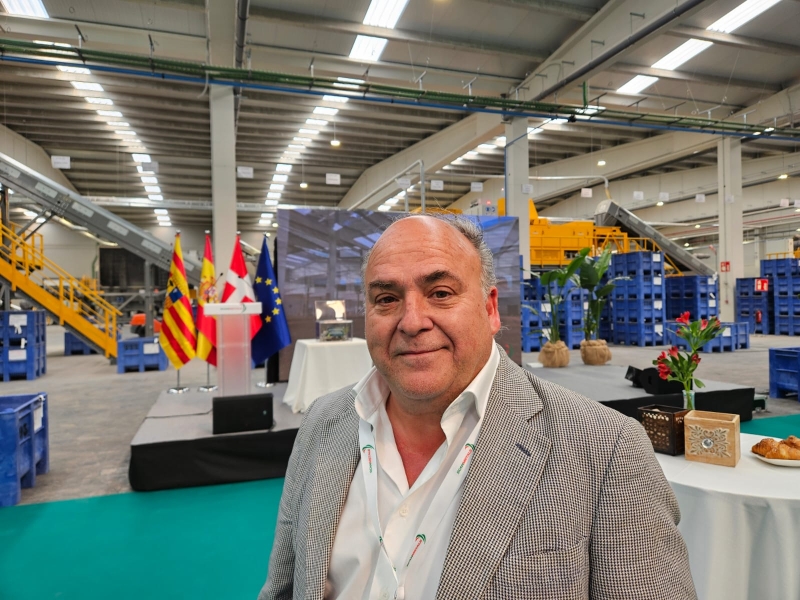
Bangladeshs Consul in Spain Antonio Bustos Herrando,
By Imtiaz Ahmed and Samia Tabassum
Bangladesh’s Honorary Consul in Spain Mr Antonio Bustos Herrando in an interview with Imtiaz Ahmed of the GreenWatch Dhaka said that the new government in Bangladesh represents an excellent opportunity to renew and strengthen relations between Dhaka and Madrid.
“Bangladesh is a country with enormous growth potential, and Spain has a lot to offer in sectors such as renewable energy, infrastructure, technology and water management. The important thing is to move towards broader economic cooperation that benefits both countries,” said Mr Antonio Bustos Herrando.
The rest of the interview is given below.
Q: How does Spain look at the New Government of Bangladesh?
A: I believe that the formation of a new government in Bangladesh represents an excellent opportunity to renew and strengthen relations between our two countries. Spain shares and supports the European Union's strategy of building closer relations with countries that have great potential for development, expanding international cooperation beyond the traditional major powers. In this context, the new Partnership and Cooperation Agreement initiated between the EU and Bangladesh in April 2026 is a very important step forward. I am confident that this new chapter will help strengthen our trade, economic and institutional relations, creating new opportunities and benefits for both countries.
Q: How do you view the Trade Relations between Spain and Bangladesh
A: Currently, trade between Spain and Bangladesh exceeds 4.3 billion euros per year. Spain is one of the main buyers of Bangladeshi products, especially textiles. On our side, Spain exports around 118 million euros to Bangladesh, mainly industrial raw materials, such as raw cotton, machinery, mechanical components, chemicals and dyes for the textile industry. I believe that over the next five years, we have a great opportunity to strengthen our trade relations. Bangladesh is a country with enormous growth potential, and Spain has a lot to offer in sectors such as renewable energy, infrastructure, technology and water management. The important thing is to move towards broader economic cooperation that benefits both countries.
Q: Can there by bilateral arrangement to promote Tourism between the two countries?
A: Spain is the second most visited tourist destination in the world, and in 2025 we welcomed nearly 97 million international tourists. Although we do not have exact figures on how many Bangladeshi citizens have visited Spain over the last five years, we know that there is a significant Bangladeshi community in Spain, with around 20,000 officially registered residents, mainly concentrated in Barcelona and Madrid. I believe there is great potential to increase travel between our two countries, both for cultural tourism and medical purposes, taking advantage of the high quality of Spain’s healthcare services and its attractiveness as a tourist destination.
Q: Does Spain find the Business Environment in Bangladesh good?
A: The Government of Bangladesh is taking important steps to modernize its economy, encourage investment and improve the business environment. The new Partnership and Cooperation Agreement with the European Union also represents an opportunity to make further progress in this direction. Naturally, there are still some bureaucratic and administrative challenges that need to be addressed, as is the case in many developing countries. However, from my own experience, if there is one thing I would highlight about Bangladesh, it is the extraordinary dynamism of its business community. Bangladeshi entrepreneurs are hardworking, proactive and have a great ability to adapt, overcome difficulties and find solutions. I believe that this entrepreneurial spirit is one of Bangladesh's greatest strengths and an important attraction for Spanish companies looking to do business in the country.
Q: How would you rate the Economic Development in Bangladesh
A: Some years ago, Goldman Sachs analysts included Bangladesh in the group known as the "Next Eleven" (N-11), identifying it as one of the economies with the greatest growth potential in the world. I believe time has proved them right. Over the past 54 years, Bangladesh has undergone an extraordinary economic transformation, moving from a country facing enormous difficulties to a middle-income economy and an important player in global industry. And what is most interesting is that its future no longer depends only on the textile sector. Bangladesh has great opportunities to diversify its economy into sectors such as software, pharmaceuticals and renewable energy.
Despite the challenges that still exist, I believe we should see Bangladesh as a young, dynamic country with enormous potential for the future, which is already demonstrating its capacity for development
Q: How do you look at the diplomatic relations between Spain and Bangladesh
A: I believe that diplomatic relations between Spain and Bangladesh, established in 1972, have developed very positively over the years, building a strong friendship based on mutual respect and cooperation.
Spain was among the first European countries to recognize the independence of Bangladesh, and since then, our relations have continued to grow. An important step was the opening of the Spanish Embassy in Dhaka in 2008, which helped strengthen our institutional and trade relations.
Today, Spain is one of Bangladesh's main trading partners and one of the largest buyers of its products.
But I believe the most important thing is to look towards the future. We still have a long way to go and great opportunities to expand our cooperation in areas such as industry, technology, education and renewable energy.
After more than fifty years of diplomatic relations, I am convinced that the best of our cooperation is still to come.
A: Do Spanish businesses find Bangladesh a destination for Investment?
A: It is true that political instability in recent years has created some uncertainty among foreign investors. However, I believe Bangladesh remains a country with great investment opportunities, especially because of its economic growth and its need for modernisation. Spain has companies with extensive international experience in sectors such as renewable energy, electricity generation and distribution, and infrastructure. These are precisely the sectors in which Bangladesh needs to make significant investments in the coming years.
For this reason, I believe there are real opportunities for more Spanish companies to establish a presence in the country.
Naturally, to attract these investments, it is important to continue improving legal certainty, simplifying administrative procedures, and providing stability and confidence to foreign companies.
I am optimistic about the future, but I believe the most important thing now is to turn these opportunities into concrete projects that benefit both countries.
Q: The issue of irregular migration to Europe from countries including Bangladesh often make headlines. What’s your opinion on this?
A: Irregular migration is an important concern for European countries, and I believe we must address it realistically. Europe needs to control its borders and fight human trafficking networks, but it also needs foreign workers in many sectors of its economy. In this regard, the European Union has introduced a new Pact on Migration and Asylum, which has been in effect since June 2026. Its aim is to establish common rules for all EU countries. Its main measures include strengthening border controls, speeding up asylum procedures and the return of people who do not have the right to remain in Europe, and creating solidarity mechanisms to support countries facing greater migration pressure. However, I believe that border controls must also be accompanied by stronger cooperation with countries of origin and more opportunities for legal migration. In the case of Bangladesh, I would like to highlight the hardworking and entrepreneurial spirit of the Bangladeshi community in Spain, which contributes to our economy, especially through trade and services. I believe we should make it easier for people to access legal employment opportunities and improve vocational training to meet the demand for workers in Europe.
Migration, when it takes place in a legal and orderly way, can be an opportunity for both Bangladesh and Spain.
Q: Will you speak a few words about the Bangladeshi Community in Spain?
A: According to the available data, around 20,000 Bangladeshi citizens live in Spain, of whom approximately 12,700 are men and 6,200 are women. Most of this community is concentrated in two major cities: Barcelona, with around 9,000 residents, and Madrid, with approximately 7,200. Bangladeshi citizens also live in other parts of Spain, such as Málaga and the Balearic Islands. From an economic point of view, their presence is particularly visible in small businesses, the hospitality industry and the service sector. Many have started their own businesses, contributing to the economic and commercial activity of our cities.
Regarding their integration, I believe that, as with other immigrant communities, there are still some challenges, especially related to language, education and access to better job opportunities. Overall, I believe their contribution to Spanish society is positive, both economically and culturally, and we should continue working to support their integration and strengthen the ties between our two countries.
Q: What about the European Union Blue Card and Skilled Workers?
A: European countries are adapting their legislation to facilitate this recruitment process, making some requirements more flexible and allowing, for example, employment contracts with a minimum duration of six months, provided that the professional and salary requirements are met.
I believe Spain has a good opportunity to attract more qualified professionals from Bangladesh, especially in sectors such as engineering, new technologies and certain healthcare specialties.
However, we must be realistic. In professions such as medicine and nursing, one of the main obstacles is the recognition of university degrees, as well as knowledge of the Spanish language. These procedures are necessary to guarantee professional standards, but we should try to make them faster and more transparent.
For this reason, I believe it would be interesting to promote cooperation agreements between universities, professional associations, companies and public authorities in both countries. These agreements could help identify Spain's workforce needs and properly prepare Bangladeshi professionals before their arrival. I also believe we must consider Bangladesh's own education and development needs, so that this professional mobility benefits both countries.
In short, I believe the EU Blue Card can be a useful tool, but what really matters is turning this opportunity into concrete programmes for training, recognition of qualifications and legal recruitment of skilled professionals.
Q: How do you think International Cooperation should develop in the backdrop of Climate Change?
A: I believe we must recognise the important efforts the European Union is making to fight climate change and support the most vulnerable countries. A good example is the €400 million financing agreement to promote renewable energy in Bangladesh, as part of the EU's Global Gateway strategy.
However, I also believe that this European commitment should be matched by greater involvement from other major powers, especially the United States and China. Climate change is a global problem, and it makes little sense for some countries to make great efforts while others follow less demanding policies or make different commitments.
Regarding financial compensation, I believe that the countries that have historically contributed the most to global warming should take greater responsibility for helping countries like Bangladesh, which are already suffering its consequences.
In this regard, the creation of the international Loss and Damage Fund is an important step forward. However, what really matters is ensuring that it has sufficient resources and that the money actually reaches the countries affected. It is not just a question of solidarity, but of shared responsibility. If we want to fight climate change effectively, we need all major economies to take part and the most vulnerable countries to have the resources they need to adapt.
Q: Can Bangladesh cooperate in the education sector at the University level?
A: Spain has universities of great international prestige, and I believe we have an excellent opportunity to expand our educational cooperation with Bangladesh. Currently, Bangladeshi students can access European programmes such as Erasmus Mundus, which offer scholarships for international master's degrees, with financial support of up to €1,400 per month.
However, we must recognise that many Bangladeshi students have traditionally preferred universities in English-speaking countries, mainly because of the English language and their historical and cultural ties. I believe Spain should make a Greater effort to promote itself as a university destination and expand its range of international programmes taught in English.
Leading universities such as the University of Barcelona, the Autonomous University of Madrid already welcome students from Bangladesh every year into their programmes taught in both English and Spanish.
And we should not think only about Madrid or Barcelona. Spain has excellent universities in cities such as Zaragoza, Granada, Salamanca and Valencia, which can offer great academic opportunities and a good quality of life for international students. In this regard, I would like to encourage Spanish universities to establish more agreements with institutions in Bangladesh, promote student and teacher exchanges, and offer new scholarships, especially in engineering, technology, medicine and renewable energy. The Spanish Embassy in Dhaka can also play an important role by working with universities to promote our educational opportunities and provide information about academic requirements and visa procedures.
I believe we need to work towards making Spain a real option for more young people from Bangladesh who wish to pursue higher education. Education is a wonderful way to bring our two countries closer together and build relationships that can last a lifetime.
Q: How does Span view the War in the Middle East and the Energy Crisis that it has caused?
I believe the situation in the Middle East is very worrying, not only because of the human consequences of the conflict, but also because of its impact on the global economy.
Bangladesh, as a country that depends heavily on imports of oil and liquefied natural gas (LNG), is particularly affected by rising energy prices. This directly increases production costs for businesses, transport costs and, ultimately, the prices of goods that families buy every day. But I believe we must also look to the future. We live in an increasingly unstable world, and we cannot rule out the possibility that similar energy crises may happen again in the coming years. For this reason, I believe it is essential for Bangladesh to continue working towards greater strategic energy autonomy, gradually reducing its dependence on foreign energy supplies, diversifying its energy sources, and investing in renewable energy, energy efficiency and the modernisation of its infrastructure.
In this process, I believe Bangladesh should strengthen its cooperation with stable and reliable partners such as the European Union, which can provide investment, technology and experience. Spain, particularly because of its expertise in renewable energy, also has important opportunities to contribute.
The main lesson from this crisis is that energy security is not just an economic issue, but a fundamental condition for ensuring stability, business competitiveness and the well-being of citizens. In short, Bangladesh should use this situation as an opportunity to strengthen its energy independence and become better prepared for the uncertainties of the future.