

- Rules on online export to global marketplaces eased |
- PM reviews progress of measures to ease Dhaka traffic congestion |
- Trump celebrates birthday with Iran deal, White House UFC fight |
- Trump announces Iran deal, ends Hormuz blockade |
- BAB welcomes reform-driven Budget FY2026–27; pledges full support |
UN–Iraq Development Pact Signals New Phase of Cooperation
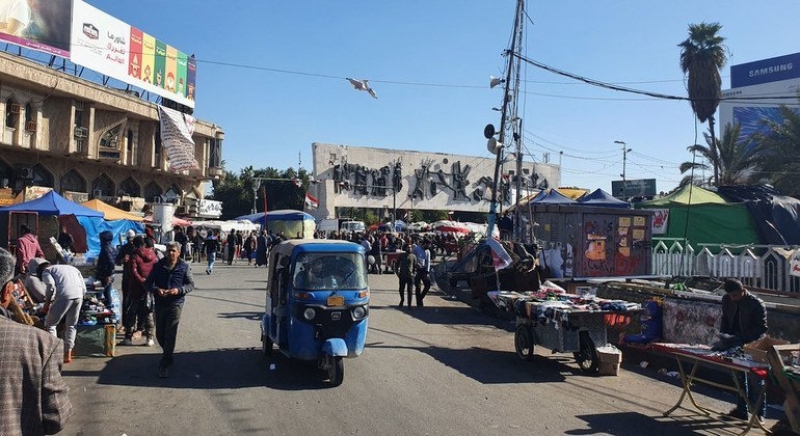
A market in Baghdad, Iraq. (file)
Better access to education, environmental protection, and good governance are among the areas in which the United Nations supports countries in improving development outcomes.
On Thursday, the UN and Iraq signed a new agreement—the Sustainable Development Cooperation Framework for 2025–2029—to help the country advance its national priorities, which are also aligned with the 2030 Agenda for Sustainable Development adopted by UN member states in 2015.
The agreement comes ahead of the closure of the UN Assistance Mission for Iraq (UNAMI), which has supported the government on key policy issues for more than two decades.
“Signing the framework is a natural and honourable transition in the relationship between the United Nations and the Republic of Iraq,” said UNAMI chief Mohamed Al Hassan. “It reflects an orderly and responsible shift from support for political stability to the consolidation of a sustainable development partnership between Iraq and the organisation.”
About the framework
To achieve the 2030 Agenda, including the 17 Sustainable Development Goals (SDGs), countries must work collectively while also taking action at the national level.
Sustainable Development Cooperation Frameworks are agreements between the UN and individual governments that provide tools for planning, implementation, and monitoring development goals.
Iraq’s framework focuses on four strategic priorities aligned with the country’s national development plan:
Improving access to education, health, and social services
Creating opportunities for employment and economic growth
Protecting the environment and addressing climate change
Strengthening the rule of law and good governance
Implementation process
Implementation, monitoring, and reporting will be overseen by a steering committee co-chaired by Iraq’s Ministry of Planning and the UN Resident Coordinator.
Government institutions and UN agencies will jointly review progress on an annual basis to ensure the framework remains on track. Implementation will be supported by a dedicated fund, alongside a strategy to mobilise additional resources.
UN mission closes
UNAMI was established in 2003 following the fall of Saddam Hussein and has supported Iraq through political transition, post-conflict recovery, and efforts to counter ISIL, also known as Da’esh. The mission’s mandate ends on 31 December.
With Iraq now significantly more stable than it was two decades ago, the country is moving towards greater self-reliance.
“Iraq believes it is ready to move to another phase, solidifying its sovereignty and territorial integrity,” Al Hassan previously said. “I wholeheartedly believe that Iraq is ready for that.”