

- UN calls for urgent action to protect children from online info risks |
- UN offers support to Colombia as 7.4 scale earthquake kills dozens |
- Former Syrian President Assad Sentenced to Death in Absentia |
- PM Welcomes Visa Investment in Bangladesh’s Digital Economy |
- PM Tarique inaugurates three pilot SDG villages |
Iran Signals Long War with US, Only Pressure Could End It
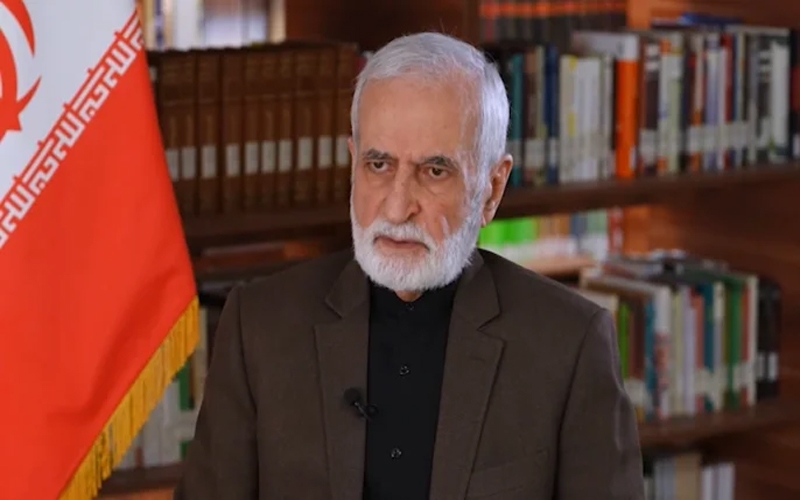
Kamal Kharazi, foreign policy adviser to the office of the Supreme Leader.
A senior Iranian official has warned that the government is prepared for a prolonged war with the United States and indicated it will continue attacks on Gulf countries to pressure them into urging President Donald Trump to step back from the conflict.
Kamal Kharazi, foreign policy adviser to the office of Iran’s Supreme Leader, spoke exclusively to CNN in Tehran, ruling out diplomacy for now and saying the war would only end through economic pressure. His remarks mark a hardening of Iran’s stance on day 10 of the conflict.
"I don't see any room for diplomacy anymore. In past negotiations, we were struck while engaged in talks," Kharazi said.
He added that the war could end only if economic pressure rises to the point where other nations intervene to curb US and Israeli actions against Iran. "This conflict has already created significant economic pressure on others, including inflation and energy shortages," he noted.
Since the US and Israel launched strikes, Iran has targeted several countries across the Middle East. Tehran claims it is focusing on US interests in Gulf nations, but residential areas and airports have also been hit.
The attacks have disrupted global energy flows, especially through the Strait of Hormuz, sending crude oil prices above $100 per barrel and unsettling markets worldwide. Analysts estimate that around 20% of the world’s oil supply has been affected, nearly double the disruption seen during the Suez Crisis of 1956-57.
The war has also eliminated the “spare capacity” that usually acts as a buffer in energy markets, reducing the ability to quickly ramp up production if needed.
A spokesperson for the Islamic Revolutionary Guard Corps said that Iran is dedicating 60% of its firepower to strikes on US bases and other strategic targets in the region.
The elevation of Mojtaba Khamenei, son of the late Supreme Leader Ali Khamenei, to Iran’s top post over the weekend signals the potential for further escalation. Asked if the military and new leadership were united, Kharazi confirmed they are.
"The leader of the Islamic Republic is responsible for directing Iran's defense capability. As Ayatollah Khamenei did, the new leader will continue that role," he said.
On the US response, Kharazi dismissed President Trump’s objection to Mojtaba Khamenei’s appointment. "That is not his business," he said.