

- Israel Strikes Tehran with US Support Amid Nuclear Tensions |
- India Sees 9% Drop in Foreign Tourists as Bangladesh Visits Plunge |
- Dhaka Urges Restraint in Pakistan-Afghan War |
- Guterres Urges Action on Safe Migration Pact |
- OpenAI Raises $110B in Amazon-Led Funding |
Pakistan–Afghanistan Strikes Escalate Tensions
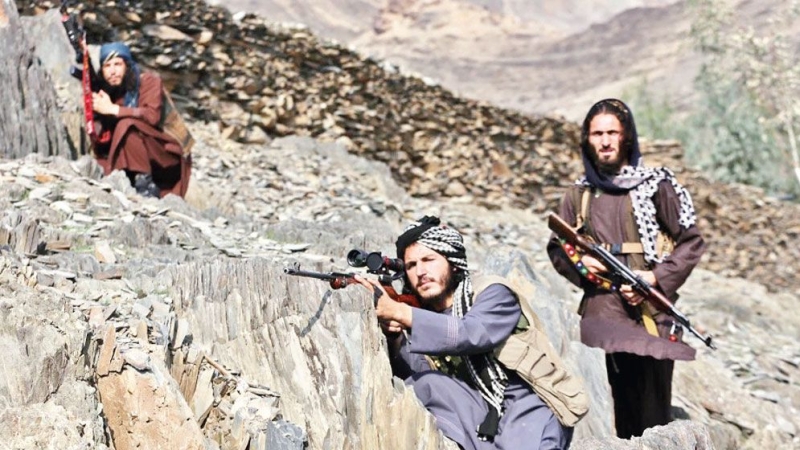
Afghan Taliban soldiers look toward the Pakistani side, with one peering through the sight of his rifle, on the Afghan side of the Torkham border crossing with Pakistan in Torkham, Afghanistan, on Friday.
Pakistan and Afghanistan exchanged overnight cross-border strikes in a sharp escalation of tensions, with Pakistan’s defence minister declaring the situation an “open war.”
Late Thursday, Afghan forces launched attacks on Pakistani targets, describing them as retaliation for earlier Pakistani airstrikes along border regions this week. Early Friday, Pakistan responded with airstrikes in Kabul and two other provinces, saying military facilities were targeted.
Relations between the two neighbours have been strained for months. Deadly border clashes in October killed soldiers, civilians, and suspected militants. Islamabad has accused Afghanistan’s Taliban authorities of sheltering armed groups responsible for attacks inside Pakistan and of strengthening ties with India. Kabul has repeatedly denied the allegations.
A ceasefire brokered by Qatar in October halted intense fighting, but subsequent talks in Turkey failed to produce a lasting agreement. Sporadic clashes have continued since then. Qatar’s minister of state, Mohammed bin Abdulaziz al-Khulaifi, held calls on Friday with the foreign ministers of both countries in an effort to ease tensions.
Afghan government spokesman Zabiullah Mujahid described the latest strikes as a warning to Pakistan and accused Islamabad of avoiding dialogue. Pakistan’s Defence Minister Khawaja Mohammad Asif said the country’s “patience has run out,” adding that hopes for regional stability following NATO’s 2021 withdrawal from Afghanistan had not materialised.
Asif reiterated longstanding claims that Afghanistan is harbouring the Tehreek-e-Taliban Pakistan (TTP) and Baloch separatist groups. Afghan officials rejected the accusations, insisting that Pakistan’s security challenges are internal.
Both sides released sharply differing casualty figures. Pakistan’s military reported hundreds of Afghan forces and militants killed or wounded, and said a dozen Pakistani soldiers had died. Afghan authorities disputed those numbers, reporting military and civilian casualties from Pakistani strikes in Khost and Paktika provinces and claiming heavier Pakistani losses. The figures could not be independently verified.
Pakistan also said it had thwarted drone attacks in northwestern cities, attributing them to Pakistani Taliban elements and alleging links to Afghan territory.
International actors urged restraint. Regional officials, including from Turkey, held diplomatic calls, while the United Nations secretary-general called for dialogue and the protection of civilians. Russia and Iran also called for an immediate halt to hostilities and offered support for mediation efforts.
Meanwhile, Pakistani authorities relocated Afghan refugees from border areas amid security concerns. Since late 2023, when Pakistan began expelling undocumented migrants, millions have returned to Afghanistan, according to the UN refugee agency, with tens of thousands repatriated this year alone.