

- AI changing the way we think. Will we notice in time |
- Bangladesh Urges Thailand to Buy More Pharma, Jute Products |
- 6 Die in Lightning Strike at Pabna Wetland |
- 2 children die with measles symptoms |
- Bangladesh Gets Three More Years to Prepare for LDC Graduation |
Myanmar’s illicit economy fuels violence; civilians bear the brunt
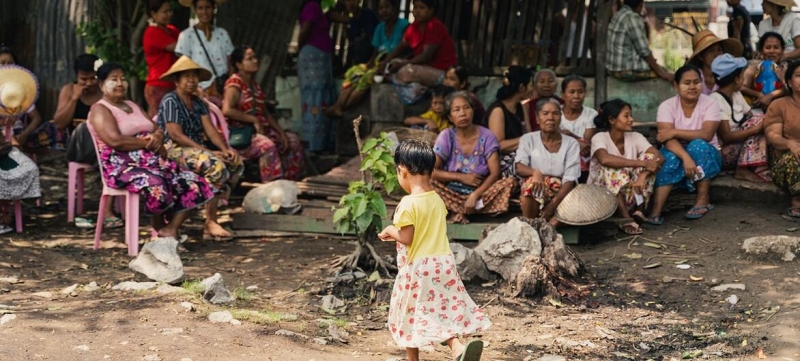
The civil war in Myanmar has caused a devastating humanitarian crisis. © UNDP
29 October 2026 - Myanmar’s human rights situation is “catastrophic”, the UN independent expert on the country warned at a press briefing Thursday, as the war spirals with no end in sight.
Myanmar has been engulfed in civil war since the military overthrew the democratically elected Government in February 2021, triggering widespread armed resistance across the country.
Special Rapporteur Kelley Anne Eckels-Currie’s new report found that at least 8,384 civilians have been killed by the military since the coup, up until 15 September 2026.
Special Rapporteurs are independent experts appointed by the UN Human Rights Council who serve in their individual capacity and receive no salary for their work.
Intentional harm
Despite the regime launching a so-called “100-day peace plan” between 20 April and 31 July 2026, the situation in the country has only deteriorated, the independent expert found.
The military continues to use weapons of war – including airstrikes and artillery – to target and destroy civilian infrastructure, including schools, healthcare facilities, religious buildings, markets and displacement camps.
“These are not accidents…This is intentional infliction of harm on civilian populations for the purpose of terrorising them and trying to force them into submission,” Ms Eckels-Currie told journalists.
Around 753 civilians were killed during the 100 day period, with the Myanmar military and paramilitary forces responsible for 89 per cent of civilian deaths.
Blocking humanitarian aid
The military’s strategy is rooted in the “Four Cuts” doctrine, the Special Rapporteur noted: sever food, resources, humanitarian access, and support networks from any area resisting the regime.
She found that the military deliberately obstructs humanitarian operations through telecommunications blackouts, movement restrictions and checkpoints, preventing the critical delivery of food, medicine, fuel and other essential supplies to displaced communities.
Aid workers also face harassment, arbitrary detention, torture and killings. In July 2026, three humanitarian workers were reportedly tortured and killed in the southeastern city of Dawei.
‘Conflict economy’ driving war
The Special Rapporteur also warned that Myanmar’s growing illicit economy has become a major driver of the conflict, rather than simply a consequence of it.
As the formal economy shrinks under the weight of war and economic mismanagement, criminal activity – including online scam centres, illegal mining, human trafficking and forced labour – are increasingly filling the gap.
Black market profits are helping to finance the military’s weapons purchases, including from China and Russia, and sustain loyalty within the junta’s ranks, Ms. Eckels-Currie explained.
Chinese transnational criminal networks provide the “backbone” of most of the criminal enterprises in Myanmar, using cryptocurrency platforms like Tether and social media like TikTok, Meta and X to facilitate their operations, she said.
Corruption in neighbouring countries, meanwhile, is enabling this cross-border trafficking, she added.
The Special Rapporteur also highlighted the difficulty of disrupting these networks without harming civilians. For instance, efforts to cut off Starlink internet access to scam centres have also left humanitarian organisations and local communities without vital connectivity. – UN News