

- Bangladesh at ‘High Risk’ From Measles, Warns WHO |
- Dhaka-Seoul Ties Set for Strategic Partnership Push: Envoy |
- BSEC vows investor protection as top priority in IPO reform drive |
- Facebook post triggers tension in Shahbagh JCD-DUCSU brawl |
- Grameen Kalyan plans 300 healthcare centres in 64 districts |
No Sign of Middle East War Easing as Strikes Spread
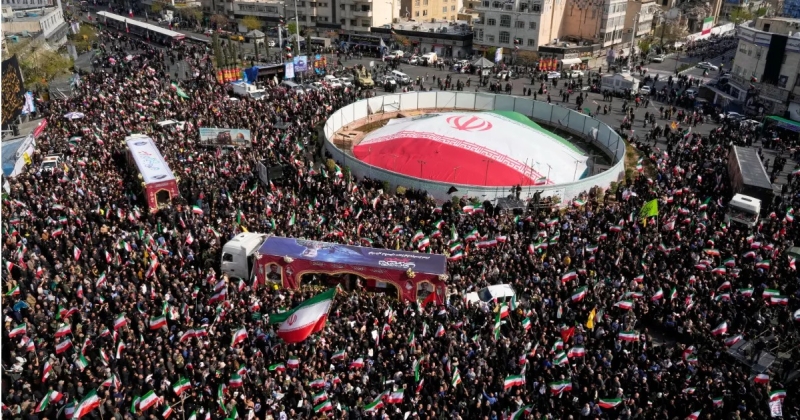
There was little sign on Friday of the Middle East war easing, as Israel reported incoming fire from Iran while Kuwait and Bahrain also came under attack. Iran, meanwhile, said eight people were killed while marking the end of the Persian New Year near a major bridge hit in a US strike.
Tehran continued to show it could strike neighbouring states, even as US President Donald Trump claimed Iran’s threat had been largely neutralised and praised the collapse of the bridge targeted on Thursday. The structure, reportedly among the tallest in the region, was still under construction.
Iran strongly condemned the attack, which also injured 95 people celebrating Nature Day, an outdoor festival marking the final day of Nowruz.
“Striking civilian infrastructure only reflects the defeat and moral collapse of an enemy in disarray,” Iranian Foreign Minister Abbas Araghchi wrote on X.
Iran’s attacks on Gulf states, along with its effective closure of the Strait of Hormuz, have disrupted global energy supplies and widened the war’s impact well beyond the region. The waterway, through which around 20 percent of the world’s traded oil usually passes, remains a critical pressure point in the conflict.
Britain on Thursday convened talks with nearly three dozen countries on how the strait could be reopened once the fighting ends. Trump, however, said the route could be secured by force, though he added it was not Washington’s responsibility to do so.
Iran Defiant Despite US Claims
Iran rejected Trump’s assertion that the country was “really no longer a threat” after weeks of US and Israeli attacks.
A military spokesperson, Lt Col Ebrahim Zolfaghari, said Tehran still possessed hidden stockpiles of weapons, munitions and production facilities, and insisted the sites targeted so far were “insignificant”.
Trump, in a televised address, said Washington’s “core strategic objectives are nearing completion”. He also shared footage on social media that he claimed showed the collapse of Iran’s largest bridge, adding: “Much more to follow.” It was not immediately clear whether the footage showed the same bridge struck in Alborz province.
Iranian state media said the bridge attack took place in the B1 area and cited local authorities.
In Lebanon, where Israel has launched a ground offensive against Iran-backed Hezbollah, Israeli strikes killed 27 people over the past 24 hours, according to the health ministry.
More than 1,900 people have been killed in Iran since the war began, while 19 deaths have been reported in Israel. More than two dozen people have also been killed in Gulf states and the occupied West Bank, along with 13 US service members.
In Lebanon, more than 1,300 people have died and over one million have been displaced. Ten Israeli soldiers have also been killed there.
Strait of Hormuz Remains Flashpoint
Iranian attacks on around two dozen commercial ships, along with threats of further action, have nearly halted shipping through the Strait of Hormuz, the narrow waterway connecting the Persian Gulf to the open sea.
According to shipping data firm Lloyd’s List Intelligence, traffic through the strait has fallen by 94 percent since 1 March compared with the same period last year. Only two ships are confirmed to have paid passage fees, while others were allowed through under special government arrangements.
Saudi Arabia reportedly diverted about one billion barrels of oil away from the strait in March, while Iraq has begun transporting oil across Syria to avoid the route.
The 35 countries that joined Thursday’s talks, including all G7 nations except the United States, as well as the United Arab Emirates and Bahrain, had already signed a declaration last month demanding Iran stop blocking the waterway.
British Foreign Secretary Yvette Cooper said the latest discussions focused mainly on diplomatic and political options, but military planners from several countries were also exploring post-war security measures, including possible mine-clearing operations and protection for commercial shipping.
For now, however, no country appears willing to try to reopen the strait by force while the conflict is still active. French President Emmanuel Macron described such a military operation as “unrealistic”.
There are also growing concerns that Iran could continue to restrict maritime traffic even after hostilities end.
Global Economic Pressure Mounts
The conflict continues to drive up oil and gas prices, rattle stock markets and raise the cost of transport, food and fuel worldwide.
US crude remained elevated at $111.54 a barrel on Friday, roughly 50 percent higher than its level before the war began on 28 February.
Although most of the oil and gas that normally passes through the strait is bound for Asian markets, only Japan and South Korea joined Thursday’s international call from the region. Supplies of jet fuel have also been disrupted, increasing pressure on global air travel and logistics.