

- Why is Iran offering to mediate between Saudi Arabia and the Houthis? |
- Biman suspends Tuesday’s Dhaka-Dammam flight |
- First Phase of Union Parishad Polls Set for January 21 |
- PM Seeks Canadian Support for Energy, Agriculture, Climate Finance |
- Saudi-led coalition intercepts drone, Houthi ballistic missile |
Biodiversity Still at Breaking Point; With It Our Survival
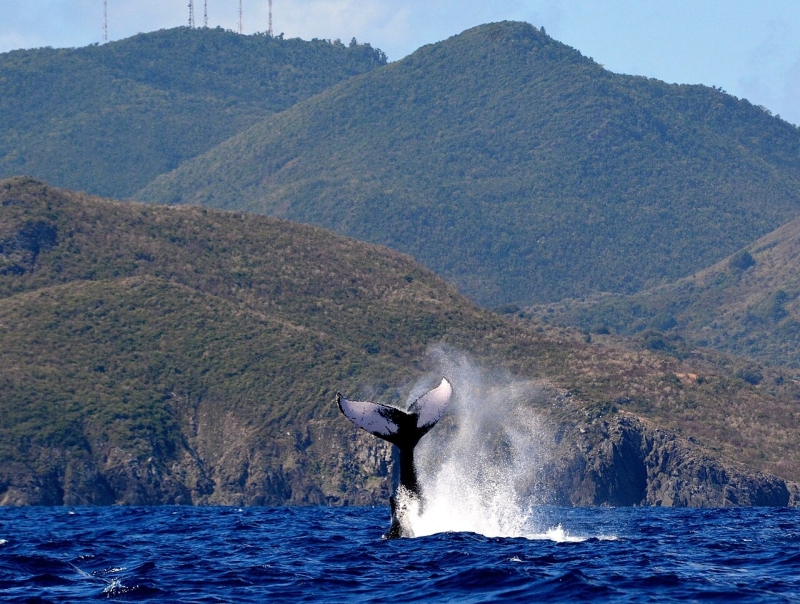
A humpback whale slaps its tail in the Agoa Sanctuary is migrating with its kin near the Saint-Martin National Nature Reserve in the Antilles to its Caribbean breeding grounds. - VELY Michel via Wikimedia Commons
Mostafa Kamal Majumder
Biodiversity loss has reached a point where it threatens not only the stability of ecosystems but the very foundations of human civilisation. Scientists have warned for decades that the disappearance of species, habitats and ecological processes will undermine food security, public health, climate resilience and economic stability. Yet global action has remained slow, fragmented and under‑financed. The latest biodiversity negotiations in Nairobi have reinforced this reality with unprecedented clarity: the world is not on track to meet its 2030 biodiversity goals, and unless countries dramatically accelerate implementation, humanity will face consequences far more severe than previously imagined.
The Nairobi talks, held under the Convention on Biological Diversity, brought together governments, scientists, Indigenous representatives, civil society and businesses. Delegates reviewed national biodiversity strategies, implementation reports and hundreds of submissions from non‑state actors. Despite record participation, the global review of the Kunming‑Montreal Global Biodiversity Framework revealed that fewer than half of national targets are currently on track. Countries have integrated biodiversity into national planning at a scale never seen before, but implementation remains slow and uneven. The review found encouraging movement on conservation targets, yet major gaps persist in biodiversity finance, subsidy reform, business accountability, monitoring systems and inclusive governance. Astrid Schomaker, Executive Secretary of the CBD, warned that progress is being made, but not at the pace or scale required to achieve the framework’s 2030 goals.
This gap between commitment and delivery is not a technical issue; it is a civilisational risk. Biodiversity is the foundation of human survival. Natural systems regulate disease, purify air and water, maintain soil fertility, stabilise climate and support food production. Without ecological diversity, public health will deteriorate. Parasites and pathogens cannot be controlled by synthetic medicines alone. Human bodies build resistance through exposure to diverse plants, microbes, insects and natural compounds. The disappearance of these natural sources of immunity will make societies more vulnerable to emerging diseases. Food systems will falter as pollinators decline, soil organisms disappear and fish stocks collapse. Climate impacts will intensify as forests, wetlands and oceans lose their ability to absorb carbon and regulate water cycles. Economies will destabilise because more than half of global GDP depends on nature’s services. The Nairobi talks underscored that biodiversity loss is not an environmental problem; it is a threat to human civilisation.
The discussions also highlighted how biodiversity governance is evolving. Wildlife management debates moved beyond traditional species protection to examine how conservation intersects with livelihoods, equitable benefit‑sharing, Indigenous rights and local community participation. Delegates recognised that conservation succeeds only when communities are transparently and meaningfully included in decision‑making. Jennifer Tauli Corpuz of the International Indigenous Forum on Biodiversity emphasised that Indigenous Peoples and local communities must be treated as co‑managers and knowledge holders, not as groups to be blamed for biodiversity loss. This shift is crucial because communities living closest to nature often possess the most sophisticated ecological knowledge. Their participation strengthens monitoring, enforcement and restoration efforts.
Technology also emerged as a governance challenge. Synthetic biology, with its rapidly evolving applications, is outpacing existing regulatory frameworks. Delegates agreed on the need for stronger capacity‑building, scientific cooperation and oversight to ensure that technological innovation supports biodiversity conservation rather than undermines it. As innovation accelerates, governments must balance potential benefits with ecological safety.
One of the most significant outcomes from Nairobi was the recognition that businesses must be enlisted as part of the solution. Corporate bodies have long been portrayed as drivers of biodiversity loss, but delegates emphasised that companies also possess tools, resources and influence necessary for large‑scale change. Businesses already have frameworks to measure biodiversity risks and dependencies. What they need now is clear guidance, incentives and accountability mechanisms. Obura, speaking on KMGBF Target 15, noted that businesses can no longer be seen only as culprits; they are essential partners. This recognition is vital because industries, supply chains and financial institutions shape land use, resource extraction, waste generation and pollution. Without corporate participation, biodiversity goals cannot be met.
Finance emerged as the central barrier to implementation. The global review found that the world is likely to miss the 2025 milestone of mobilising USD 20 billion annually in international biodiversity finance. Developing countries reported persistent challenges in accessing financial resources, securing technology transfer, building technical capacity and strengthening institutions. At SBI‑7, finance dominated discussions, with debates over resource mobilisation, the Cali Fund and the governance of biodiversity finance. A delegate from the African Union emphasised that adequate, predictable and accessible financial resources are essential for developing countries to translate global commitments into concrete national actions. Ambition without finance is rhetoric, and rhetoric does not revive ecosystems. Rich nations must recognise that biodiversity loss will not spare them. The poor will suffer first, but the rich will not escape. Without biodiversity, global public health will deteriorate, food systems will destabilise and climate impacts will intensify across all regions.
The implications of these global findings are deeply relevant for Bangladesh, a frontline state in the biodiversity crisis. The country’s ecological richness—from the Sundarbans to haor wetlands, hill forests and the Bay of Bengal—is under severe pressure. Pollution and waste have become silent killers. Industrial effluents, agro‑chemicals, antibiotics, plastics and untreated sewage are poisoning rivers, canals and coastal waters. E‑waste from electronics and batteries is growing rapidly, contaminating soil and groundwater. Waste is not just an environmental issue; it is a biodiversity issue, a public health issue and an economic issue. This is where Nairobi’s call for circular economies becomes crucial. Bangladesh must eliminate waste generation at source, redesign production systems and treat waste as a resource rather than a burden. A circular economy—where materials are reused, recycled and repurposed—reduces pollution, conserves resources, lowers emissions and protects ecosystems.
Habitat loss and overexploitation continue to erode ecosystems. Encroachment, unplanned development, sand extraction and unsustainable harvesting are degrading forests, wetlands and rivers. Wildlife trafficking persists. Fisheries are under strain. Climate impacts—cyclones, salinity intrusion, temperature rise and erratic rainfall—are accelerating species decline and ecosystem degradation. Bangladesh’s biodiversity crisis mirrors global trends but with higher stakes due to population density and climate vulnerability.
The Nairobi talks reinforced that all natural systems must be revived. This means restoring forests with native species, rehabilitating rivers and wetlands, protecting mangroves, rebuilding soil health, reducing chemical dependence in agriculture, enforcing sustainable fishing and curbing pollution at source. Revival is not a technical exercise; it is a societal transformation. It requires political will, financial investment, scientific innovation and community participation. Indigenous Peoples, local communities, women, youth and businesses are not stakeholders; they are key actors. Their knowledge, leadership and participation are essential for monitoring, implementation, benefit‑sharing and governance reform. Blaming communities or corporations is counterproductive. The future lies in co‑management, shared responsibility and equitable partnerships.
As governments prepare for COP17 in Yerevan, they face a clear challenge: turning commitments into action. The Nairobi talks have set the stage. What happens next will determine whether the world can still meet its 2030 biodiversity goals or whether humanity will continue accelerating toward ecological collapse. The Nairobi outcomes reinforce a simple truth: saving biodiversity is saving civilisation. Reviving natural systems, embracing circular economies, mobilising finance and empowering communities and businesses are not environmental choices; they are survival imperatives. Without biodiversity, public health will deteriorate, food systems will falter, climate impacts will intensify and economies will destabilise. Ultimately, no nation—rich or poor—will be spared.