

- Shahabuddin Set to Leave Bangabhaban, Hafiz Takes Charge |
- Rail Expansion Planned for 16 Unconnected Districts |
- Rescued elephant Badsha Bahadur gets a second chance to survive |
- Next President Likely From BNP Standing Committee |
- Resignation of President Mohammed Shahabuddin for ill health |
Bangladesh Sets Tough Crackdown on Defaulted Loans
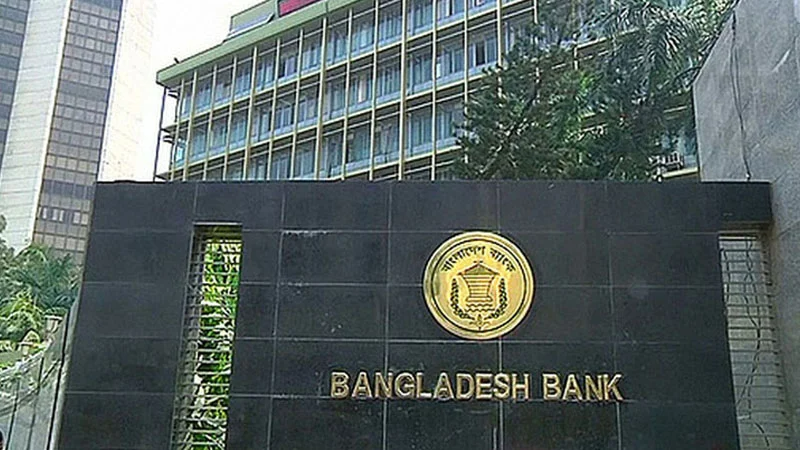
Bangladesh Bank has adopted an ambitious plan to reduce the country's soaring defaulted loans, warning that bank directors who fail to restore capital shortfalls could ultimately lose their ownership stakes.
Bangladesh currently has the world's highest ratio of non-performing loans (NPLs), with the official default rate standing at 32.26 percent. The central bank aims to reduce that figure to 20 percent by the end of this year and further to 10 percent by the end of next year through a phased strategy combining incentives with stricter enforcement.
According to an internal Bangladesh Bank report, the regulator has prepared a 21-point action plan covering short-, medium- and long-term measures. The plan has been reviewed in several meetings chaired by Governor Md Mostakur Rahman.
Flexible repayment first, stricter action later
Initially, the central bank will encourage borrowers to repay overdue loans by offering incentives under its Exit Policy, introduced on 29 June. The scheme allows banks to waive accrued interest and certain funding management costs to facilitate recovery of at least the principal amount.
No additional special loan rescheduling policy will be introduced beyond the current framework. Borrowers will be able to settle loans under relaxed conditions until December this year.
From next year, however, the central bank plans to tighten regulations by introducing a Distressed Asset Management Act and amending the Money Loan Court Act to require loan recovery cases to be resolved within six months.
Defaulters' identities may be made public
Officials said borrowers who fail to repay despite the flexible policy could face public disclosure. Bangladesh Bank is considering publishing the names and photographs of major loan defaulters, with lists potentially displayed at airports, bank headquarters and branch offices.
Banks will also be required to calculate capital shortfalls based on their actual non-performing loans. Directors will be given a deadline to restore the required capital. Failure to do so could result in the loss of ownership and disqualification from serving as a director of any bank for five years.
If a bank remains financially weak, authorities may place it under the Bank Resolution framework, allowing options such as sale, merger or liquidation.
Why the central bank is tightening its stance
Bangladesh Bank's tougher approach follows years of limited success in recovering rescheduled loans.
Between 2013 and 2024, loans worth Tk 441,000 crore were rescheduled under special facilities. Another Tk 170,503 crore was rescheduled last year alone. Despite these measures, outstanding unpaid rescheduled loans stood at Tk 446,894 crore, indicating that only a small portion of such loans was ultimately recovered.
Although the official NPL ratio is 32.26 percent, the central bank estimates that distressed loans reached Tk 1,087,590 crore, equivalent to 59.73 percent of total outstanding loans at the end of last year.
The banking sector also recorded a negative capital ratio of 2.64 percent, largely due to a combined capital shortfall of Tk 278,000 crore across 20 banks. Only 17 of Bangladesh's 52 banks reported profits last year.
Bangladesh Bank spokesperson and Executive Director Arif Hossain Khan said reducing defaulted loans is the regulator's top priority. He said borrowers who fail to repay under the current flexible arrangements will later face stricter legal action.
Selling collateral to recover loans
Under the third phase of the strategy, distressed assets may be transferred to licensed asset management companies established under a proposed new law.
However, selling collateral will not fully clear a borrower's liabilities. Borrowers will remain responsible for any unpaid balance after the collateral's sale value is deducted.
For example, if a borrower owes Tk 1,000 crore, including interest, but the pledged assets are purchased for Tk 100 crore, the borrower would still be liable for the remaining Tk 900 crore.
Industry reaction
Syed Mahbubur Rahman, Managing Director of Mutual Trust Bank, said the Exit Policy has faced criticism but argued that negotiated settlements are preferable to prolonged legal battles.
"It is better to recover Tk 80 today by offering a Tk 20 concession than to spend ten years trying to recover Tk 100," he said, adding that safeguards are needed to prevent abuse of the policy.
He also cautioned that the effectiveness of asset management companies will depend on accurate valuation of collateral, noting that many loans were approved against inflated or questionable security.
Three-phase reform strategy
The central bank's roadmap includes:
Short-term measures
Full implementation of the Prompt Corrective Action (PCA) framework for banks with high default rates.
Modernisation of credit risk management in line with international standards.
Stronger corporate governance requirements for appointing or reappointing bank chief executives.
Quarterly reporting to the governor by banks whose defaulted loans exceed 10 percent.
Regular review of recovery progress from each bank's 20 largest defaulters.
Medium-term measures
Publication of major loan defaulters.
Incentives for well-performing borrowers.
Independent valuation of collateral by accredited firms.
Introduction of early warning systems to detect credit risks.
Special incentives for officials involved in loan recovery.
Long-term measures
Faster disposal of loan recovery cases through legal reforms.
New requirements for borrowers seeking court stays to deposit part of their outstanding debt.
A legal cap on total borrowing across the entire banking sector rather than from a single bank.
Encouraging companies seeking loans above Tk 1,000 crore to raise funds through bond issuance instead of bank borrowing.
Inclusion of experienced bankers in judicial panels handling financial disputes.
Bangladesh Bank has already published a draft law on establishing Asset Management Companies (AMCs) for public consultation. Under the proposed legislation, distressed assets will include defaulted loans, written-off loans and rescheduled loans that remain unpaid. AMCs will be required to maintain minimum capital and purchase distressed loans with cash.