

- 3 killed in Uttara building fire; 13 rescued |
- Late-night deal ends standoff: BPL resumes Friday |
- Global Marine Protection Treaty Enters into Force |
- US Immigrant Visa Suspension Triggers Concern for Bangladesh |
- 29 arrested under Operation Devil Hunt Phase-2: DMP |
Dhaka’s air at risk as Savar brick kilns defy closure orders
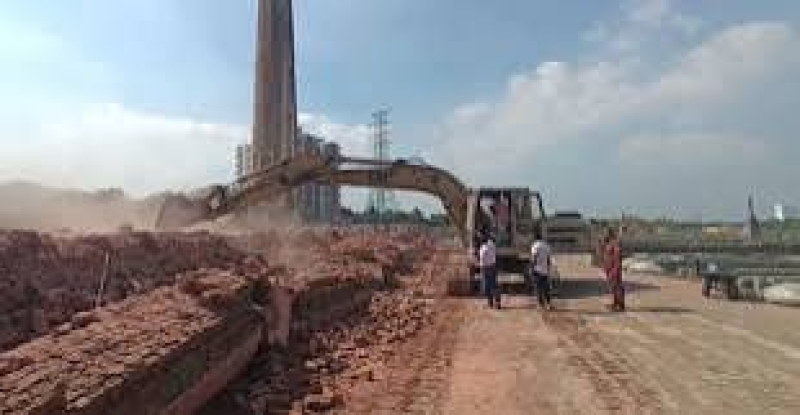
Despite the government’s declaration of Savar upazila as a ‘degraded airshed’, brick kilns in the area continue operating openly, raising serious concerns over air pollution in Dhaka.
The move, intended to protect the capital’s northern entry points, appears to have little effect on kiln owners, who are finding ways to circumvent official orders.
On August 17, 2025, the government formally designated the entire Savar upazila as a ‘degraded air shed’ under the Air Pollution (Control) Rules, 2022, explicitly banning all brick-burning and brick-manufacturing activities.
The decision followed mounting evidence that emissions from kilns in Savar significantly worsened air quality in Dhaka, especially during the dry season, posing grave health risks to the city’s densely populated residents.
Yet, local residents and environmental activists report that many brick kiln owners treat the government’s circular as mere paperwork. Although authorities demolished chimneys of several kilns late last year, many have been rebuilt and resumed operations.
According to the latest data up to June 2025, Savar hosts 86 brick kilns, including 59 licensed and 27 unlicensed facilities.
In the Turag River area near Ashulia Bazar, brick burning remains widespread.
Ashulia Bricks and MCB Bricks, in particular, have continued production since the start of the season.
During a recent visit to Ashulia Bricks, hundreds of workers were observed manufacturing raw bricks, transporting them, and stacking finished products near the kiln. On the opposite side, others were removing fired bricks from the furnace.
When contacted, Ashulia Bricks manager Md Madhu Mia defended the operation, saying, “The government has done its job and we are doing ours. We have already spent a lot of money on labour and other sectors. If we shut down the kiln, recovering that investment would be impossible. That’s why we were compelled to continue. We have communicated with various parties and they assured us.”
At MCB Bricks, no owner or authority could be reached, and workers declined to provide details. One anonymous worker explained, “We are working under seasonal contracts. Sometimes officials come, but if payments are made, they leave without taking action. That’s how the kiln keeps running.”
Visits to Genda and Sadhapur areas, adjacent to Savar, revealed that several kilns have displayed large signboards citing High Court orders, which prohibit authorities from obstructing operations based on writ petitions filed by owners.
Some kiln owners claimed they obtained court permission to continue operations, despite lacking environmental clearance or a valid licence.
Along the Dhaka–Aricha highway in Aminbazar, kilns including Roni Bricks were also observed operating. Mohammad Munsur Ali, the owner of one such kiln, admitted, “To avoid harassment from the DoE and local administration, I filed a writ in the High Court seeking four months’ permission to operate. The court granted it, so I have continued operations.”
Ferdous Anwar, Regional Director of the Department of Environment (Dhaka region), acknowledged the ongoing challenges.
“Enforcement drives against brick kilns in Savar have continued since the degraded airshed declaration. Action will be taken again against kilns that are still operating,” he said.
Regarding writ petitions, he added, “We are addressing the issue legally for those kiln owners who have obtained court orders to continue operations.”
Those who live in Dhaka and surrounding areas, the continuation of brick manufacturing in Savar represents more than a regulatory breach—it is an ongoing threat to their health and the city’s environment, according to environmentalists, reports UNB.