

- PM Orders Study on Restoring Universal Stipends for Girls |
- President urges KSA to make hajj more convenient for Bangladeshi pilgrims |
- Second Teesta Bridge: Costly shortcut that heavy vehicles cannot take |
- March in Stockholm for stronger climate action ahead of polls |
- Dhaka ranks 18th in global air quality ranking Monday morning |
Dhaka ranks 6th globally in worst air quality
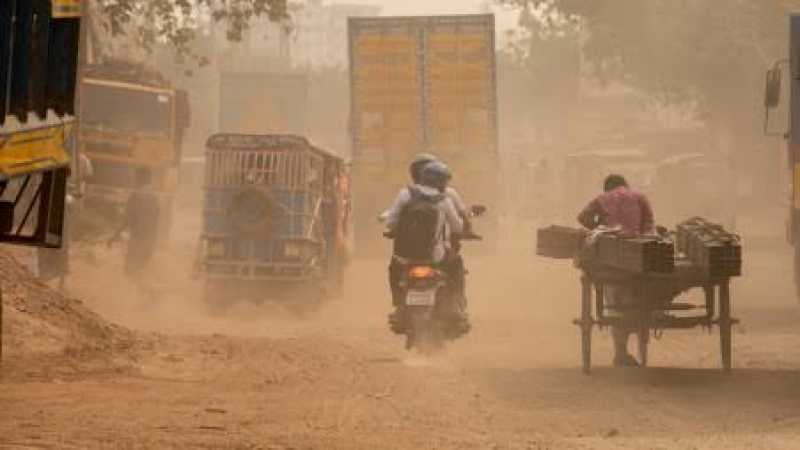
Dhaka ranked 6th among the world’s cities with the worst air quality on Tuesday morning, recording an Air Quality Index (AQI) score of 122 at 9:08 am.
According to the AQI scale, the city's air quality was classified as “Unhealthy for Sensitive Groups”, poses health risks to children, older adults, and people with heart or lung diseases, while the general public is mostly unaffected.
Malaysia’s Kuching topped the global pollution list with an AQI of 188, followed by Kuala Lumpur with 176 and Indonesia’s Jakarta with 163.
An AQI reading of 101 to 150 is considered ‘unhealthy for sensitive groups’, while 151 to 200 is classified as ‘unhealthy’. A reading between 201 and 300 is considered ‘very unhealthy’, and anything above 301 is categorized as ‘hazardous’, posing serious health risks.
The AQI provides a daily indication of air quality by measuring the level of pollution and its potential impact on human health.
In Bangladesh, the AQI is calculated based on five major pollutants — particulate matter (PM10 and PM2.5), nitrogen dioxide (NO2), carbon monoxide (CO), sulfur dioxide (SO2) and ozone.
Dhaka has long faced serious air pollution problems, with air quality generally deteriorating during the winter months and improving during the monsoon season.
The World Health Organization estimates that air pollution contributes to around 7 million deaths worldwide every year, mainly from stroke, heart disease, chronic obstructive pulmonary disease, lung cancer and acute respiratory infections, reports UNB.