

Sunday, August 16, 2026
News update
- Miraz puts Bangladesh within sight of victory as Australia stutter |
- Scale 7.7 quake off Indonesia coast, kills at least 47, topples homes |
- PM for swift steps to restore energy supply, patience to resolve crisis |
- 7 crore people to get mobile internet access within 6-12 months |
- 86 proposals from 14 groups to revive closed govt factories |
Dhaka's air quality remains moderate
Staff Correspondent:
Air
2026-06-27, 10:02am
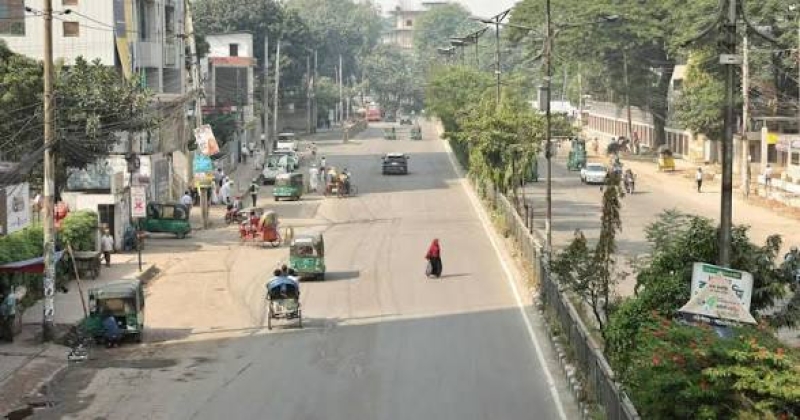
Dhaka, the capital of Bangladesh, ranked 32nd among the world’s most polluted cities on Saturday morning, with an Air Quality Index (AQI) of 67.
According to the AQI scale, the city’s air quality was classified as ‘moderate’ at 09:30 am.
Indonesia’s Jakarta, Pakistan’s Lahore and India’s Delhi occupied the first three spots on the list with AQI scores of 173, 166 and 155, respectively.
An AQI between 50 and 100 is considered "moderate" with an acceptable air quality while AQI between 101 and 150 is considered ‘unhealthy for sensitive groups’, while a score between 151 and 200 is classified as ‘unhealthy’. AQI readings between 201 and 300 are termed ‘very unhealthy’, and anything above 301 is considered ‘hazardous’, posing serious health risks.
The AQI is a daily indicator of air quality, showing how clean or polluted the air is and the possible health effects people may experience.
In Bangladesh, the AQI is calculated based on five major pollutants: particulate matter (PM10 and PM2.5), nitrogen dioxide, carbon monoxide, sulphur dioxide and ozone.
Dhaka has long struggled with severe air pollution. Air quality usually worsens during winter and improves in the monsoon season.
According to the World Health Organization, air pollution causes around seven million deaths globally each year, mainly from stroke, heart disease, chronic respiratory diseases, lung cancer and acute respiratory infections, reports UNB.