

- Dhaka Condemns Hasina's Media Event in New Delhi |
- Oil Prices Fall on Hopes of Hormuz Reopening |
- Tk 2,500 crore harvest in Daudkandi floodplain fishery |
- Gaza unsafe for civilians as Israeli attacks hit homes, classrooms |
- El Niño May Push 49 Million More Into Acute Hunger |
Haribhanga Harvest Boosts Northern Bangladesh Economy
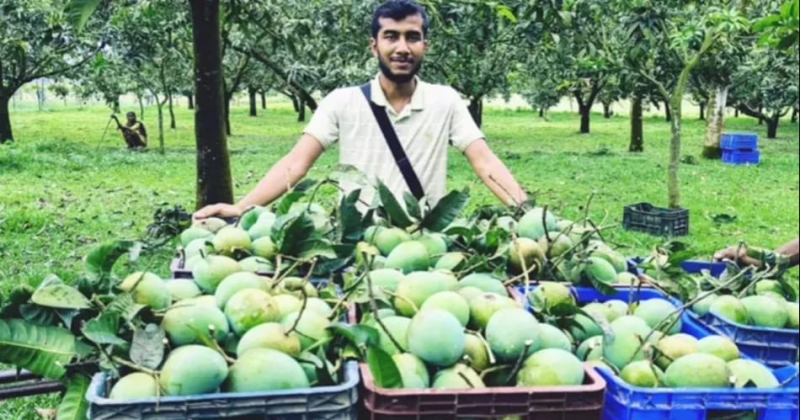
Every summer the arrival of Haribhanga mangoes brings a wave of excitement to northern Bangladesh. But in Rangpur and surrounding districts, the famed sweet and juicy fruit represents far more than a seasonal treat.
From orchard owners and traders to transport workers and online entrepreneurs, thousands of people now depend on the GI-recognised mango for their livelihoods, turning what was once a region marked by seasonal hardship into a growing hub of rural prosperity.
Rows of mango trees laden with clusters of ripe fruit now dominate the landscape in Rangpur and surrounding districts.
The sight reflects not only a successful harvest but also the growing prosperity of farming communities that once struggled with poverty and seasonal unemployment.
Rangpur’s geographically indicated (GI) Haribhanga mango entered the market earlier than usual this year.
While the official marketing season generally begins around June 20, an intense heatwave accelerated ripening, prompting growers to start harvesting ahead of schedule.
The season was formally inaugurated on June 15 by Rangpur Deputy Commissioner Mohammad Ruhul Amin at an orchard in Padaganj of Mithapukur upazila. Since then, harvesting and trading activities have gained full momentum.
The main production hubs—including Padaganj, Khoregachh, Paikarhat, Moyenpur, Changmari, Balua Masumpur, Kutubpur, Gopalpur, Lohanipara, Ramnathpur and Kalupura—have turned into bustling trading centres where growers, traders and buyers negotiate prices from dawn to dusk.
The economic impact of the fruit extends far beyond orchard owners.
Farm labourers, seasonal workers, traders, online entrepreneurs, transport operators and courier service providers are all benefiting from the mango season.
The entire supply chain becomes active during these few months, generating employment and income opportunities across northern Bangladesh.
“We have cultivated mangoes on 10 acres of land this year,” said orchard owner Mashiur Rahman. “Some fruits were damaged by storms and hail, but the current market prices are encouraging. We hope to recover our losses and make a profit.”
Wholesale trader Ranga Mia said large buyers from Dhaka, Chattogram, Sylhet and other parts of the country have already started placing orders.
“Demand is strong, and if market conditions remain favourable, both traders and farmers will benefit this season,” he said.
Haribhanga mangoes are now available in markets across Rangpur city, including the Central Bus Terminal Road, City Bazaar, Lalbagh, Modern Mor, Dhap Bazaar and Shapla Chattar areas. Vendors are also selling the fruit door-to-door in neighbourhoods.
As in previous years, prices are relatively high at the beginning of the season. Depending on size and quality, wholesale prices currently range from Tk 1,200 to Tk 2,400 per maund.
Mango entrepreneur Hanifur Rahman Sajib said weather conditions prompted many growers to harvest early this year.
“Haribhanga is highly popular because of its taste. Individual fruits typically weigh between 150 and 500 grams,” he said.
However, he noted one major challenge: the fruit ripens within four to five days after harvesting, leading to significant post-harvest losses every year.
According to the Department of Agricultural Extension (DAE), Haribhanga mango cultivation has expanded significantly across five northern districts—Rangpur, Kurigram, Gaibandha, Nilphamari and Lalmonirhat.
This year, the fruit has been cultivated on nearly 6,000 hectares of land, with a production target of about 45,000 metric tonnes. Average yields range from 10 to 12 tonnes per hectare.
Growers and traders estimate that total sales could exceed Tk 300 crore if weather and market conditions remain favourable.
DAE Additional Director Md Sirajul Islam said Bangladesh currently exports mangoes to more than 30 countries while following Good Agricultural Practices (GAP).
“We are working to expand exports further in the coming years,” he said.
Local authorities view Haribhanga mango as a strategic economic asset.
Deputy Commissioner Mohammad Ruhul Amin said the district administration has prioritised the development of the Haribhanga sector and plans to support increased exports through infrastructure improvements, road development, banking services and better logistics, including initiatives such as a dedicated mango train.
Rangpur Divisional Commissioner Shahidul Islam said efforts are underway to expand cultivation and strengthen export opportunities.
The success of Haribhanga mango cultivation has already transformed many rural communities.
Areas once marked by seasonal hardship now witness thriving economic activity during the harvest season.
Farmers have diversified their income sources, local businesses have expanded, and thousands of people find temporary employment linked to the mango trade, reports UNB.