

- Measles Outbreak Claims 17 Lives in Single Day |
- Trump says US holding ‘very positive discussions’ with Iran over war |
- Dhaka ranks 4th among the world’s most polluted cities Monday |
- Cabinet approves tax relief for brand new electric vehicle imports |
- Energy prices surge to highest in 4 years as conflict spreads |
Haor Farmers to Get Tk7,500 Monthly Aid for 3 Months
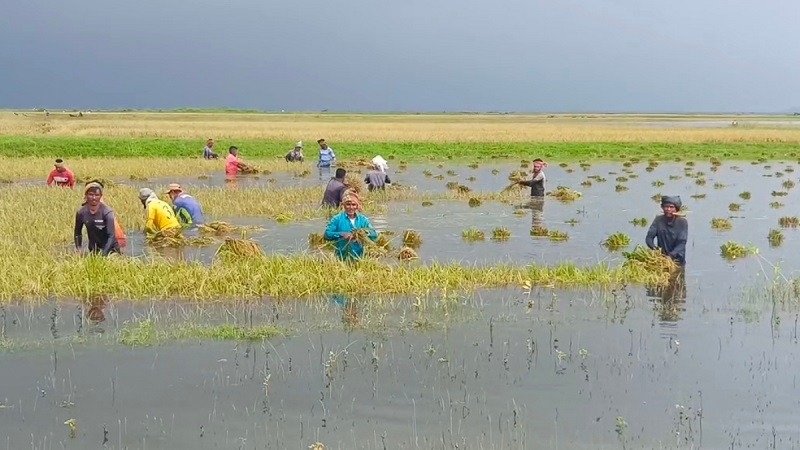
Farmers affected by recent floods in the country’s haor regions will receive monthly financial assistance of Tk7,500 for three months, Agriculture Minister Amin-ur Rashid said on Sunday.
He said the support package may be increased depending on the scale of damage, as the government moves to help affected farmers recover from losses caused by flooding.
The announcement came after a meeting with district commissioners held during the DC Conference at the Osmani Memorial Auditorium in the capital. Representatives from the agriculture, fisheries and livestock, and food ministries also attended discussions with the DCs.
The minister said the assistance will be provided from multiple sources, including the prime minister’s relief fund, other government funds, and the disaster management fund. He acknowledged that it would not be possible to fully compensate farmers for their total losses.
An initial list of affected farmers is being prepared at the field level, and a committee has been formed to oversee the distribution process.
He also noted that while the country has seen a bumper potato harvest, many farmers are not getting fair prices. To address this, the government has introduced a farmer card system to better track production and supply.
Once fully implemented, the system will help identify crop patterns, cultivation areas, and the number of farmers involved, enabling more planned production and better price stability.
The minister said such planning could eventually support a quota-based approach to ensure fair returns for farmers while keeping prices stable for consumers.
He added that natural disasters continue to disrupt agriculture despite good harvests, often due to heavy rainfall and flooding. Increasing potato consumption in the local diet is also being considered as part of demand management.
He further said Bangladesh has recently achieved progress in producing potato varieties used for French fries and chips, reducing dependence on imports and opening future export opportunities.
On border cattle movement, the minister said some border markets have been closed due to unusually high inflows, while authorities including border forces are monitoring the situation closely.
He added that there is currently no significant cattle shortage in the country, and market fluctuations often depend on farmers’ decisions to hold livestock for better prices.
The minister also highlighted growing interest among educated youth in agriculture, calling it a positive sign for the sector’s future.