

- Govt Drafts New Model for $1tn Economy by 2034 |
- Middle East Conflict Hits Bangladesh Labour Market |
- Millions face growing hunger as Iran conflict fuels food crisis: UN |
- Bus plunges into Padma from pontoon at Daulatdia |
- Tree logging in Bangladesh has fallen in last two years: Study |
Ukraine drone attacks on Moscow could escalate
CONFLICTSRUSSIAN FEDERATION
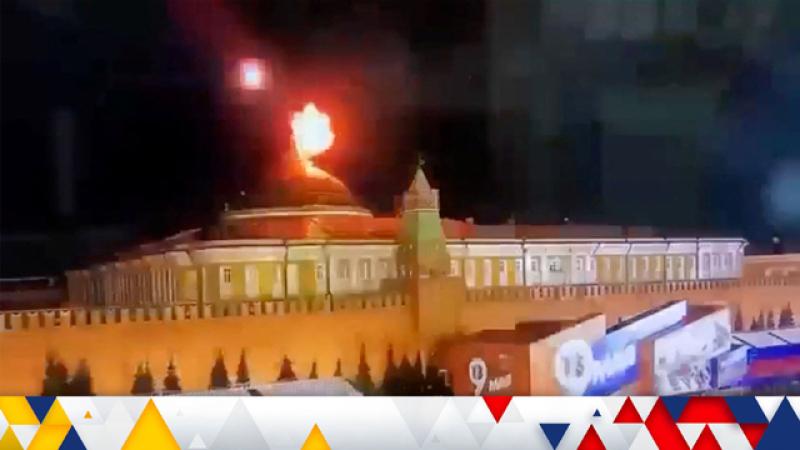
Ukraine drone attacks on Moscow could escalate. File
Their impact is comparatively small, but Ukrainian drones are increasingly attacking targets in Moscow. Experts say Kyiv is pursuing several goals simultaneously, and expect the campaign to escalate.
On the night of May 3, two drones carrying explosives flew unimpeded over Moscow, smashing into the Kremlin’s Senate Dome
This first-ever drone strike on the Russian capital, most likely orchestrated by Ukraine dealt a severe symbolic blow to Russia.
Since then, drone attacks on Moscow have grown ever more frequent. Moscow International Business Center, a high-rise commercial district that houses two Russian ministries, has been hit four times. Last week, Moscow suffered almost daily drone attacks.
According to the Russian Defense Ministry, an unmanned flying object from the east was shot down near Moscow on Monday. Russian officials said two Ukrainian drones were downed over the Tula and Belgorod regions a day later.
Drone raids serve multiple objectives
Analysts say Ukraine is pursuing several objectives with its drone attacks. One is to "send a strong, public message to the world and its own citizens that Ukraine is not sitting idly but responding to Russian aggression," Israeli military expert Sergey Migdal said.
Migdal said the attacks put pressure on Russia to relocate more air defense systems from the front line to Moscow. Ongoing air raids could also provoke an ill-considered, violent, knee-jerk reaction from Russia.
The drone strikes are increasingly forcing Moscow authorities to close the region's airspace. On Monday, Moscow airports temporarily stopped all flight movements amid incoming unmanned aerial objects.
"These attacks on Moscow are not aimed at killing millions of people," military expert Yigal Levin said. "That is neither necessary nor useful. Instead, the goal is to block Moscow's airspace and logistics channels, to paralyze airports and the transport system."
Meanwhile, Turkmenistan Airlines has already suspended all flights to Moscow until further notice.
Patchy Moscow air defenses?
However, experts disagree on how successful Ukrainian drone attacks on Moscow are proving to be, and how well the capital's air defenses are holding up, as the facts remain unclear.
Moscow's air defenses remain patchy, even though the city was supposed to become the best-protected region in Russia since the Soviet era, Mykhailo Samus, a Ukrainian military expert based in Prague, said.
Russian air defenses, he said, are aimed at "traditional targets," such as ballistic missiles, rather than small flying objects like Ukraine's UJ-22 and Bober, or "Beaver," drones.
"Such small objects are predominantly made from composite materials rather than metal, follow complex flight patterns and therefore present a challenge for any air defense system," said Samus.
Experts say air defense gaps also exist in the wider area around the Russian capital.
"To shoot down a target, you first have to identify it. This will be done by radar stations, which ideally should be part of an integrated radar field," said Samus. "But we can assume that Russia does not have such a radar field. Its air defense systems detect individual objects but don't cover an entire area."
Will Ukraine expand its drone campaign?
Ukraine lacks long-range weapons like the Russian Kalibr-guided missiles and hypersonic Kinzhal missiles. Given this tactical disadvantage, Ukraine is resorting to drone attacks instead, said Migdal.
Experts predict that Ukrainian drone attacks on Moscow will increase despite their limited effectiveness.
"This is just the opening stage," said the experts, adding that an attack with 25 drones simultaneously would mark a whole new phase.
"What if instead of three, 33 or 300 combat drones were launched from all sides," pointed out the experts. Ukraine could use such swarm attacks to permanently disable Moscow airports, for example, marking a significant victory for Kiyv.
This would force the Kremlin to reconsider which direction it wants the war to go, "whether that is compromise and negotiations, or suddenly and forcefully reacting without any consideration, " Israeli military expert Sergey Migdal said. – DW