

- Former Bangladesh Air Force Chief Arrested in Qatar |
- PM stresses discipline, professionalism, public trust in armed forces |
- COP17: Can the World Deliver on Its Biodiversity Goals? |
- Dhaka Ranks 8th in Global Pollution Index on Sunday |
Rubio heads to Central Asia amid criticism over avoiding major global crises
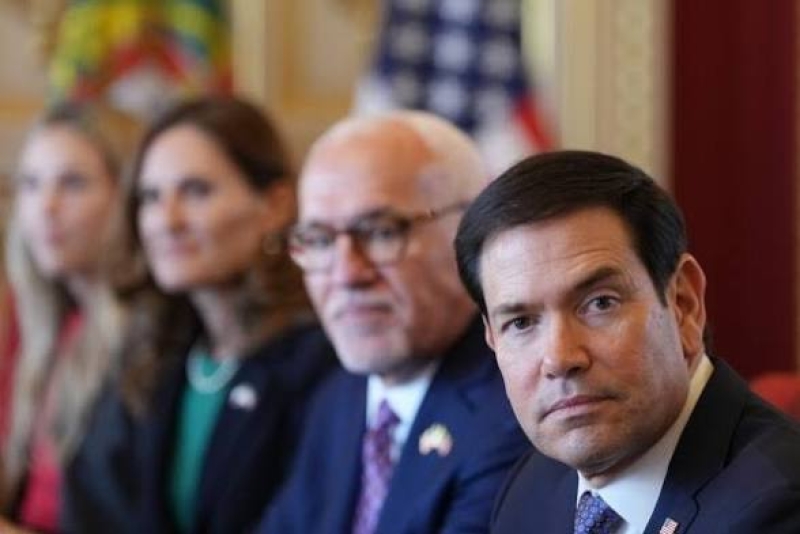
US Secretary of State Marco Rubio has travelled to Uzbekistan and is scheduled to visit India to strengthen economic and security ties with Central and South Asia, amid criticism that he has kept his distance from major international crises.
The trip is Rubio's 31st overseas journey as secretary of state. Critics say his recent travel schedule has focused on politically less risky destinations while key diplomatic challenges, including conflicts in the Middle East and the Russia-Ukraine war, remain unresolved.
Rubio, who also serves as President Donald Trump's national security adviser, defended the trip before leaving Washington on Saturday, saying the United States needed to build strategic relationships beyond countries facing immediate crises.
“It's an important relationship,” Rubio told reporters, explaining that the visit was arranged when Central Asian leaders could meet.
The State Department rejected suggestions that Rubio was avoiding difficult issues, saying he remained directly involved in discussions on Iran, Gaza, Lebanon, Russia-Ukraine and China, even when other Trump administration officials took the public lead.
The department said Rubio's role was to help the president develop and implement policies that advance US interests, adding that diplomacy also required building partnerships and addressing emerging challenges before they escalated.
Special envoys, including Steve Witkoff, Jared Kushner and Tom Barrack, have taken prominent roles in several major diplomatic initiatives, while Rubio has focused on behind-the-scenes discussions, according to the department.
Rubio has also prioritised Latin America, particularly Venezuela and Cuba, and worked to strengthen ties with conservative leaders aligned with Trump. He has also sought to reassure NATO allies concerned about the administration's intentions towards Europe and the Arctic.
However, some former US diplomats have questioned his travel priorities.
Ivo Daalder, a former US ambassador to NATO under President Barack Obama, said Rubio had largely avoided the capitals, crises and negotiations central to the secretary of state's role.
Daalder argued that Rubio's dual responsibilities as secretary of state and national security adviser could leave him overextended. He also suggested that avoiding difficult negotiations could have political advantages for Rubio, who has declined to discuss speculation about his future political ambitions.
Deputy Secretary of State Christopher Landau rejected the criticism, arguing that it reflected an outdated foreign policy establishment that undervalued Latin America and other regions.
The State Department maintained that Rubio's schedule was guided by Trump's foreign policy and national security priorities, rather than an attempt to favour certain regions over others.
It said diplomatic travel could serve different purposes, from responding to immediate crises to strengthening economic and security partnerships, reports UNB.