

- One year after Milestone tragedy: memories mark a day of grief |
- GP auditor flags Tk 125.80 bn BTRC tax demand as 'unresolved risk' |
- Govt Unveils 2027 Hajj Packages, Cuts Airfare |
- Dhaka to build ‘Strategic Energy Reserves’, amid uncertainty |
- ECNEC Eyes Tk 2,082cr Rural Road Maintenance Project |
Andy Burnham Becomes Britain's New Prime Minister
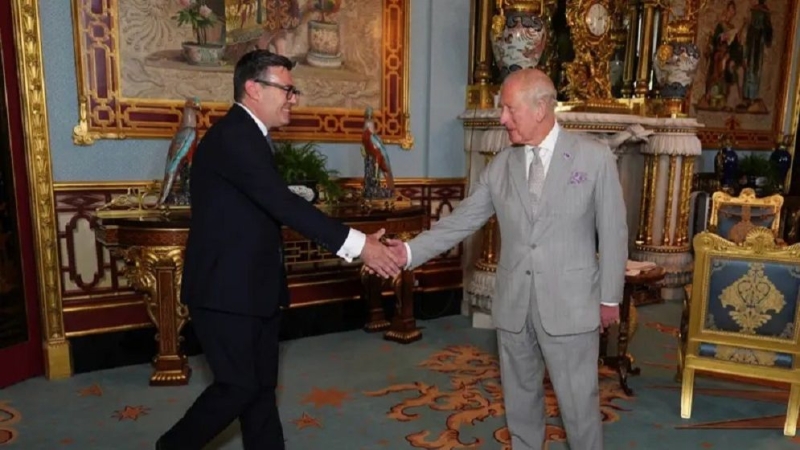
Andy Burnham meets King Charles III before the monarch appointed him prime minister
Andy Burnham officially became the United Kingdom's prime minister on Monday after meeting King Charles III at Buckingham Palace, succeeding Keir Starmer and pledging to restore public confidence in government.
Burnham was formally invited by the King to form a new government after the monarch accepted Starmer's resignation. The 56-year-old becomes Britain's sixth prime minister in the past decade.
Before leaving Downing Street, Starmer defended his two years in office, saying his government had made Britain "stronger and fairer."
"I go with good grace, I go with a smile, and I go proud of everything that we have achieved," Starmer said in his farewell speech.
Burnham is expected to outline his government's priorities in his first address as prime minister, focusing on restoring trust in government, easing the cost-of-living crisis, boosting economic growth and devolving more powers to regional communities.
He is also expected to announce his senior cabinet appointments, including the successor to Finance Minister Rachel Reeves.
In an interview published ahead of taking office, Burnham said Britain needed a fresh approach after years of political instability.
"What we've been doing hasn't been working. I am going to try and do things in a different way," he said.
The former mayor of Greater Manchester, widely known as the "King of the North," was chosen by the Labour Party to replace Starmer after the latter resigned in June following a series of political controversies and policy reversals.
Burnham takes office amid mounting economic and political challenges, including sluggish growth, high public debt, rising welfare costs, irregular migration, volatile global energy prices linked to the US-Iran conflict and uncertainty surrounding US President Donald Trump's policies.
He has pledged to pursue an investment-led economic strategy, prioritising early intervention, economic growth and measures to ease the financial pressures facing households.
Burnham also moved quickly to signal a policy shift by scrapping the previous government's proposed nationwide digital identity scheme, saying the funds would instead be redirected to areas such as tackling the cost-of-living crisis.
Having returned to Parliament only weeks ago after serving as Greater Manchester mayor, Burnham now faces the task of reviving Labour's fortunes before the next general election, expected in 2029.