

- 45th anniversary Ziaur Rahman's death Saturday |
- India’s Muslims denied public spaces for Eid prayers |
- China steps up efforts to protect rare golden monkeys at world heritage site |
- Russia urges US, Iran to avoid return to war amid nuclear tensions |
- President, PM offer Eid prayers at National Eidgah |
China steps up efforts to protect rare golden monkeys at world heritage site
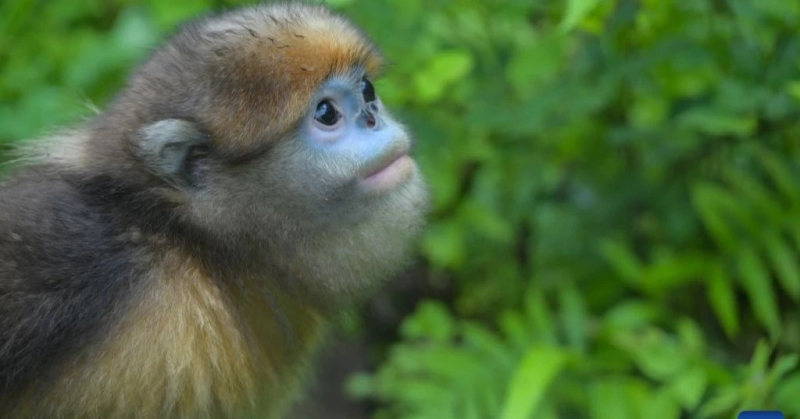
Golden monkeys at world heritage site in China. AP
China is strengthening conservation efforts to protect the critically endangered Guizhou snub-nosed monkey, also known as the golden monkey, in Mount Fanjingshan, a UNESCO World Natural Heritage site in southwest Guizhou Province.
Deep inside the misty mountains, veterinarian Yang Wei has spent the past six years closely working with the rare primates, building a strong bond while helping improve their chances of survival.
The Guizhou snub-nosed monkey is a nationally protected species and is listed as critically endangered, with its entire wild population — estimated at around 850 — living in the Fanjingshan area.
After completing his studies, Yang returned to his hometown in 2020 and now leads the monkey research centre under the Fanjingshan National Nature Reserve Administration. He said his goal is to protect the rare species found only in his region.
At the centre, Yang and his team have improved care for rescued monkeys by designing enclosures that closely resemble their natural habitat. As a result, all rescued monkeys under their care have survived so far.
The team has also enhanced nutrition and care for pregnant monkeys. While females in the wild usually give birth every three years, those under scientific care at the centre are now producing healthy offspring every two years.
Currently, nine monkeys — including rescued and centre-born individuals — are being cared for at the facility.
Protecting monkeys in the wild remains a major challenge, but authorities are increasingly using technology to monitor and safeguard them. Surveillance systems, infrared cameras, drones and regular patrols are being used to track their movements and prevent poaching.
In addition, 14 ecological corridors have been built along roads around the mountain to ensure safe movement of monkeys between feeding and resting areas, while reducing human interference.
These measures are already showing positive results. Increased monkey activity has been recorded, with cameras capturing groups moving freely through the forest and using the newly built corridors.
Forest ranger Li Jiuhua said he has noticed a rise in the number of monkeys and other wildlife in recent years. He added that sightings of multiple monkey groups in a single day are becoming more common.
China is also expanding similar conservation efforts nationwide to protect biodiversity and promote environmentally sustainable development. Thousands of ecological protection projects have been implemented in recent years, with more planned in the future.
Locally, authorities have invested over 46 million yuan to build a new conservation centre for the monkeys. The facility, which began trial operations in April 2026, includes enclosures, a veterinary hospital, laboratories and food preparation areas.
Officials say the new centre will focus on breeding, research and education, while also aiming to involve more experts and share conservation knowledge globally. - AP