

Tuesday, September 15, 2026
News update
- REHAB president's post declared vacant over loan default |
- China criticises idea it is in 'malicious competition' over AI |
- UP elections to be held in 7 phases, 1st phase on Nov 12 |
- Govt Launches Major Plan to Combat Pollution in Dhaka Rivers |
- New warnings about risks of AI to humanity revive the debate |
China Rejects ‘Threat’ Narrative in Global AI Debate
GreenWatch Desk:
Technology
2026-09-14, 7:04pm
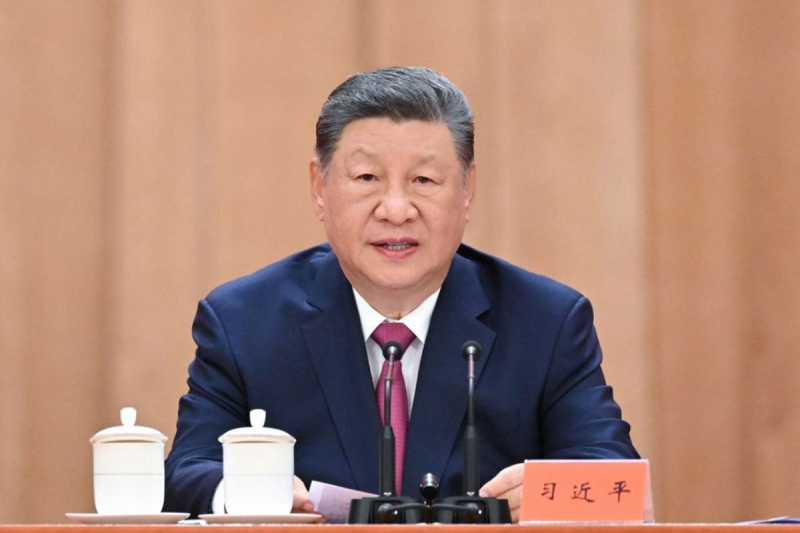
China has rejected narratives portraying artificial intelligence as a source of “threats,” “conflict” or “harmful competition” amid its ongoing rivalry with the United States over AI development and regulation.
Beijing said such rhetoric would obstruct efforts to establish global AI governance and serve no country’s interests.
Chinese Foreign Ministry spokesperson Guo Jiakun told reporters on Monday that narratives centred on threats, conflict and harmful competition would only disrupt the global AI-governance process.
He called on all parties to advance AI development in an open, inclusive and beneficial manner while prioritising human welfare.
China’s remarks came as several leading figures in the US AI industry raised serious concerns over the rapid advancement of the technology. Anthropic CEO Dario Amodei and former AI researcher Jacob Coxon have warned that AI capabilities could advance faster than safety measures and human oversight.
Amodei recently called for a slower and more cautious pace of frontier-AI development, while Coxon warned that uncontrolled progress could pose an existential threat to humanity. OpenAI CEO Sam Altman has also stressed the need to ensure that safety and alignment technologies keep pace with the growing capabilities of AI models.
US President Donald Trump, however, has prioritised maintaining American leadership in AI rather than slowing development. His position is that the country that leads the AI race will gain significant strategic advantages.
Prospects for US-China Understanding
The growing debate has raised questions about whether the world’s two largest economies and leading AI powers can reach an understanding on managing the development of the technology.
According to Chang Jun Yan, an assistant professor with the Military Studies Programme at Singapore’s S Rajaratnam School of International Studies, an agreement between the United States and China to slow AI development for safety reasons would be “almost impossible.”
AI has become closely linked to the core national-security interests of both countries, making cooperation to deliberately slow technological progress highly unlikely, he said.
The US-China AI rivalry has already become one of the most consequential competitions in global geopolitics. Both countries are investing heavily in advanced technologies to secure strategic advantages.
The United States has imposed restrictions on the export of advanced semiconductors and other critical AI-related technologies to China. Despite these measures, China’s AI sector continues to advance, supported by open-source technologies and government backing.
Many experts believe the United States remains ahead in frontier AI, while Chinese companies are working rapidly to narrow the gap. However, Chinese firms still face challenges in raising the hundreds of billions of dollars being invested in the US AI industry.
Beijing Also Warns of Security Risks
Despite its opposition to threat-based narratives, China has also acknowledged the risks associated with AI. President Xi Jinping and other senior officials have stressed the need to combine technological development with security safeguards.
Chinese Minister of State Security Chen Yixin wrote on Sunday that the country should maintain a balance between development and security. He called for stronger AI-related laws, ethical guidelines and risk-prevention mechanisms to protect public interests and national security.
Chen also referred to potential risks arising from the use of AI by foreign intelligence agencies and other “hostile forces.” At the same time, he emphasised the importance of international cooperation to address such threats.
Kenton Thibaut, a senior fellow focusing on China at the Atlantic Council, recently wrote that there were signs of growing understanding in both Washington and Beijing regarding the risks posed by advanced AI.
China also has a technological interest in cooperating with the United States, he argued, as such engagement could allow Chinese researchers to monitor how their models are used abroad and identify potential vulnerabilities.
China Seeks Role in Global AI Governance
China has become increasingly active in efforts to shape an international framework for AI governance. In July, Beijing announced the establishment of the World Artificial Intelligence Cooperation Organization, which aims to contribute to the development of a global AI-governance system.
At a BRICS summit in India, Xi also proposed building an international community around open-source AI.
In the United States, meanwhile, calls for stronger oversight are growing. Former Anthropic researcher Jacob Coxon recently warned that maintaining the current pace of AI development could create a serious risk to humanity in the near future.
Amodei and other senior AI figures have subsequently called for a more cautious development process and stronger safeguards. Altman has also said that AI companies need to ensure that safety and alignment systems advance alongside model capabilities.
Microsoft CEO Satya Nadella has warned that AI development cannot be organised in a way that leaves control in the hands of only a few companies.
Trump, however, has continued to emphasise the importance of preserving US technological leadership, arguing that Washington must remain ahead of China in the AI race.
Calls for Coordinated Slowdown
Coxon has said that some form of coordinated effort with China to slow AI development may be necessary to prevent a dangerous international race.
In an interview, he argued that avoiding a reckless global competition would require countries to coordinate their approaches to advanced AI development.
Such coordination, however, would be difficult in practice. AI is no longer merely a commercial technology; it is directly connected to military capabilities, economic power, cybersecurity, intelligence operations and national security.
As a result, the need for cooperation is growing alongside mutual distrust and strategic rivalry.
AI May Feature in Xi-Trump Talks
Trump is preparing to welcome Xi to the White House next week, and efforts are reportedly underway to include AI in the agenda of their meeting.
US Treasury Secretary Scott Bessent and Chinese Vice Premier He Lifeng may also meet ahead of the summit. He is involved in China’s economic planning and oversight of AI development, potentially making AI an important subject in broader economic discussions between Washington and Beijing.
Experts say cooperation between the United States and China on AI safety is essential, but the strategic stakes are so high that the risks for both sides remain considerable.
Chesen Nevett, managing director of Hong Kong-based Forani Investments, said Washington would not view a potential long-term Chinese lead in frontier AI merely as a defeat in a technology competition. Instead, it could see such an outcome as the loss of a critical component of the strategic infrastructure of the next industrial era.
The debate over AI safety, regulation and the pace of development has therefore moved beyond the technology sector. It is increasingly becoming a central issue in US-China geopolitical rivalry, national security and the future balance of global power.