

- NCP Demands Impeachment, Arrest of President |
- PM Pledges to Modernise, Strengthen Border Force |
- Dhaka Tops Global Pollution List with Hazardous Air |
- Country Observes Martyred Army Day Today |
- 100 CSOs rally against Trump’s trade tactics, urge access to drugs |
New Study Finds Moon Still Tectonically Active Today
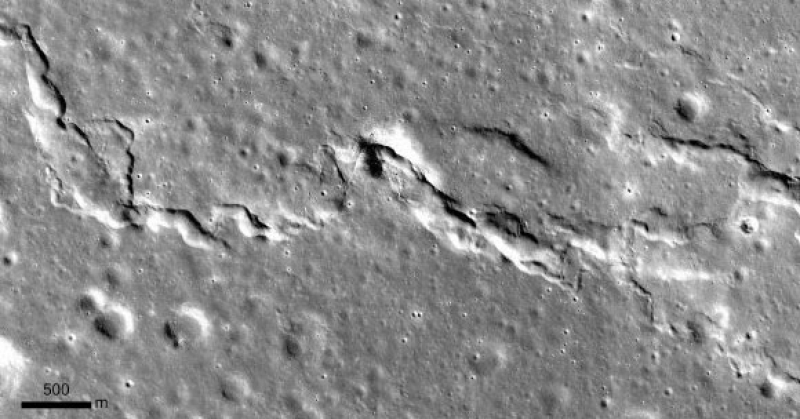
Photo: NASA
New research suggests the Moon is far more geologically active than long believed, overturning the idea that its surface has remained largely unchanged for billions of years. Although the Moon lacks Earth-style plate tectonics, internal stresses within its crust continue to reshape the landscape.
A key sign of this activity is the presence of lobate scarps, ridge-like features formed when the crust compresses and thrusts over itself along faults. These structures are concentrated mainly in the lunar highlands and are relatively young in geological terms, having formed within the past billion years.
Earlier work showed the Moon is slowly shrinking as its interior cools, a process that helps create these scarps. However, scientists found that contraction alone could not explain all recent tectonic features.
The new study identifies another landform type, Small Mare Ridges (SMRs), located in the Moon’s darker volcanic plains, known as maria. Formed by similar compressional forces, SMRs appear to be widespread across the near side.
Researchers mapped these ridges and compiled the first comprehensive catalogue, adding more than a thousand newly identified segments. Dating analysis indicates SMRs average about 124 million years old, comparable to lobate scarps at roughly 105 million years, making both among the youngest features on the Moon.
In some regions, highland scarps appear to transition directly into mare ridges, suggesting a common origin. Together, these structures reveal a global pattern of ongoing contraction and tectonic activity.
The findings provide new clues about the Moon’s internal evolution, heat loss, and seismic behaviour, including the likelihood of future moonquakes.