

- NCP Khulna Chief Critically Shot Amid Rising Political Violence |
- Indian MP Warns Bangladesh Faces Rising Lawlessness |
- Law and Order Must Be Ensured Ahead of Polls: Prof Yunus |
- Tough times ahead, everyone must remain united: Tarique Rahman |
- Sirajganj’s luxuriant mustard fields bloom as an oasis of gold |
Paraplegic Engineer Makes History With Spaceflight
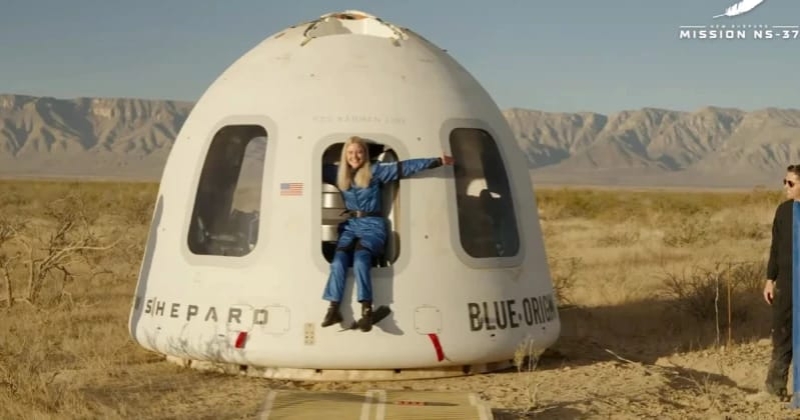
German engineer Michaela Benthaus made history on Saturday by becoming the first wheelchair user to travel to space, marking a significant step forward for accessibility in human spaceflight.
Benthaus flew on a 10-minute suborbital mission that took her more than 65 miles (105 kilometres) above Earth. Leaving her wheelchair behind, she experienced weightlessness while orbiting the planet aboard the spacecraft, which launched from West Texas. She was joined by five other passengers, including retired space executive Hans Koenigsmann, who helped organise and sponsor her journey.
“I laughed all the way up,” Benthaus said, recalling the excitement of the ascent. During the brief period of microgravity, she even tried to turn herself upside down inside the capsule.
The spacecraft required only minor modifications to accommodate Benthaus. Accessibility features included a transfer board to help her move between the hatch and her seat, while a carpet was laid out at the desert landing site to ensure smooth access to her wheelchair after touchdown.
Benthaus, 33, became paraplegic following a mountain biking accident seven years ago. She is currently a graduate trainee with the European Space Agency in the Netherlands and has previously experienced short periods of weightlessness during a parabolic flight in 2022. She also took part in a two-week simulated space mission in Poland.
The privately funded mission was not connected to the European Space Agency, although the organisation recently cleared an amputee astronaut for a future International Space Station mission. Unlike that case, Benthaus required in-flight assistance, with Koenigsmann assigned to help her during the journey.
After landing, Benthaus said her flight carried a message beyond personal achievement. “Never give up on your dreams,” she said, expressing hope that her journey will inspire greater inclusion and accessibility in space exploration and everyday life on Earth.