

- EC Plans First-Phase Elections in 1,050 Union Parishads |
- Rohingya crisis now a security concern for Bangladesh: Shama |
- Hasina Is a Convict, Legal Steps Underway to Bring Her Back |
- Nearly 300 families perish in road crashes in 6 years 10 months: RSF |
- Earth Gets a Tiny New Mini-Moon Until December |
Earth Gets a Tiny New Mini-Moon Until December
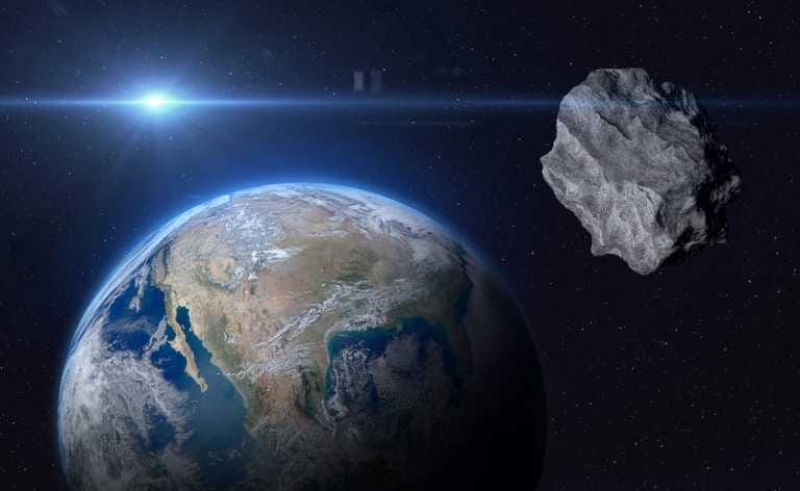
Earth has gained a new temporary mini-moon, a small space rock designated 2026 QQ8. Although it entered Earth's gravitational orbit in April, scientists first spotted it in August.
The asteroid is expected to remain temporarily bound to Earth by gravity until December before escaping and continuing its journey through space in 2027. The International Astronomical Union’s Minor Planet Center announced the finding.
Scientists have reconstructed 2026 QQ8’s orbital path and found that it takes about 359 days to orbit the Sun, almost the same as Earth’s orbital period. The asteroid approaches Earth roughly once every 10 years. During its latest approach, it came close enough to be temporarily captured by Earth's gravity.
The Minor Planet Center said 2026 QQ8 came within about 353,000 miles of Earth during its stay. That is roughly 110,000 miles farther away than the Moon’s average distance from our planet.
The space rock is estimated to be about 6 feet, or 2 metres, across. Even if it entered Earth's atmosphere, it would likely burn up before reaching the ground, producing a bright fireball.
This is not the first time Earth has temporarily captured a mini-moon. Such objects have been detected before, and research suggests that several small asteroids may temporarily orbit Earth at the same time.
A study published last year estimated that Earth could have around six mini-moons at any given time. Some of these objects may be fragments of the Moon that have become detached.
Although 2026 QQ8 is small, it is larger than the average mini-moon. Modelling conducted earlier this year estimated that temporary satellites typically measure about 75 centimetres, or 30 inches, across and remain near Earth for an average of around nine months.
Despite being called a mini-moon, 2026 QQ8 is too small and distant to be seen with the naked eye.