

- Govt Proposes 17-Member Panel for Constitution Reform |
- Energy Security Lies in in Solar Power |
- Breaking The Iron Grips of Oligarchy in Bangladesh |
- PM Unveils 12-Point Plan for Clean, Green Dhaka |
- Fuel shortage, rains hit Boro harvest in Habiganj haors |
Energy Security Lies in in Solar Power
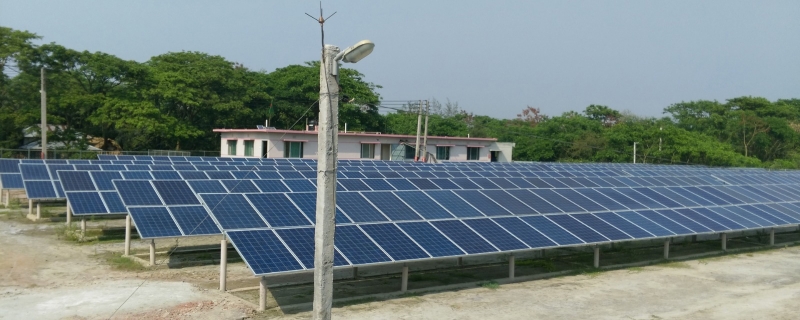
Representational image
Bangladesh is now realising the consequences of an import-dependent energy policy. The prices of petroleum products have of late been increased. The government says supply is adequate. Still, there are miles long queues at petrol pumps in Dhaka City. Purchase and storage of excess oil by many people fearing imports may stop due to the unstable situation caused by the Iran War and the hoarding by some unscrupulous petrol dealers are largely responsible for the current situation. A corrupt, short-sighted energy policy of the past has put the country in this predicament.
Bangladesh is 56 percent dependent on imports for energy. In 2024, 20 billion US dollars was spent on fuel imports. Due to reduced gas supply, 23% of power plants have been shut down and production in industrial factories has dropped to 30-40 percent of capacity. The increase in transportation costs caused by the fuel crisis has raised fears of an increase in the prices of essential commodities. This reaction of the war has been felt all over the world. Although temporary ceasefires have been reached twice so far since the Joint US-Israeli unjust war on Iran broke out on 28 February, no one can say when the war may flare up again. The peace talks have been brokered by Pakistan. The United States and Iran are still treading threats against each other.
It is sad that Bangladesh has not used the potential of renewable energy. While neighbouring country India is supplying 51 percent of the total energy from renewable sources, and Pakistan has urgently increased the supply of this sector to about 25 percent, the share of renewable energy in Bangladesh is only 5 percent. India is subsidizing the renewable energy sector, and Pakistan is developing this sector considering it a national emergency. Almost two decades ago, Bangladesh amazed the world by electrifying millions of homes with solar energy, but due to negligence, it is lagging behind now. Despite the fact that the price of solar power equipment and batteries has come down by a half in the international market, the country has not been able to take advantage of it, due to corrupt and unsustainable state policies. This explains why Bangladesh's tariff policy has not become renewable energy-friendly.
Despite all this, investment in solar and other renewable energy has become profitable in Bangladesh. Akij Group, PRAN-RFL Group have come forward to successfully set up solar power plants on a commercial basis. PRAN-RFL Group has already launched a 36 MW rooftop system. They are taking forward the work of generating another 50 MW of electricity. In addition, they have made great progress in setting up a 100 MW commercial plant in Moulvibazar. They also have plans to set up several small 50 MW plants.
The government-owned Infrastructure Development Company Limited (IDCOL), an investor in this sector, has said that the cost of generating electricity from renewable energy will decrease by 5 Taka per unit. Since investment is profitable, corporate groups are coming forward with enthusiasm in search of capital. IDCOL has invested 12,000 crore Taka in this sector so far, which is about 44% of the total investment. IDCOL Executive Director Alamgir Morshed said the development of renewable energy is possible through commercial plants. Commercial banks can come forward to invest in the highly attractive solar power sector. Vietnam has succeeded to produce 25,000 megawatts of solar power in 5 years using market-based capital and local equipment. Experts believe if urgent steps are taken, the current government's target of producing 40,000 megawatts of renewable energy-based power by 2040 can be achieved by 2030. They say if the country invests in this way and encourages the private sector at the same time, it can restore sovereignty in the energy sector within a short time.
Similar encouraging information has come from Abu Alam, Additional Director of Bangladesh Bank. He said, the rate of non-performing bank loans in the solar power sector is 0.73 percent, that is, less than one percent. Non-performing bank loans in all other sectors range from 30 to 40 percent. A few days ago, Parliament was told the amount of non-performing bank loans as of December 2025 is about 5.45 lakh crore Taka. It is unlikely that this will happen in the solar power sector. Honest and bold steps imbued with patriotism are needed to develop renewable energy, experts say.
But where will the money come from? Change Initiative CEO M Zakir Hossain Khan said if carbon tax is imposed, a revenue of 10,000 crore taka can be collected annually. A significant amount of foreign exchange can be earned through carbon trading. Along with these, funds such as zakat, donations can be properly collected and innovatively invested in this sector. A revolution in the solar energy sector is possible by encouraging private small entrepreneurs to invest.
Dr. Enamul Haque, MD Bangladesh Institute of Development Studies (BIDS), said that it is possible to take a big step forward by setting up one-megawatt solar power plant in each of the 68,000 villages of Bangladesh. This will not require large capital and can be achieved in a short time if banks provide support to enthusiastic and honest small investors. He however cautioned that without proper management full capacity solar power generation might not be possible. Electricity for wind power has not yet proved promising. But the potential for harnessing tidal power is huge, he said.
It should be noted that currently 86 percent of electricity comes from fossil fuels, which is why the level of air pollution in Bangladesh is high. The average life expectancy of people in Bangladesh is decreasing by 6-7 years due to air pollution. Various studies have shown that more than one lakh people die every year due to this. 46 percent of fossil fuels come from gas and 28 percent from coal. During the last two decades, Bangladesh's contribution to global carbon emissions has increased from 0.3 percent to about 10 percent. Neighbouring India also contributes significantly to Bangladesh's air pollution. Polluted air enters Bangladesh from coal-based power plants and factories set up on three sides of the country. This sometimes causes acid rain and a lot of damage to the ecosystem.
Currently, Bangladesh has a renewable energy-based power generation capacity of 1,700 MW. 80 percent of this comes from solar energy, 15 percent from hydropower, wind power and fossil fuels. In the current 7.9 trillion Taka annual national budget, 2.9 percent is allocated to the energy sector. By urgently increasing the share of this sector in the budget, Bangladesh must come out of its dependence on an unstable international energy sources. There is no choice but to achieve energy sovereignty on an urgent basis. Some changes in the law are needed to develop renewable energy rapidly like in Vietnam and Pakistan. Laws need to be changed to allow the private sector to generate electricity on a commercial basis and sell it to consumers. If community or village-based power generation plants are established in a decentralized manner, the pressure on the national grid will be reduced. Converting diesel-powered irrigation pumps consuming about 3,500 MW of power to solar energy will reduce dependence on diesel.
It is necessary to reduce the duty on energy-efficient equipment to increase their import and reduce electricity consumption to some extent. Experienced businessmen are in favour of withdrawing the nearly 40 percent duty levied on inverter imports. If the National Board of Revenue does not agree to this, the Ministry of Energy should demand allocations to pay the import duty on renewable energy under a duty drawback system as is the case with the export-oriented garment industry. Due to power scarcity, production and national growth are now being hampered. The current government's Bangladesh First policy demands the achievement of energy security and sovereignty at the fastest to accelerate production and growth. (This story has been published in the April print edition of the GreenWatch)