

- অতিথি পাখির বিচরণ আর দুষ্টুমিতে নান্দনিক হয়ে উঠেছে কুয়াকাটার চর বিজয় |
- Remittance inflow exceeds $632 million in first six days of Dec |
- 18 migrants die as inflatable boat sinks south of Greek island of Crete |
- TIB for polls manifesto vows to curb misuse of powers and religion |
- Khaleda now not fit for travelling: Medical Board |
AI Predicts Breast Cancer Risk Years Ahead, Improving Detection
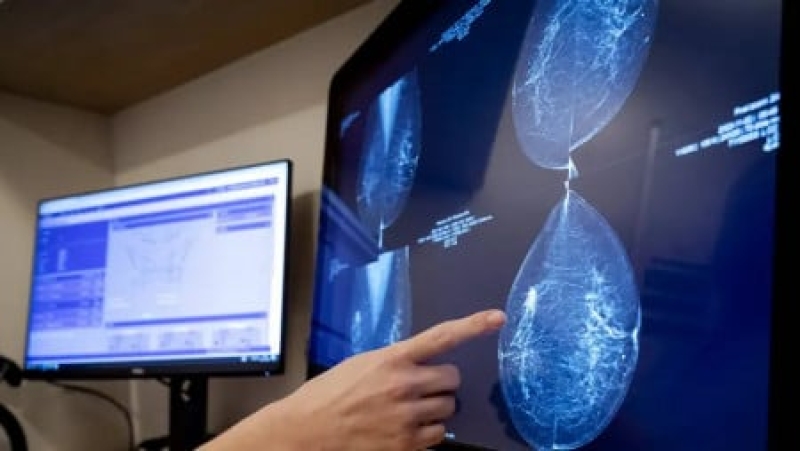
A standard mammogram does not always detect breast cancer early enough.
Breast cancer remains the leading cause of cancer death in women, with 2.3 million new cases diagnosed each year globally. Despite widespread use of mammograms, many aggressive tumors are still undetected, particularly those that grow rapidly and lead to fatal outcomes.
A new AI model is now changing the game in early detection. This innovative algorithm can predict a woman’s risk of developing breast cancer within the next five years based solely on mammogram images—even if no visible signs of cancer are present. In clinical tests, women flagged as high-risk by the AI were four times more likely to develop breast cancer than those identified as low-risk.
At present, women in many countries undergo routine mammograms every two years starting at age 50. However, breast cancer risk varies significantly from person to person. Christiane Kuhl, a leading radiologist, argues that a more personalized screening approach is necessary, as mammograms are less effective for women with dense breast tissue, which can mask potential cancers.
The AI model, developed by the Clairity Consortium, analyzes mammograms to identify risk factors such as tissue density, texture, and arrangement—all key indicators of cancer risk. The model can assess these factors in seconds, offering precise predictions of whether a woman should proceed with more advanced screenings, like MRI scans, which are better suited for detecting early-stage cancer, especially in women with dense tissue.
Kuhl suggests that the AI model could even benefit younger women, as they are more likely to have dense tissue that complicates mammography. However, she doesn't advocate for lowering the general screening age. Instead, she proposes a two-step approach: begin with a standard mammogram, followed by AI analysis to predict long-term risk. If the algorithm detects a high risk, an MRI would be recommended instead of additional mammograms, improving early detection and outcomes.