

- PM accords reception to winners of international Quran competition |
- 300,000 displaced people in Gaza seek safe shelter: UNDP |
- Climate change made deadly Nepal glacier and rock collapse more likely |
- Building damaged in Israeli strikes collapses in Gaza, killing 21 |
- Bangladesh sees 31 risky heat days, 25 for CC, this summer |
Scientists develop mice with partly human brains in research breakthrough
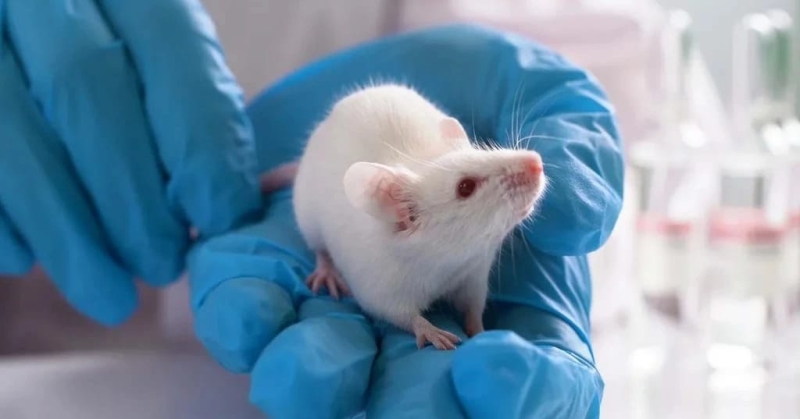
US neuroscientists have developed mice with functioning human cells integrated into their brains, in a breakthrough that could help researchers study human brain disorders.
The researchers hope the new model will allow potential treatments for psychiatric and neurodevelopmental diseases that occur only in humans to be tested in laboratory mice.
Although the idea of mice with partly human brains may sound unsettling, the scientists stressed that the animals are not “mice that think like humans.”
Instead, the mice were genetically modified and surgically treated so that part of their brain tissue consists of human cells.
The research, published in the journal Nature, was conducted under independent ethical review, the scientists said.
The goal of the ethically complex experiment is to better understand the biology of brain disorders for which effective treatments are currently unavailable.
Some human conditions cannot be properly studied in mice because the animals do not naturally develop certain brain disorders.
Prof Sergiu Pașca of Stanford University, the study's lead researcher, said psychiatry has “one of the lowest success rates for clinical trials.”
“Even drugs that actually make it to clinical trial - that seem to be working really well in animal models - fail dramatically in clinic,” he said at a press conference. “That tells us we're missing a lot of information about human biology and capturing that will be essential.”
The Stanford team said the approach could potentially transform research into complex conditions including epilepsy, autism and cerebral palsy.
“Here we have a new model that allows us to actually capture aspects of human brain function in a way that has not been possible before,” Pașca said.
Mice without their ‘grey matter’
The human brain contains billions of cells linked through millions of circuits, making it difficult for scientists to understand how the brain develops and what happens at the cellular level when disorders occur.
Although researchers have previously implanted human neurons into laboratory rodents, the Stanford scientists said their study takes the technique considerably further.
Source: BBC