

- Sharif Osman Hadi No More |
- Tarique Rahman to Return Home With Daughter on Dec 25 |
- ILO praises Bangladesh’s labour reforms, new milestones |
- Depositors stranded as Sammilito Islami Bank is in liquidity crisis |
- BNP faces uphill task to reach seat-sharing deal with allies |
BDRCS Highlights Rohingya Crisis at GRF Review in Geneva
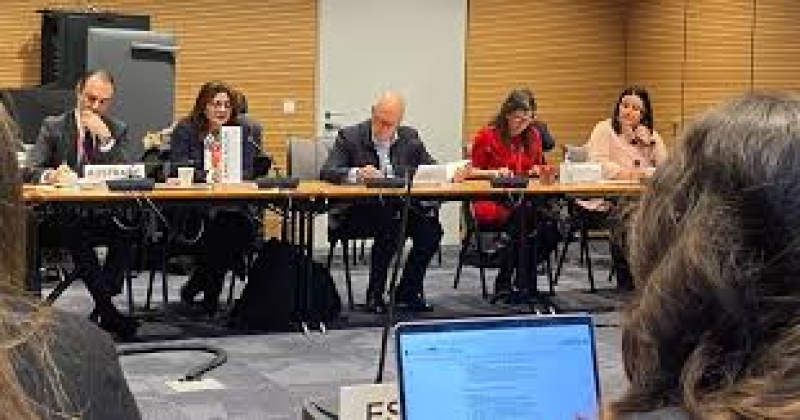
The Bangladesh Red Crescent Society (BDRCS) has highlighted the deepening humanitarian crisis facing Rohingya refugees and host communities at the Global Refugee Forum (GRF) Progress Review held in Geneva.
At a time of declining global funding and rising humanitarian needs, BDRCS emphasized the urgent need for renewed international commitment, sustained and predictable financing, and a stronger shift toward locally led humanitarian action.
Representing Bangladesh as part of the International Federation of Red Cross and Red Crescent Societies (IFRC) delegation, Areefa Mehera Sinha, Director of International Relations and Communication of BDRCS, drew attention to the growing operational strain on the ground.
At several sideline events held between 16-17 December, 2025, Sinha stated that the impact of funding shortfalls is already evident through interrupted health services, reduced WASH coverage, rising malnutrition, weakened disaster preparedness, and increased protection risks, particularly for women, children, elderly people, and persons with disabilities.
She also noted that the arrival of approximately 150,000 newly displaced Rohingya since 2024 has further stretched already fragile systems.
During the GRF Progress Review and its associated side events, BDRCS raised serious concerns over deep and sudden funding cuts affecting the Rohingya response.
With less than half of the required resources currently available, many humanitarian actors have been forced to scale down or withdraw essential services, creating critical gaps in protection and assistance and placing immense pressure on the remaining responders.
Speaking from the perspective of a national society deeply embedded in the response, Sinha called for a strategic humanitarian reset that prioritizes essential services while empowering local and national actors.
She emphasized the importance of direct, predictable, and flexible funding for Bangladeshi NGOs, stronger coordination across sectors, increased investment in local capacity strengthening with simplified donor compliance, environmental rehabilitation to reduce disaster risks in the camps, and meaningful participation of Rohingya refugees in planning, coordination, and feedback mechanisms.
She stressed that locally led action is not only more cost-effective but also essential to sustaining humanitarian assistance in a protracted crisis of this scale.
In her intervention, Sinha urged global actors to reflect on the human cost behind policy and funding decisions, stating that when decision-makers return home and sit before a warm meal, they should remember the daily realities faced by Rohingya refugees and host communities and allow that reflection to guide their actions and choices.
The High-Level Strategic Dialogue at the GRF Progress Review also featured keynote remarks by Ambassador Asad Alam Siam, Foreign Secretary of the Government of Bangladesh.
He reiterated Bangladesh’s sustained humanitarian commitment despite immense socio-economic and environmental pressures and called on the international community to uphold its pledges, share responsibility more equitably, and accelerate efforts toward durable solutions, including the safe, voluntary, and dignified return of Rohingya refugees to Myanmar.
The Global Refugee Forum Progress Review marks a critical midpoint toward the next Global Refugee Forum in 2027.
Through its active participation, the Bangladesh Red Crescent Society reaffirmed its commitment to humanitarian principles and called on global partners to translate pledges into concrete action to ensure protection, dignity, and hope for the Rohingya people and the communities that continue to host them.
BDRCS underscored its long-standing and comprehensive humanitarian response in Cox’s Bazar in support of Rohingya refugees and affected host communities.
Over the years, the organization has delivered life-saving assistance across shelter, disaster risk reduction, water, sanitation and hygiene (WASH), health, protection, livelihoods, and community engagement, with implementation largely carried out through local volunteers and community-based mechanisms, reports UNB.